
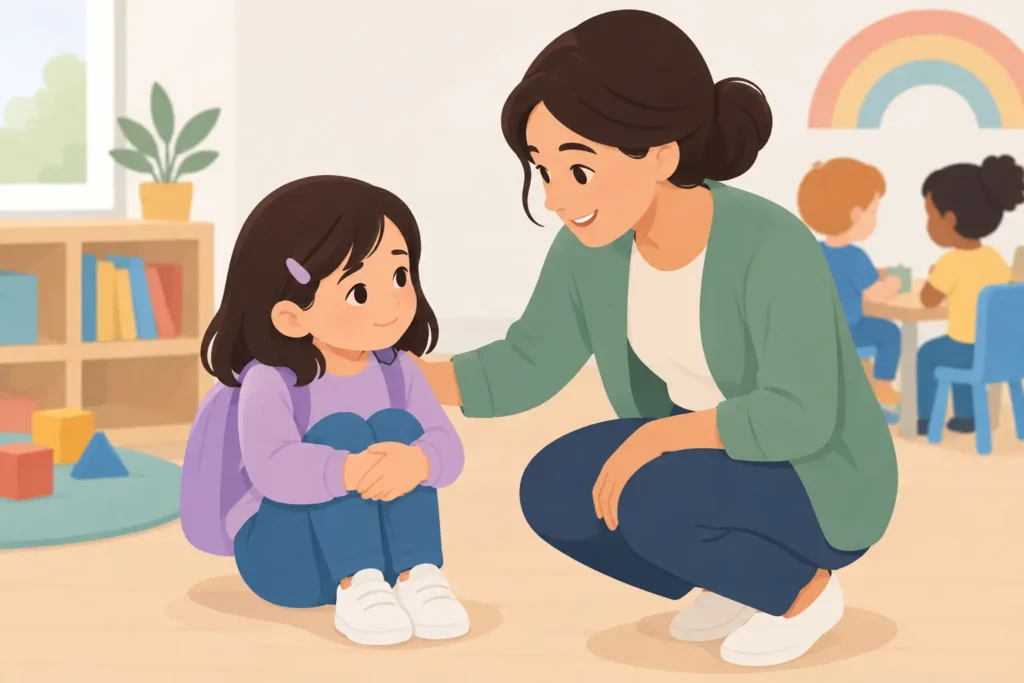
The child who clings quietly at drop-off, watches other children build before joining in, or answers a teacher with a nod may simply need more time to feel safe. Learning how to support shy preschoolers begins with seeing their quietness as a temperament, not a problem to fix. With patient adults, familiar routines, and small chances to connect, many reserved children grow into confident learners while still honoring who they are.
Shyness is not the same as unhappiness
Some preschoolers enter a room ready to lead a game. Others prefer to stand close to a parent, observe the activity, and decide for themselves when it feels comfortable to participate. Both approaches can be healthy.
A shy child may be deeply curious, thoughtful, and eager to learn. They may notice details others miss, enjoy imaginative play, and form especially meaningful friendships once trust has grown. The goal is not to turn a quiet child into the loudest child in the room. It is to help them feel secure enough to share ideas, try new experiences, ask for help, and build warm relationships.
That distinction matters. When adults repeatedly label a child as “shy” in front of others, the child may begin to believe that stepping back is all they can do. Instead, describe what you see with kindness: “You are taking a moment to watch,” or “You like to get comfortable first.” These words leave room for growth.
How to support shy preschoolers at home
Home is where a child practices feeling understood. A few gentle habits can make new social situations feel less overwhelming.
Prepare for what is ahead
Preschoolers feel safer when they know what to expect. Before a birthday party, school event, or playdate, briefly explain where they are going, who may be there, and what will happen first. Keep the description simple: “We will arrive, say hello to Ms. Ana, and then you can choose a puzzle or sit with me for a few minutes.”
Avoid promising that a child will immediately have fun or make friends. That can feel like pressure. Instead, offer a manageable goal, such as greeting one familiar adult, helping carry a snack, or staying for the first activity. Small successes build confidence more reliably than big demands.
Practice through play
Pretend play gives children a safe way to rehearse words they may need later. Set up stuffed animals for a pretend preschool morning and take turns saying, “Can I play?” “My name is…” or “May I have a turn when you are done?” Keep it light and silly. A child who will not say these words to an adult may happily say them through a teddy bear.
Reading stories together can also open helpful conversations. Ask, “How do you think this character felt when they met someone new?” Then gently connect the idea to your child’s experience without putting them on the spot.
Choose smaller social steps
Large, busy gatherings can be hard for many young children, especially after a long school day. A short playdate with one calm, familiar child may be a better place to begin. Choose an activity that does not require constant talking, such as making play dough shapes, watering plants, building a boat to float in a tub, or decorating a simple pizza.
Side-by-side activities reduce the pressure of direct conversation. As children focus on a shared project, words often come more naturally.
Notice bravery, not performance
Praise the effort you want a child to recognize. “You stayed near the group during music time” is more useful than “Why didn’t you sing?” “You told your teacher you needed help” celebrates a meaningful step, even if the child spoke softly.
Try to be specific and sincere. Children can sense the difference between genuine encouragement and pressure dressed up as praise. Confidence grows when a child knows that adults notice their effort, whether or not they perform perfectly.
Make goodbyes calm and predictable
For a shy preschooler, a rushed or uncertain goodbye can make the whole morning feel harder. Create a short drop-off routine that stays mostly the same: a hug, a loving phrase, and a clear goodbye. You might say, “I love you. Your teacher will help you get started. I will see you after afternoon snack.”
Lingering too long can sometimes make separation more difficult, even though it comes from love. A calm, confident farewell tells a child that school is a safe place and that you trust the adults caring for them. If tears happen, that does not mean the routine has failed. Many children settle once they move into a familiar activity with a caring teacher.
A comfort item can help in some settings. A small family photo in a bag, a favorite hair clip, or a tiny note with a heart may offer reassurance without becoming something the child must hold all day. It depends on the child and the school’s routines, so it is helpful to discuss this with the teacher first.
What caring teachers can do
A nurturing preschool environment gives quieter children a gentle bridge into the group. Rather than placing a child at the center of attention, experienced educators can welcome them through a familiar task: feeding classroom fish, choosing a book, helping arrange crayons, or checking whether seeds in the garden need water.
Purposeful jobs give children a reason to engage without requiring them to entertain others. Hands-on learning is especially helpful because it creates natural moments for connection. A child may begin by quietly observing water vapor on a classroom experiment, then point out what they see. They may first watch others make geometric forms, then proudly show a teacher their own creation.
Teachers can also pair a shy child with a kind peer during simple activities. The match matters more than forcing a friendship. A gentle classmate who enjoys puzzles, painting, or outdoor discovery may help a reserved child feel included. Over time, the child may move from playing beside others to playing with them.
Support without pushing
There is a balance between protecting a child from every uncomfortable moment and pushing them into situations before they are ready. Avoid speaking for your child all the time, but do offer a bridge when needed. Instead of saying, “Tell her your name,” try, “This is Maya. She is still getting comfortable. Maya, would you like to wave or say hello?”
Offer choices that keep the child involved. “Would you like to join the blocks or the drawing table?” feels much easier than “Go play with the children.” Give them time to answer. A pause can feel long to adults, but it may be exactly what a thoughtful preschooler needs.
It is also okay if a child declines sometimes. Real confidence is not forced cheerfulness. It is the growing belief that they can handle new moments, make choices, and return to safety when they need to.
Build a partnership with your child’s school
Parents and teachers see different sides of a child. A child who talks freely at home may be quiet at school, while a child who seems reserved at home may become animated during outdoor play. Sharing these observations helps adults create consistent support.
Tell the teacher about your child’s interests, comforting routines, favorite books, and ways they communicate when nervous. Ask what activities bring out their voice at school. Perhaps they enjoy helping bake, reading with one trusted adult, or explaining how their floating boat was made. These details reveal strengths that can become stepping stones toward connection.
A good school-home partnership also keeps expectations realistic. Growth may look like entering the classroom with fewer tears, answering a teacher with a word instead of a nod, joining a group for five minutes, or inviting one friend into play. Those quiet milestones deserve to be celebrated.
When extra support may help
Most shy preschoolers become more comfortable as relationships and routines grow familiar. Still, it may be helpful to speak with your child’s pediatrician or a qualified child development professional if fear regularly prevents them from joining everyday activities, communicating with trusted adults, eating at school, or enjoying play. Seek guidance with compassion, not alarm. Early support can give families practical tools and reassurance.
Your child does not need to become someone else to thrive. With a safe haven at home, patient encouragement at school, and adults who notice the courage in small steps, a quiet child can grow into a capable, kind, and confident learner – in their own time.