
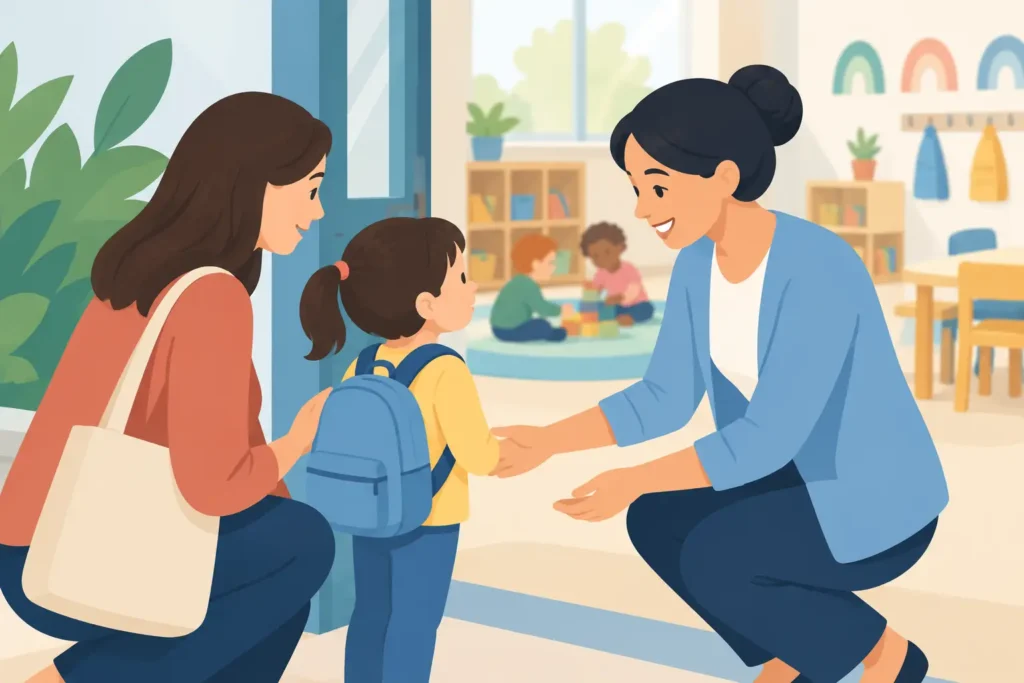
The goodbye at the classroom door can feel much bigger than a few minutes. A child may cling tightly, go quiet, or suddenly insist on taking one more toy from home. For parents, learning how to support preschool transitions means recognizing that these moments are not signs of failure. They are a child’s way of adjusting to a new place, new people, and new expectations while still needing the safety of home.
With steady routines and a warm partnership between family and educators, children can learn that preschool is a safe haven where they can play, explore, make friends, and grow with confidence.
Why preschool transitions can feel challenging
Preschool asks children to manage many new experiences at once. They may be separating from a parent, following a group routine, sharing materials, using unfamiliar bathrooms, trying new foods, or resting in a different environment. Even a cheerful, outgoing child may need time to settle.
Transitions also happen beyond the first day. A new classroom, a different teacher, returning after a holiday, changing from half-day to extended care, or moving toward kindergarten can all bring back big feelings. Children do not always have the words to explain what feels different. Instead, they may become tearful, tired, extra energetic, or resistant at drop-off.
A little uneasiness is often part of healthy adjustment. What matters most is that children feel heard and are surrounded by calm adults who show them, again and again, that school is predictable, caring, and enjoyable.
How to support preschool transitions at home
Preparation works best when it is gentle and practical. Rather than giving a child a long explanation about what will happen, talk about school in simple, positive language. You might say, “After breakfast, we will go to school. Your teacher will help you choose an activity, and I will come back after your afternoon snack.” Clear words give children a timeline they can understand.
Practice the rhythm before the first day
A familiar morning makes a new school day feel more manageable. A few days before preschool begins, practice waking up, getting dressed, eating breakfast, and leaving home at roughly the same time. If your child will stay for lunch, nap, or extended day care, speak positively about those parts of the day too.
It is helpful to let your child take small responsibilities. They can choose between two shirts, place their water bottle in a bag, or help prepare a comfort item if the school allows one. These small choices build a sense of control without placing too much pressure on them.
At bedtime, keep the routine calm and repeatable. A bath, a favorite story, and a few minutes of connection can help a child’s body and mind prepare for rest. Good sleep does not solve every difficult drop-off, but tired children often find transitions harder.
Name feelings without making school feel scary
Parents naturally want to reassure a worried child quickly. Instead of saying, “There is nothing to be scared of,” try naming what you see: “You wish we could stay together. Starting somewhere new can feel hard.” Then offer confidence: “Your teacher will take care of you, and I will be back after school.”
This approach tells children that their feelings are welcome while also showing them that they can handle the experience. Avoid promising that they will not cry or that every moment will be fun. Preschool includes waiting, sharing, and trying again after mistakes. Children are better prepared when adults make room for both happy excitement and nervous feelings.
Create a brief, confident goodbye
Long goodbyes can accidentally make a child believe there is something unsafe about staying. Create a short ritual that your child can expect each morning: a hug, a kiss, a cheerful phrase, and a wave at the door. Keep your voice warm and your message clear.
If tears come, it is okay to leave after you have connected your child with a trusted educator. A child often settles more quickly once they are engaged in play, a book, or a simple classroom job. Ask the teacher what type of goodbye works best in that particular setting, because some children feel comforted by a window wave while others do better with a quick handoff.
Build a bridge between home and school
Children feel more secure when home and school seem connected rather than separate. Share useful information with educators, especially during the first weeks. Let them know about a child’s favorite songs, comfort strategies, allergies, sleep changes, family events, or words they use for important needs. These details help teachers offer individual care from the start.
At home, ask questions that invite more than a one-word answer. “What made you smile today?” may work better than “What did you do at school?” You can also ask, “Who did you sit near at snack?” or “What did you make with your hands?” If your child does not want to talk, do not force it. Some children need quiet play, movement, or a snack before they are ready to share.
Try to keep your own language about school respectful and encouraging. Children notice when adults speak warmly about teachers and classroom routines. When they hear that the important grown-ups in their lives trust one another, they are more likely to feel safe doing the same.
Give children something familiar to hold onto
A comfort item can be helpful, particularly for younger preschoolers. Depending on school guidelines, this may be a small family photo, a soft handkerchief, or a familiar object kept in a backpack or cubby. The goal is not to make the child dependent on the item, but to offer a reassuring link while they build confidence in the new environment.
Familiarity can also come through routines. Reading the same book before school, listening to a favorite song in the car, or packing a recognizable snack can quietly say, “Some things are still the same.” As children become comfortable, they usually need these supports less often.
Support transitions within the school day
The move from one activity to another can be as difficult as morning drop-off. Young children may not want to stop building a tower to wash hands, leave outdoor play for lunch, or put away art materials before they feel finished. Caring educators make these moments easier by giving advance notice, using songs or visual cues, and offering simple choices.
At Summer Tots, purposeful activities can help children enter the day with curiosity. A child who is invited to observe water vapor, shape dough for pizza, create a floating boat, or care for a classroom project has a welcoming reason to participate. Play is not a distraction from adjustment. It is often the path through it.
Outdoor time matters, too. Running, climbing, digging, and noticing the natural world allow children to release energy and reconnect with their bodies. For a child who has been working hard to manage feelings, movement can make the next transition feel more possible.
When a transition needs extra support
Most children need a settling-in period, and the length varies. Some are comfortable within days; others need several weeks of consistent routines. Progress is rarely a straight line. A child may have a wonderful week, then struggle after illness, travel, a new sibling, or a change at home.
Speak with your child’s teacher if distress is intense, continues without improvement, affects eating or sleeping significantly, or appears alongside a major change in behavior. The goal is not to label normal emotions as a problem. It is to understand what the child is communicating and agree on a kind, consistent plan.
A teacher may suggest arriving a little earlier to avoid a busy entrance, beginning with a shorter day when possible, assigning a familiar arrival activity, or having one educator greet your child regularly. These supports work best when home and school use the same calm message: “You are safe. We know this is hard. We will help you practice.”
Help children feel proud of growing independence
Preschool transitions are not only about getting through a difficult goodbye. They are opportunities for children to discover that they can enter a new space, form trusting relationships, and do meaningful things away from home. Celebrate specific efforts: “You carried your bag inside by yourself,” “You told your teacher you needed help,” or “You tried again when it was time to clean up.”
These small moments build the confidence children carry into kindergarten and beyond. When parents and educators offer affection, clear boundaries, and patient encouragement, children learn that new beginnings can bring nervous feelings and joyful discoveries at the same time. Tomorrow’s goodbye may still need a hug, but it can also become the first step toward a happy day of their own.