
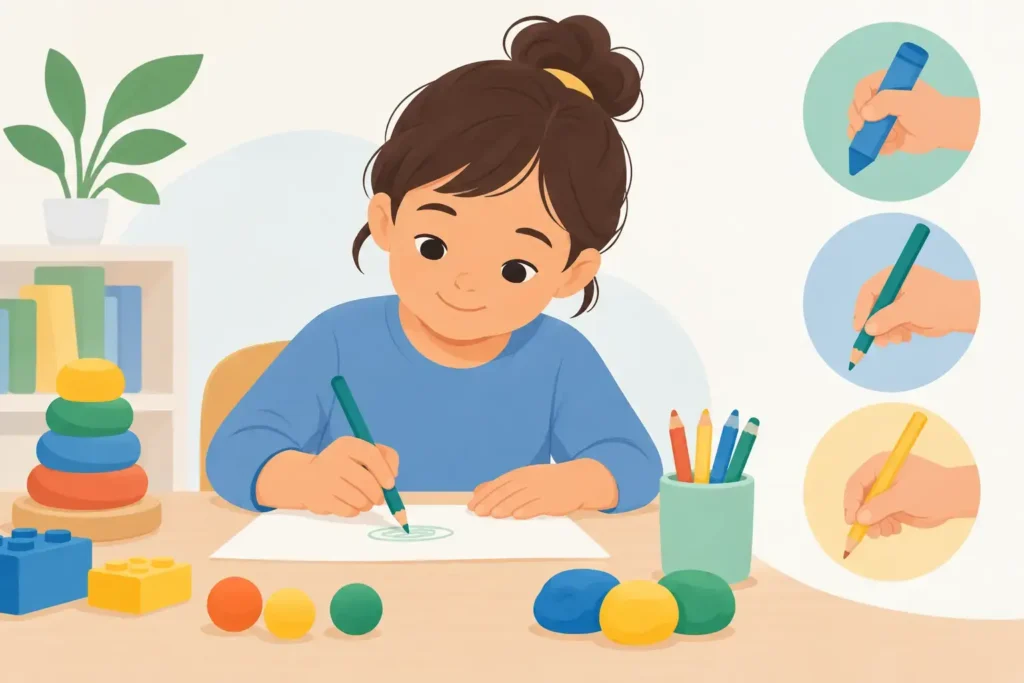
A child’s pencil grip often begins long before they are asked to write their name. It grows while they squeeze play dough, turn pages, build with blocks, pick up tiny treasures, and paint big, joyful lines. When parents ask how to develop pencil grip, the most helpful answer is usually not “more worksheets.” It is more hands-on play, gentle encouragement, and time for little hands to become strong and confident.
For preschool and kindergarten children, pencil grip is a skill that develops gradually. Each child has a different timeline, and a grip that looks unusual at age three may naturally become more mature with practice and growth. The goal is not perfect finger placement overnight. It is helping your child feel comfortable, capable, and ready to share their ideas through drawing and writing.
Why pencil grip matters for young children
A comfortable pencil grip helps a child control marks on the page without tiring too quickly. As hand strength and coordination improve, children can draw shapes, color with more purpose, trace lines, and eventually form letters more easily. These early experiences support school readiness, but they also build pride. A child who can make a picture of their family or write the first letter of their name often feels a wonderful sense of independence.
At the same time, pencil grip is only one part of early writing development. Posture, shoulder strength, visual attention, hand dominance, and interest all play a role. A child who is wiggly at the table may not be refusing to learn. They may simply need movement, a shorter activity, or a different way to practice.
Build strong hands before focusing on the pencil
Little hands need plenty of active work before they can manage small, precise movements. This is why playful activities are so valuable. They strengthen the fingers, palms, wrists, and arms that children use when drawing and writing.
Play dough is a simple favorite. Invite your child to roll “snakes,” pinch tiny cakes, press cookie cutters, or hide small objects inside the dough for them to find. Tearing paper for a collage, crumpling paper into pretend snowballs, and using child-safe tongs to move pom-poms are equally helpful. These activities feel like play, yet they give fingers a meaningful workout.
Creative projects can offer the same benefits. Your child might use stickers to decorate a card, thread large beads onto a string, make a paper plate animal, or help prepare a snack by peeling a banana and placing toppings on a pizza. Outdoor play matters too. Climbing, digging in sand, watering plants, and drawing with sidewalk chalk support the larger arm and shoulder movements that make seated writing feel easier later.
Try to offer a variety of activities rather than repeating one exercise. Some children love crafts; others would rather build a tall tower or use toy tools. Following their interests keeps practice positive and gives their hands many different ways to grow stronger.
How to develop pencil grip with simple, playful practice
Once your child enjoys drawing and making marks, introduce crayons, short colored pencils, or chunky pencils during relaxed activities. Shorter tools can be especially useful because they naturally encourage children to use their fingertips instead of holding the pencil in a tight fist.
Start with drawing rather than letter practice. A child may enjoy making roads for toy cars, adding rain to a picture, drawing a treasure map, or creating a menu for a pretend restaurant. Encourage lines, circles, zigzags, crosses, and simple shapes. These are the building blocks children later use for letters and numbers.
For many preschoolers, a mature grip develops toward a tripod position: the pencil rests against the middle finger while the thumb and index finger guide it. You can model this gently by saying, “Let’s give the pencil three finger friends.” Then place the pencil between the thumb and index finger, with the middle finger underneath for support.
Do not turn every drawing session into a correction session. If your child grips tightly, holds the pencil high, or switches hands, offer a brief reminder and then let them continue creating. Too much attention on the grip can make a child feel watched or worried. Warm encouragement such as “I love how carefully you are drawing those windows” keeps the focus on effort and expression.
Set up the table for success
A good writing position can make a noticeable difference. Seat your child at a table where both feet can rest on the floor or on a stable footrest. Their hips and knees should feel supported, and the table should be near elbow height. When children are dangling their feet or reaching too high, their hands have to work harder.
Place the paper slightly to the side of the hand they use most. A right-handed child may find it easier with the paper tilted slightly left, while a left-handed child may prefer a slight tilt to the right. This allows the wrist to stay more comfortable as the child draws across the page.
It is also helpful to give children a stable surface. Writing while lying on the floor can be fun sometimes, but a supported chair and table are better for practicing control. For a change of pace, tape paper to a wall or use an easel. Vertical drawing strengthens the shoulder and encourages a natural wrist position.
Respect hand preference and each child’s pace
Many children experiment with both hands when they are young. A clear hand preference may not appear until the preschool years, and some children take longer. Avoid asking a child to use a particular hand because it seems easier or more familiar. Instead, place materials in the middle and notice which hand they choose most often for drawing, eating, and other detailed tasks.
Left-handed children can develop excellent pencil control. They may benefit from having more space on their left side at the table and from seeing a left-handed adult or older child model writing when possible. Most importantly, they should never be made to feel that their natural preference is wrong.
Progress is rarely a straight line. A child may use a lovely grip one day and revert to a whole-hand grasp when tired, excited, or working quickly. That is normal. Short, frequent opportunities are more effective than long sessions that leave small hands sore or frustrated.
When a pencil grip tool may help
Pencil grips, triangular crayons, and thicker writing tools can be useful for some children, but they are not a requirement for everyone. A tool should make writing feel more comfortable, not become another rule to manage. If your child already draws happily and controls the pencil well, there may be no need to add one.
Consider trying a simple grip if your child presses very hard, complains that their hand hurts, or struggles to keep the pencil from slipping. Let them test it during a fun drawing activity first. If they dislike it or it seems to make their hand tighter, set it aside. The best support is the one that helps your child relax and enjoy the activity.
Know when to ask for extra guidance
Most pencil grip differences improve with time, play, and patient practice. Still, it can be helpful to speak with your child’s teacher or a pediatric professional if they consistently avoid drawing, become upset by simple hand tasks, seem to have pain, or find it very difficult to use both hands together. Early guidance can offer practical ideas tailored to your child, without labeling them or making them feel behind.
At Summer Tots, children build these foundations through art, practical projects, sensory play, outdoor exploration, and caring guidance from educators who notice each child’s individual progress. A joyful learning environment gives children many reasons to use their hands with purpose, from creating geometric forms to making a thoughtful card for someone they love.
The sweetest sign of developing pencil control is not a perfect grip. It is the moment your child proudly brings you a drawing and begins to tell its story. Keep the pencils available, make space for mess and imagination, and celebrate every brave little mark they make.