
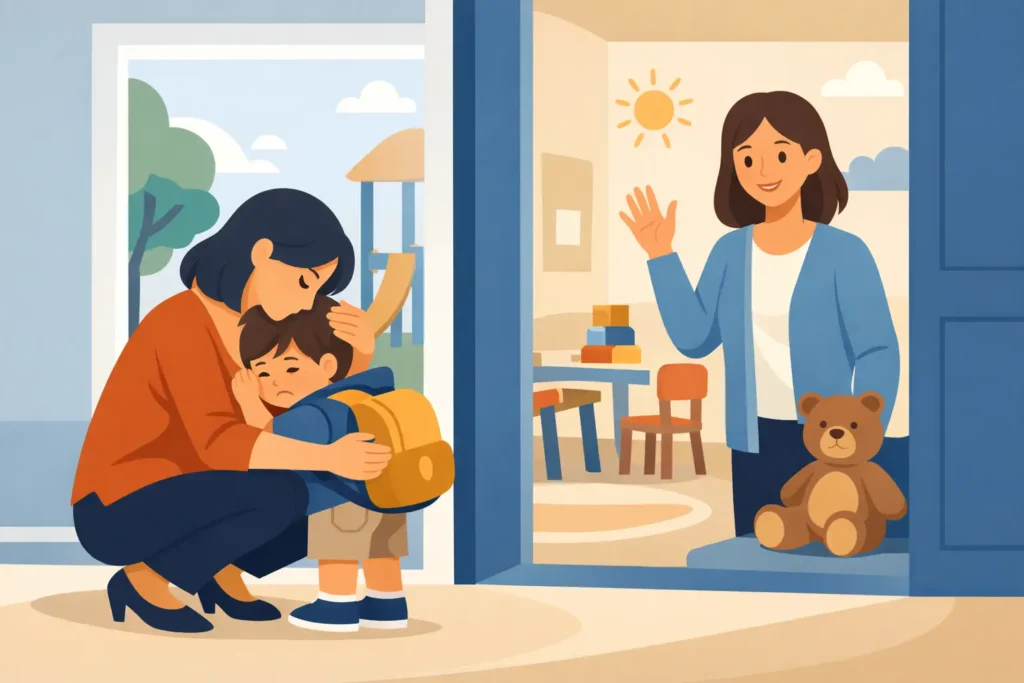
The moment you reach the classroom door, your cheerful child may cling tightly, cry, or suddenly refuse to let go. It can be heartbreaking, especially when you know preschool can be a joyful place to learn, play, and make friends. To manage preschool separation anxiety, children need a calm, predictable bridge between the safety of home and the new confidence they are building at school.
Separation anxiety is not a sign that a child is being difficult or that a parent has done something wrong. For many preschoolers, it is a normal response to a big change. They are learning that Mom, Dad, or another trusted caregiver can leave and always return – and that they can be safe, cared for, and capable in the meantime.
Why Preschool Goodbyes Can Feel So Big
Young children understand time differently from adults. “I’ll be back this afternoon” may not feel reassuring if they cannot picture what afternoon means. A new classroom, unfamiliar faces, different routines, and the noise of a busy morning can also feel overwhelming, even in the most nurturing environment.
Sometimes anxiety appears after a smooth start. A child may be happy for the first few weeks, then become tearful after a holiday, an illness, a family change, or a switch in routines. This does not mean preschool is no longer a good fit. It often means your child needs extra reassurance while they settle again.
A warm school environment makes a meaningful difference. When children are welcomed by familiar educators, invited into purposeful play, and given gentle attention, they begin to connect school with comfort and belonging. That confidence grows through many small moments: choosing a book, painting beside a friend, watering a plant, building a boat, or proudly sharing something they made.
How to Manage Preschool Separation Anxiety at Drop-Off
The most helpful goodbyes are loving, clear, and brief. It may feel natural to stay until every tear has stopped, but long or repeated farewells can make the separation harder. Your child can sense that you are unsure, which may make school feel less certain too.
Create a simple goodbye ritual that you can repeat every day. It could be a hug, a kiss, a high-five, and one familiar sentence: “I love you. Your teacher will take care of you. I will see you after snack time.” Use words that fit your child’s schedule and that you can keep as a promise.
Then leave calmly. Avoid slipping away without saying goodbye, even if it seems easier in the moment. Children who discover a parent has disappeared may become more worried about the next drop-off. A clear goodbye teaches trust: you tell them when you are leaving, and you return when you said you would.
If your child cries, allow the teacher to comfort and guide them into an activity. Experienced early childhood educators know how to help children transition with gentle connection – perhaps by looking at a favorite book together, feeding a classroom pet, joining a puzzle, or helping prepare materials for a hands-on project. Many children settle within minutes after a parent leaves, even when the goodbye was emotional.
Prepare Before the First Bell
A calm morning begins the night before. Lay out clothes, pack needed items, and allow enough time for breakfast without rushing. When adults are tense, children often feel it. A slower start gives everyone more room to connect.
Talk positively and honestly about school. Instead of saying, “Don’t cry,” try, “You may miss me at first, and your teacher will help you feel better.” This acknowledges your child’s feelings without giving anxiety more power.
It also helps to explain what will happen in a simple sequence. “We will drive to school, hang up your bag, have our goodbye hug, and then you will play. After lunch and rest time, I will come back.” Repeating the same language helps preschoolers understand the rhythm of the day.
For children who are especially nervous, visit the school beforehand if possible. Point out the classroom, outdoor play space, cubbies, and welcoming adults. At home, pretend to play school with dolls or stuffed animals. Let your child practice saying goodbye, then returning as the parent. Play gives children a safe way to work through feelings they may not yet be able to explain.
Send Comfort Without Creating a New Struggle
A small comfort item can help some children feel connected to home. This might be a family photo tucked into a bag, a tiny heart drawn on their hand, or a familiar object approved by the school. The goal is not to replace a parent, but to offer a gentle reminder: “My family is thinking of me, and I can manage this.”
It depends on the child. Some children hold a comfort item closely and settle well. Others become more upset if the item is misplaced or if they are asked to put it away. Speak with your child’s teacher and try one simple option rather than sending several special items.
A short note can also be meaningful for children beginning to recognize letters. A simple message such as “I love you. Have fun learning and playing!” can be read with a teacher and kept in a bag for reassurance.
Build Confidence Beyond the Classroom Door
Separation anxiety often eases as children gain confidence in everyday life. Give your child small, age-appropriate responsibilities at home, such as putting napkins on the table, choosing between two shirts, watering a plant, or putting books back on a shelf. These moments quietly say, “You can do things for yourself.”
Make space for independence while staying nearby. If your child is solving a puzzle or trying to zip a jacket, resist stepping in immediately. Offer encouragement: “You are working hard. Would you like a hint?” Success after effort builds the same confidence they need when joining an activity without you.
Talk about the parts of preschool they enjoy, not only the difficult goodbye. Ask specific, gentle questions after school: “What did you build outside?” “Who sat near you at story time?” or “What made you smile today?” If your child does not want to talk, do not pressure them. Share a little about your day first, then let the conversation come naturally during dinner, bath time, or a quiet ride home.
Work Closely With Your Child’s Educators
Your child’s teacher sees an important part of the picture: what happens after you leave. Share useful details, such as whether your child slept poorly, is recovering from a cold, or is worried about a change at home. This helps the teaching team offer the right kind of support that day.
Ask for a brief update on how long your child takes to settle and which activities help most. You may learn that the tears stop quickly once your child begins painting, joins outdoor play, or helps with a practical classroom task. That information can reassure you and guide your morning conversations.
Consistency between home and school matters. If the teacher uses a particular goodbye routine or encourages your child to carry their own bag to the classroom, support that approach at home when you can. Children feel safer when the adults who love them are working together.
At Summer Tots, a nurturing transition is treated as part of a child’s early learning journey. Caring educators help children feel seen, offer purposeful play to draw them in, and create a safe haven where happy hearts and healthy minds can grow.
When to Seek More Support
Most preschool separation anxiety improves gradually with routine, reassurance, and time. However, it is worth speaking with your child’s pediatrician or a qualified child mental health professional if distress is intense or continues for several weeks without improvement, if your child cannot settle at school, or if anxiety is affecting sleep, eating, play, and family life.
Extra support is also helpful if your child has frequent physical complaints before school, panic-like symptoms, or an unusually strong fear that something bad will happen when you are apart. Seeking guidance is not overreacting. It is another caring way to understand what your child needs.
Your calm confidence is one of the strongest messages you can offer. Each goodbye may feel small, but every successful reunion teaches your child something lasting: they can be safe away from you, enjoy a world beyond home, and return to your loving arms with new stories to tell.
Pingback: Parent Guide: Kindergarten Transition Made Easier – Summer Tots
Pingback: Choosing a Safe Nurturing Preschool Environment – Summer Tots