
A spilled drink at breakfast, a refusal to put on shoes, a toy grabbed from a sibling – these small moments can test even the most patient parent. A guide to positive discipline is not about finding the perfect response every time. It is about giving young children steady, loving guidance while helping them learn the skills they do not yet have.
For preschoolers and kindergarteners, behavior is often communication. They may be tired, overwhelmed, hungry, excited, disappointed, or still learning how to use words for a big feeling. When adults respond with warmth and clear boundaries, children begin to feel safe enough to practice patience, responsibility, and respect. That sense of safety supports happy hearts, healthy minds, and growing confidence.
What positive discipline really means
Positive discipline is sometimes mistaken for being permissive. It is not. Children need limits, routines, and adults who mean what they say. The difference is that positive discipline teaches rather than shames. Instead of asking, “How can I make my child stop this right now?” it asks, “What does my child need to learn, and how can I guide them through it?”
A young child who hits may need help naming anger and keeping hands safe. A child who delays cleanup may need a simpler instruction, a playful transition, or support getting started. This does not excuse hurtful behavior. It gives parents a way to address it without labeling a child as “naughty,” “bad,” or difficult.
The goal is not immediate obedience at any cost. The goal is to raise a child who gradually understands boundaries, can make better choices, and knows that mistakes can be repaired. This takes time. It also takes repetition, especially during busy mornings, after long school days, or when routines change.
Start with connection, then set the limit
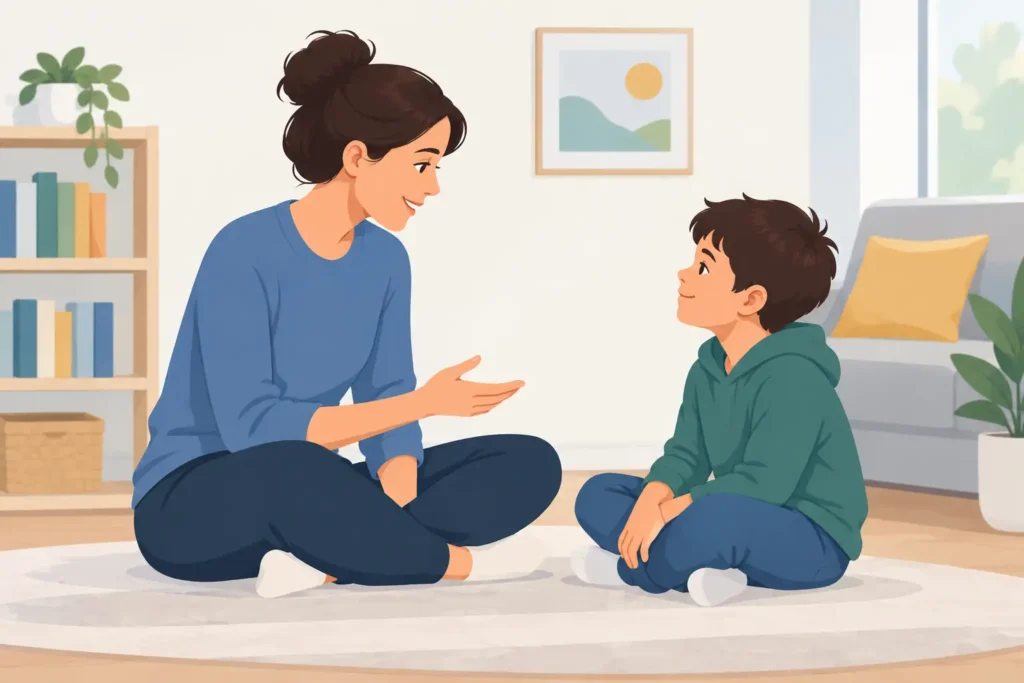
When a child is upset, reasoning often has to wait. A preschooler in the middle of a meltdown is not refusing to listen simply to be challenging. Their feelings may be too big for their developing self-control. Begin by getting close, lowering your voice, and using a few calm words: “You are really disappointed that playtime is over. I hear you. It is still time to leave.”
Connection does not mean changing the boundary. It means showing your child that their feelings are allowed, even when a certain action is not. You can say, “It is okay to be mad. It is not okay to throw blocks.” Then help them move toward a safer choice, such as stomping feet, squeezing a pillow, or asking for help.
This approach can feel slower than issuing a sharp command, particularly when you are late for work. Yet calm, brief guidance often prevents a difficult moment from becoming a larger power struggle. If you need to act quickly for safety, do so first. Gently stop the behavior, move your child away from danger, and talk when everyone is calmer.
Use simple choices to build cooperation
Young children want a sense of independence, but they cannot manage unlimited decisions. Two reasonable choices can help them feel capable while keeping the adult in charge. “Would you like to walk to the bathroom or hop like a bunny?” is more useful than repeatedly asking a child to brush their teeth.
The choices must both work for you. “Do you want to clean up now or never?” invites a debate. Try, “Would you like to put the cars away first, or should I help you begin with the books?” If your child chooses neither, stay calm and follow through: “You did not choose, so I will choose. We will start with the books together.”
Children also respond well when expectations are concrete. “Be good” is too broad for a four-year-old. “Use walking feet indoors,” “Put crayons back in the box,” and “Ask before taking a turn” tell a child exactly what to do. Notice their effort when they try. “You waited while your friend finished. That was respectful.” Specific encouragement helps children understand the behavior you hope to see again.
Let consequences teach, not punish
A consequence works best when it is connected to what happened, respectful, and manageable for the child’s age. If markers are used on the wall, the child can help clean the wall. If sand is thrown at the playground, sand play pauses while the child stays nearby with an adult. The message is clear: actions have effects, and we can make things right.
Avoid consequences designed to make a child feel embarrassed or afraid. Threats, yelling, and long lectures may stop behavior for a moment, but they rarely teach the missing skill. They can also make children more focused on avoiding punishment than on understanding why a boundary matters.
Repair is a valuable part of positive discipline. After a child hurts someone, a forced “sorry” may not mean much. Help them check on the other person, offer an ice pack, help rebuild a knocked-over tower, or practice kinder words. Over time, children learn that kindness includes taking responsibility after mistakes.
Create routines that make success easier
Many behavior challenges happen at predictable times: getting dressed, leaving the house, meals, bath time, and bedtime. A simple routine reduces the number of decisions children must make and lets them know what comes next. Pictures can be especially helpful for children who are still building language skills. A morning chart might show getting dressed, eating breakfast, brushing teeth, and putting on shoes.
Make room for play and movement, too. A child who has spent a long day sitting, concentrating, and following directions needs a chance to run, climb, create, and talk. Outdoor play, water exploration, baking together, building with recycled materials, or reading a favorite story can all bring connection back into the day. These moments are not extras. They help children regulate their bodies and practice cooperation in natural ways.
At Summer Tots, children are guided through purposeful activities and everyday social moments with the same caring attention. Families can carry that spirit home by inviting children into small responsibilities, such as washing fruit, sorting socks, feeding a pet with supervision, or setting napkins on the table. Practical jobs build pride and give children a positive place to use their growing independence.
When your child keeps testing the boundary
Consistency matters, but it does not require perfection. If you have raised your voice or given in after a long day, you can repair that, too. A simple apology teaches an important lesson: “I was frustrated, and I spoke too loudly. I am sorry. Next time I will take a breath and use a calmer voice.” Parents are allowed to learn alongside their children.
If a behavior continues, look for patterns before assuming your child is being defiant. Consider sleep, hunger, transitions, screen time, sensory discomfort, competition for attention, or a new family stress. Then choose one small change to try for a week. Earlier bedtime, a snack before errands, five minutes of special one-on-one play, or a clearer cleanup routine can make a meaningful difference.
Some concerns need additional support. Speak with your child’s teacher or health care professional if behavior is frequent, intense, unsafe, or affecting your child’s ability to participate in daily life. Asking for guidance is a caring step, not a sign that you have failed.
Positive discipline grows in ordinary moments: kneeling beside a tearful child, holding a boundary with a calm voice, and noticing the small try that came before success. Each kind, steady response tells your child, “You are loved, you are learning, and I will help you find a better way.”