
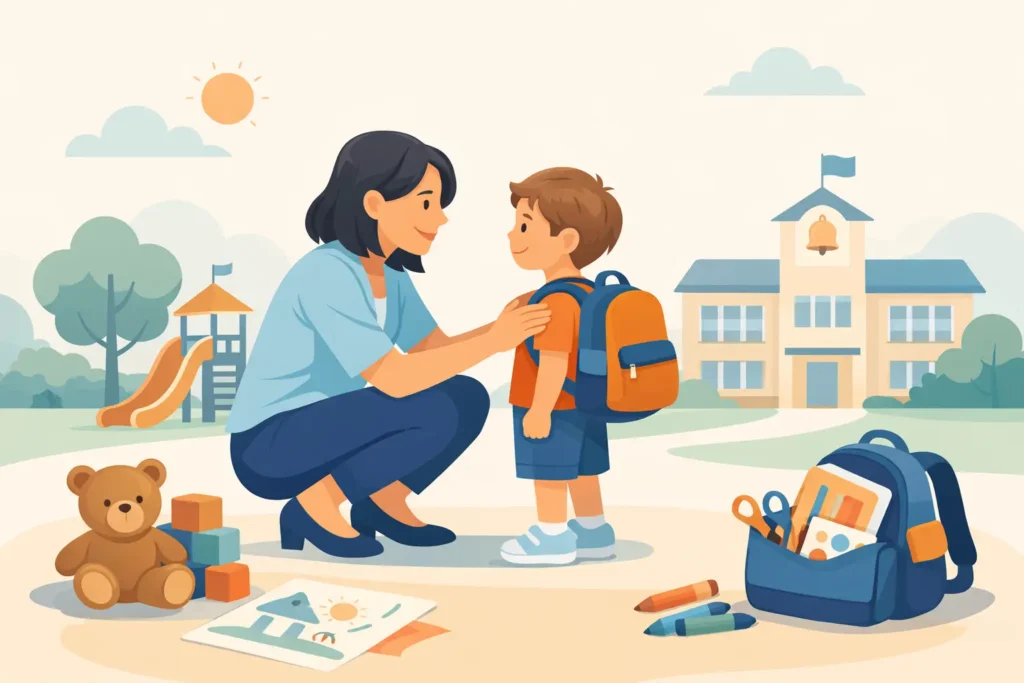
The first days of kindergarten can feel big for a small child – and for the parent standing at the classroom door. If you are wondering how to prepare your child for kindergarten, focus less on making them “ahead” and more on helping them feel safe, capable, and excited to belong. A child who can share a thought, try a new activity, ask for help, and recover from a small disappointment has a wonderful foundation for learning.
Kindergarten readiness is not a single checklist. Children grow at different speeds, and a child who is still learning to hold a pencil may be wonderfully confident with friends. The most helpful preparation brings together practical routines, playful learning, emotional support, and plenty of time to simply be a child.
How to Prepare Your Child for Kindergarten at Home
Home is the best place to practice the everyday skills that make a new classroom feel familiar. Small, repeated routines are more powerful than long lessons. Your child does not need a formal school schedule, but knowing what comes next in the day can make transitions much easier.
Begin with the morning. Let your child help choose clothes, put on shoes, use the bathroom, wash hands, and pack a water bottle or small bag. Offer enough time that you are not rushing them through every step. Independence grows when children are allowed to try, even when a zipper takes longer than an adult could manage.
Practice short moments apart, too. A playdate with a trusted family member, a class, or a visit with grandparents can help your child learn that you leave and return. Keep goodbyes calm and clear. A long, uncertain farewell can make separation feel more worrying, while a warm hug and confident “I will see you after school” gives children something steady to hold onto.
Reading together each day is another gentle way to prepare. Choose stories about school, friendship, feelings, animals, or everyday adventures. Pause to ask what a character might be feeling or what your child would do next. This builds language, listening, empathy, and the confidence to speak in a group.
Build Confidence Through Play, Not Pressure
Children learn best when their hands, minds, and imaginations are busy. Before kindergarten, play is not a break from learning. It is how much of the learning happens.
Invite your child to draw, paint, cut paper with child-safe scissors, build towers, sort socks by color, make shapes with play dough, and help set the table. These activities strengthen the small hand muscles needed for writing while teaching focus and problem-solving. If their drawing is a swirl rather than a recognizable person, celebrate the effort and ask them to tell you about it.
Simple practical projects also encourage curiosity. Bake muffins and let your child scoop ingredients. Float homemade boats in a basin and talk about why some stay up while others tip over. Grow beans in a cup near a window, notice water droplets on a cold glass, or make a pretend restaurant with menus and play money. These shared experiences give children ideas to talk about, questions to ask, and confidence that learning can be joyful.
Letters and numbers can be included naturally in everyday life. Point out the first letter of your child’s name, count strawberries onto a plate, or look for circles and rectangles during a walk. Keep the mood light. Pushing worksheets before a child is ready can turn learning into a test, while meaningful play helps knowledge stick.
Let your child make manageable choices
Kindergarten involves many moments when children need to make decisions: where to sit, which activity to try, how to solve a small disagreement, or whether they need help. At home, offer simple choices such as, “Would you like the blue shirt or the green shirt?” or “Do you want to brush teeth before or after this one book?”
Too many choices can feel overwhelming, especially for a young child. Two clear options are usually enough. The goal is not for children to control the day. It is for them to experience that their voice matters within loving, dependable boundaries.
Practice the Social Skills That Make School Feel Safer
Many parents worry about ABCs and counting, but social and emotional skills often shape a child’s first classroom experience even more. A child does not need to be perfectly calm, endlessly patient, or ready to share every favorite toy. They do need caring adults who can guide them as they learn.
Use everyday moments to name feelings. You might say, “You look disappointed that playtime is over,” or “It seems you feel nervous about meeting new children.” Naming an emotion does not make it bigger. It helps a child understand that feelings are normal and can be handled.
Then offer a simple next step. They can take a breath, ask for a turn, choose another activity for now, or tell a teacher they need help. Role-play these moments with stuffed animals. One bear wants the truck, another bear is using it, and together they find respectful words: “Can I have a turn when you are done?”
Kindness is also a skill worth practicing. Encourage your child to notice when someone needs help, to say thank you, and to use gentle hands. Explain that classmates may have different ideas, abilities, or ways of communicating. A welcoming child helps create the kind of classroom community where everyone can grow.
Get to Know the Kindergarten Routine
When possible, visit the school before the first day. Show your child where they will enter, where they may play, and where you will say goodbye. Familiar places often feel less scary after children have seen them with a parent nearby.
Talk about the day in a positive but honest way. You can explain that there will be teachers to help, time to play and learn, snack or lunch, outdoor movement, stories, and friends. Avoid promising that every moment will be easy. Instead, remind your child that new things can feel a little strange at first, and that they will have support while they settle in.
For working families, it is especially helpful to explain extended care in the same reassuring way. Let your child know who will pick them up and what the afternoon may include. A consistent plan reduces uncertainty and helps children feel secure from morning through the end of the day.
Prepare for the first morning the night before
Lay out clothes, pack what the school requests, and keep the evening quiet. A familiar dinner, bath, story, and bedtime routine can bring comfort before a new beginning. Aim for enough sleep, but do not panic if excitement makes bedtime slower than usual.
On the morning itself, offer a simple breakfast and keep your own words steady. Children often borrow their parent’s emotional cues. You can acknowledge your feelings without placing the weight of them on your child: “This is a special day. I know you can try, and your teacher will help you.”
Partner With Your Child’s Teachers
Teachers learn a great deal by watching children play, communicate, and respond to routines. Parents can help by sharing useful information early: comfort items, allergies, family changes, favorite interests, calming strategies, and any concerns about speech, behavior, or separation.
This is not about labeling your child or expecting a teacher to solve everything alone. It is about creating a caring partnership. When home and school use similar language for routines, kindness, and emotions, children receive a clearer message about what helps them thrive.
Be patient with the adjustment period. Some children run into class on day one and become tearful in week two. Others cling at first, then gradually find a favorite friend, book corner, or outdoor activity. Progress is rarely perfectly straight. Notice the small signs: your child remembers a teacher’s name, tells you about a song, tries a new food, or walks in with a little less hesitation.
Your child does not need to arrive at kindergarten knowing everything. They only need to arrive knowing they are loved, that adults will keep them safe, and that mistakes are part of learning. With a calm home routine, joyful opportunities to explore, and caring guidance from the adults around them, kindergarten can become the beginning of many happy, confident steps forward.
Pingback: How to Build Preschool Independence With Care – Summer Tots
Pingback: Preschool Versus Childcare Center: Which Fits? – Summer Tots
Pingback: Full Versus Half-Day Kindergarten: Which Fits? – Summer Tots
Pingback: Kindergarten Versus Daycare Differences Explained – Summer Tots