
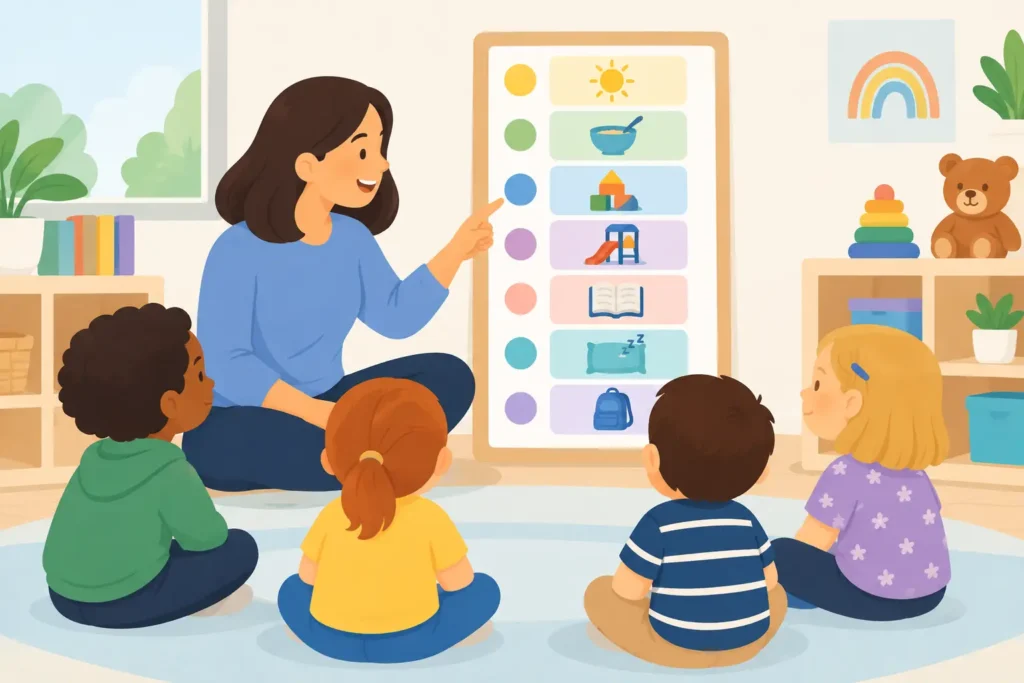
A preschool day can look simple from the outside: drop-off, play, lunch, nap, and home. Yet the rhythm behind those moments has a powerful effect on how secure, cheerful, and ready to learn a child feels. This guide to preschool daily schedules helps parents see what a purposeful day should include and why a predictable routine supports both happy hearts and healthy minds.
For young children, a good schedule is not about keeping every minute busy. It creates a safe, familiar flow with room to move, wonder, talk, rest, and be cared for as an individual. When children know what comes next, they can spend less energy worrying about transitions and more energy building confidence.
Why Preschool Daily Schedules Matter
Preschoolers are still learning how to manage big feelings, wait for a turn, communicate a need, and move from one activity to another. A steady daily routine gives them gentle practice in all of these skills. They begin to understand that a parent will return after school, that lunch follows play, and that a teacher will help when something feels difficult.
This sense of security is especially valuable for children who are new to school, shy in group settings, or adjusting to a parent’s work schedule. Consistent routines can make morning separation easier over time and help children feel that school is a trusted place where they belong.
A schedule also protects the parts of childhood that matter most. Purposeful learning should sit alongside outdoor movement, imaginative play, meals, quiet time, friendships, and warm conversations with caring educators. A day filled only with worksheets may look productive, but it can leave little room for the hands-on discovery through which young children learn best.
A Guide to Preschool Daily Schedules by Part of the Day
Every school has its own timing, and younger preschoolers often need more rest and flexibility than older kindergarten children. Still, a balanced day usually follows a pattern like this.
Arrival and a gentle welcome
The first part of the morning should help each child settle in rather than rush straight into instruction. A warm greeting from a familiar teacher, a place to put away belongings, and a simple choice of table activity can make a meaningful difference.
Children may begin with puzzles, drawing, blocks, books, or sensory materials while teachers check in with families and observe how each child is feeling. This quiet start gives educators valuable insight. A child who arrives tired, upset, or unusually quiet may need extra reassurance before joining the group.
Morning circle and language-rich learning
After children have settled, group time often brings the class together for songs, greetings, stories, calendar activities, or a conversation about the day’s theme. The goal is not for children to sit still for a long time. It is to build listening skills, confidence in speaking, and a sense of community.
English-led instruction can be especially meaningful when it is woven naturally into songs, storytelling, role-play, and everyday conversation. Children develop vocabulary more comfortably when words are connected to objects they can touch, actions they can try, and stories they enjoy.
Short teacher-led lessons may introduce early literacy, numbers, shapes, colors, sounds, or science ideas. The most effective activities invite children to participate. They might create geometric forms, notice water vapor during an experiment, or retell a favorite story with puppets. These experiences help learning feel real rather than something to memorize.
Learning centers and practical projects
A strong preschool schedule makes time for children to choose, explore, and repeat activities. Learning centers can include art, building, dramatic play, books, simple math games, sensory exploration, and practical life tasks.
This is where children often show their interests and strengths. One child may carefully build a bridge from blocks, while another practices social skills in a pretend kitchen. A teacher can extend both moments with thoughtful questions: What will make the bridge stronger? Who would you like to cook for?
Hands-on projects also teach patience and problem-solving. Baking, preparing pizza or sushi, making floating boats, planting seeds, or caring for small animals can introduce early science, language, measurement, responsibility, and teamwork in one joyful activity.
Outdoor play and active movement
Outdoor time is not a break from learning. It is an essential part of a healthy preschool day. Running, climbing, balancing, digging, and playing games help children strengthen coordination and release energy in positive ways.
Just as importantly, outdoor play gives children social practice. They negotiate turns on a slide, invite a friend into a game, recover from small disappointments, and learn how to play fairly. These are early lessons in kindness, empathy, and respect.
Weather, safety, and a child’s age may affect how long children spend outside. On very hot or rainy days, indoor movement activities can still give them opportunities to dance, stretch, follow obstacle courses, or play active group games.
Meals, rest, and quiet moments
Lunch and snack times should feel calm and unhurried. Children learn practical independence as they wash hands, open containers, use utensils, clean up, and talk politely with friends. Educators can encourage children to try new foods without turning meals into a battle.
A rest period after lunch is appropriate for many preschool-age children, even if they no longer nap at home. Some children sleep, while others need a quiet alternative such as looking at books, listening to soft music, or doing a peaceful activity. Rest helps children reset for the afternoon and supports their ability to manage emotions.
A schedule should not force every child into the same response. Experienced teachers notice who needs more sleep, who needs a few minutes of quiet space, and who is ready for a calm activity after resting.
Afternoon enrichment and extended care
For working families, the afternoon matters just as much as the morning. Extended child care should continue the school’s nurturing approach rather than become unstructured waiting time.
A thoughtful afternoon may include a snack, outdoor play, reading practice, creative projects, small-group games, and opportunities to finish work from earlier in the day. This gentler pace is often ideal for individual reading support or for helping a child practice writing, communication, and independent routines.
At Summer Tots, a full day can include meaningful classroom learning, active play, and caring extended support, so children remain in a familiar and secure environment until family pick-up. For parents, that continuity can bring welcome peace of mind.
What Parents Should Look for in a Daily Routine
When visiting a preschool, ask not only what time activities happen, but how teachers guide children through them. A schedule is only as caring as the adults who bring it to life.
Look for routines that include active and quiet periods, teacher-guided and child-led experiences, individual attention, and regular communication with families. Notice whether children are treated with patience during transitions. Are they encouraged to express feelings? Do educators speak kindly and get down to the child’s level?
It is also helpful to ask how the school handles a child who is not yet ready for a particular routine. Some children need support separating at drop-off. Others may be toilet training, adjusting to naps, or developing confidence in English. The right program works with families instead of expecting children to adapt overnight.
Creating a Smoother Routine at Home
School routines work best when home mornings are not overly rushed. Preparing clothes, bags, and lunch the evening before can give everyone more breathing room. A simple goodbye ritual, such as a hug, a short phrase, and a confident wave, helps children know what to expect.
Try to avoid long goodbyes, even when your child is upset. A calm, loving, predictable departure gives a clearer message: school is safe, and you will come back. Teachers can then comfort your child and help them join an activity.
At pick-up, invite conversation without pressure. Instead of asking only, What did you do today?, try questions such as, What made you smile today? or, Did you build, make, or discover anything? Children often share more when they feel there is no right answer.
A well-planned preschool day does more than fill the hours before pick-up. It gives children repeated chances to feel capable, cared for, curious, and connected – one familiar moment at a time.