
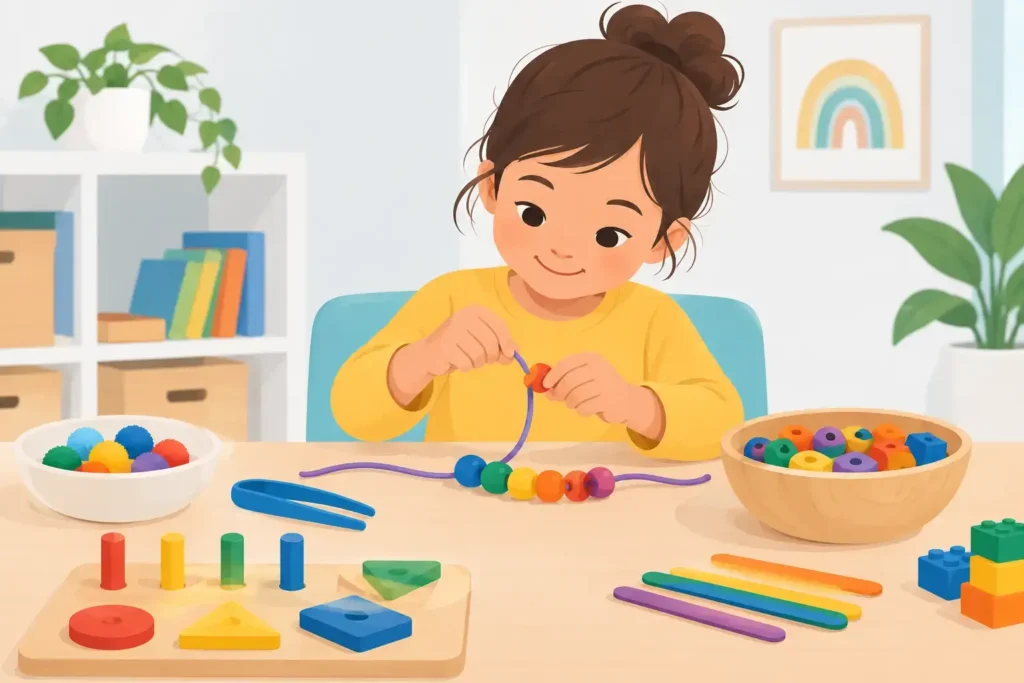
A preschooler carefully placing a tiny button into a jar is doing far more than staying busy. That small movement asks their eyes, fingers, wrists, and attention to work together. The best fine motor activities turn these everyday moments into joyful practice, helping children grow stronger, more confident, and more ready for writing, self-care, creative work, and classroom learning.
Fine motor development does not need to feel like a lesson. For young children, it grows best through play, repetition, and the pride of saying, “I did it myself.” A nurturing classroom and a few simple materials at home can give little hands many meaningful reasons to pinch, squeeze, twist, pour, build, and create.
Why Fine Motor Skills Matter in Preschool
Fine motor skills are the small, controlled movements children make with their hands and fingers. They support practical tasks such as holding a crayon, turning book pages, using a spoon, buttoning a shirt, opening a lunch container, and cutting with child-safe scissors.
These skills also build confidence. When a child learns to zip a jacket or finish a puzzle, they experience the satisfaction of solving a real problem independently. That confidence often carries into other areas of learning, from trying a new word in English to joining a group activity or sharing an idea.
There is no need to rush children toward perfect pencil grips or tidy handwriting. Every child develops at their own pace. The goal is to offer frequent, enjoyable practice while noticing progress: a stronger grip, longer focus, more patient effort, or greater willingness to try again.
15 Best Fine Motor Activities for Happy, Capable Hands
1. Play dough creations
Rolling, squeezing, flattening, and pinching play dough strengthens the small muscles in the hands. Invite children to make pretend food, animals, letters, or tiny “treasures” for a nature scene. Adding safe tools such as cookie cutters, plastic knives, and rolling pins gives the activity even more variety.
2. Sticker pictures
Peeling stickers from a sheet takes patience and careful finger control. Children can create a garden, decorate a paper plate animal, or place stickers along a drawn line. Larger stickers are a good starting point for younger preschoolers, while smaller stickers offer an extra challenge for children who are ready.
3. Threading beads and pasta
Threading large beads, cereal loops, or dry pasta onto a shoelace or thick string helps children practice hand-eye coordination. Ask them to make a color pattern or count each piece as they go. Always choose materials that are age-appropriate and supervise closely, especially when working with small items.
4. Clothespin games
Clipping clothespins around the edge of a paper plate is a wonderful hand-strengthening activity. A child can turn the plate into a sunshine, lion’s mane, or hedgehog. They can also match colored clothespins to colored marks on cardboard, adding early color recognition to the fun.
5. Water transfer play
Set out cups, spoons, turkey basters, sponges, and small containers with a shallow tub of water. Children can scoop, squeeze, pour, and transfer water from one place to another. This calm activity builds control and concentration, but it works best with clear boundaries, towels nearby, and close adult supervision.
6. Cutting and collage making
Child-safe scissors help preschoolers develop the two-hand coordination needed for many daily tasks. Begin with snipping strips of paper, then move toward straight lines, curves, and simple shapes. The cut pieces can become a collage, a homemade card, or a colorful picture, so the practice has a purpose children can see.
7. Building with blocks
Stacking small blocks asks children to control pressure and placement. They learn that a careful touch can keep a tower standing, while a big movement may send it tumbling down. Building bridges, homes, roads, or a zoo also encourages storytelling, problem-solving, and cooperative play.
8. Nature treasure sorting
A walk outdoors can provide wonderful materials for little hands. Children can collect leaves, large seed pods, flowers that have fallen naturally, or smooth stones, then sort them by color, size, or texture. This activity brings fine motor practice together with observation and appreciation for the natural world.
9. Simple kitchen projects
Mixing batter, sprinkling toppings, tearing lettuce, spreading soft fillings, and shaping dough all strengthen hands in practical ways. Children often stay engaged because they can see and taste the result. Making mini pizzas, fruit skewers, or simple sandwiches also opens gentle conversations about healthy choices and helping the family.
10. Puzzle time
Puzzles encourage children to grasp, rotate, and place pieces with care. Choose puzzles with knobs or large pieces for beginners, then gradually introduce more detailed pictures as confidence grows. It is helpful to let children work through a challenge before stepping in, offering encouragement rather than immediately giving the answer.
11. Painting with different tools
Paintbrushes are only one option. Children can paint with cotton swabs, sponges, toy cars, leaves, or their fingertips. Each tool creates a different kind of movement and helps children notice cause and effect. A washable paint setup makes it easier for adults to relax and let creativity lead.
12. Tweezers and pom-pom sorting
Using child-friendly tweezers or tongs to move pom-poms, large buttons, or soft fabric pieces strengthens the pincer grasp used for writing. Children can sort objects into muffin cups by color or use tongs in a pretend animal rescue game. Avoid very small materials for children who still mouth objects.
13. Drawing on vertical surfaces
Try taping paper to a wall or using an easel for drawing and coloring. Working upright naturally encourages a steadier wrist and stronger shoulder muscles, both helpful foundations for later writing. Children may enjoy tracing simple roads, making rain lines, or drawing family members at eye level.
14. Dressing practice
A dress-up basket with large buttons, zippers, velcro tabs, hats, and easy buckles turns self-care practice into play. These are valuable skills for a preschooler who wants to manage their own belongings at school. Start with clothing that is easy to handle, because repeated success is more encouraging than frustration.
15. Making and folding paper creations
Folding paper, pressing down creases, and adding tape or glue are small movements with a big payoff. Children can make paper boats to test in water, simple fans, greeting cards, or a pretend restaurant menu. Practical projects like these show children that their hands can bring an idea to life.
How to Choose Fine Motor Activities That Fit Your Child
The best activity is not always the most elaborate one. Look for an idea your child can enjoy for a few minutes without feeling defeated. If they are squeezing too hard, losing interest quickly, or becoming upset, make the task easier by choosing larger materials, shorter steps, or a shared activity with you.
It also helps to follow a child’s interests. A child who loves trucks may happily use tongs to move “construction rocks.” A child who enjoys stories may want to make play dough characters from a favorite book. Children who are curious about food may be especially motivated by baking, preparing sushi rolls, or arranging fruit for a family snack.
Balance guided activities with open-ended play. An adult can demonstrate how to use scissors safely or how to hold a paintbrush, but there should still be room for the child’s own choices. A crooked line, an unusual color combination, or a block tower that falls down is not a failure. It is part of learning.
Creating a Supportive Routine at Home and School
Fine motor practice works beautifully when it is woven into daily life. Invite your child to help open containers, carry a small bag, turn pages during reading time, put toys away, or help set the table. These ordinary jobs strengthen capable hands while showing children that they are trusted members of the family.
At Summer Tots, purposeful play is part of helping children develop happy hearts and healthy minds. Through creative projects, outdoor exploration, practical activities, and caring guidance, children have opportunities to grow at a pace that feels safe and encouraging.
Offer one small hands-on invitation today, then notice what your child does with it. Their proud smile after a careful pour, a finished collage, or a successfully zipped jacket may be the clearest sign that meaningful growth is already happening.