
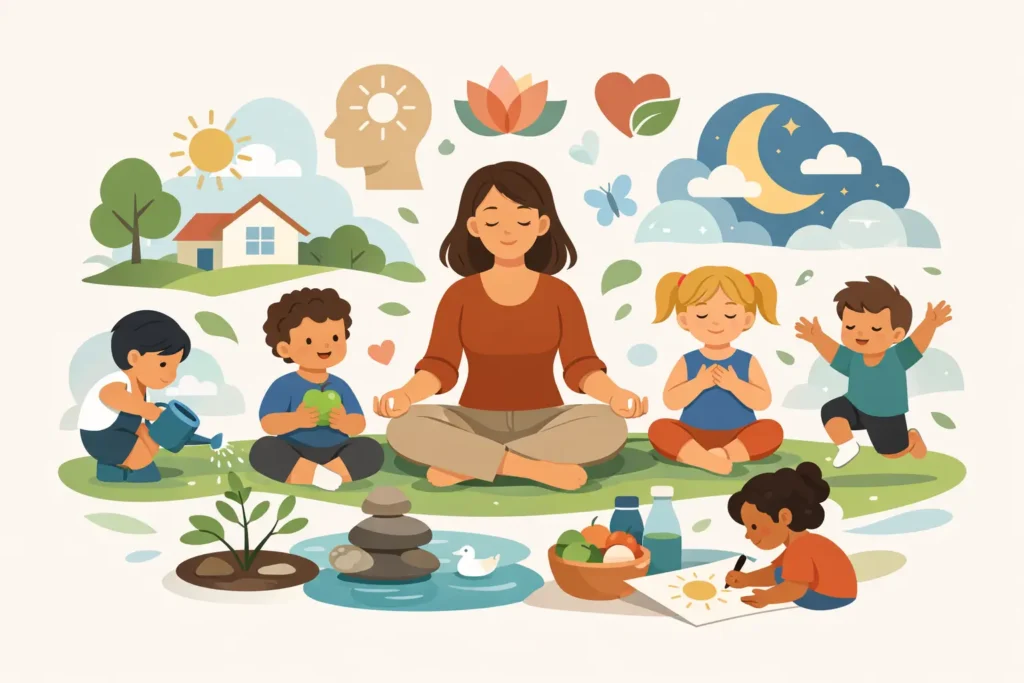
A child who feels safe enough to ask a question, try again after a mistake, and invite a friend into play is already building skills that matter far beyond preschool. Holistic wellbeing in early childhood education is about nurturing those everyday moments, alongside early literacy, number skills, and school routines. It recognizes that happy hearts and healthy minds are not separate from learning. They are where meaningful learning begins.
For parents, especially those balancing work and family life, a caring early education setting can become an important extension of home. Children need more than a busy schedule or a worksheet-filled day. They need warm relationships, room to move, chances to explore, clear boundaries, and educators who notice who they are becoming.
What holistic wellbeing means for young children
Holistic wellbeing means supporting the whole child: emotional, social, physical, intellectual, and moral growth. In the early years, these areas are closely connected. A child who has learned to name a feeling can ask for help instead of pushing. A child who feels confident climbing, running, and balancing outdoors is also practicing courage and persistence. A child who is listened to during story time is more likely to share ideas and develop language.
This approach does not mean academics are forgotten. Early reading, writing, speaking, and number awareness still matter. The difference is that children learn them in ways that feel purposeful and enjoyable. They might recognize letters while making signs for a pretend shop, count ingredients while preparing pizza, or build vocabulary while describing why a homemade boat floats.
When learning connects to a child’s real experiences, it is easier for them to stay curious. Rather than feeling pressured to perform, they begin to see themselves as capable learners.
A safe, loving foundation comes first
Young children cannot always explain when they feel worried, tired, left out, or overwhelmed. Their feelings often appear through behavior: tears at drop-off, frustration during a task, silence in a group, or difficulty sharing. Responsive educators look beyond the behavior and help children feel understood.
A predictable day is one of the simplest ways to create security. Knowing that there will be a welcoming arrival, active play, meals, rest, stories, and time to go home helps children settle into their environment. Gentle routines also teach responsibility. Children learn to put away materials, wash hands, wait for a turn, and care for shared spaces.
Individual attention matters within those routines. Some children are ready to join a large group quickly, while others need a familiar teacher nearby before they feel comfortable. Some are eager speakers; others communicate first through drawing, movement, or quiet observation. A nurturing classroom makes space for these differences without labeling children too soon.
For working parents, dependable extended care can be especially valuable when it continues this same sense of warmth and structure. Children should not simply be supervised until pickup. Their afternoons can include rest, outdoor movement, creative play, reading, and calm connection with trusted adults.
Play is serious work for growing minds
Play is often mistaken for a break from learning. For young children, it is one of the most natural forms of learning. Through play, children test ideas, negotiate with friends, solve small problems, and make sense of the world around them.
Consider a group of children building a block city. They are not only stacking blocks. They are comparing sizes, deciding where a bridge should go, using language to explain a plan, and coping when a tower falls down. An educator can extend that learning with thoughtful questions: “What could make the bridge stronger?” or “How can everyone have a role?”
Hands-on projects bring the same benefits. Watching chicks grow teaches gentleness, patience, and observation. Baking introduces measuring, sequencing, and cooperation. Observing water vapor encourages children to notice change and ask why it happens. Creating geometric forms turns an abstract idea into something a child can touch and proudly show a parent.
Not every activity needs a perfect final product. In fact, process matters greatly. When children are allowed to experiment, make a mess, revise an idea, and try again, they develop resilience. That is an important trade-off for adults to accept: a carefully directed craft may look neat, but open-ended exploration often creates deeper confidence.
Movement and outdoor time support healthy development
Children are meant to move. Running, climbing, digging, carrying, balancing, and playing games all build strength and coordination. They also help children release energy, regulate emotions, and return indoors ready to focus.
Outdoor time offers something classrooms cannot fully replicate: changing weather, natural textures, open space, and opportunities for healthy, supervised risk-taking. A child navigating stepping stones or learning to swing independently is making judgments about their own body and abilities. With caring guidance, these experiences build confidence without ignoring safety.
The amount and type of outdoor activity may depend on the weather, the child’s age, and the available space. Yet the goal remains the same: regular movement should be part of the day, not a reward after “real” learning is finished. Physical wellbeing supports attention, sleep, appetite, and emotional balance.
Kindness and character grow through daily practice
Character education is most meaningful when children experience it, rather than simply hear about it. Saying “be kind” is helpful. Showing a child how to check on a sad friend, offer a toy, apologize sincerely, or include someone in a game is far more powerful.
Educators play a central role by modeling respect in their own words and actions. Children notice whether adults speak calmly, listen carefully, and treat mistakes as opportunities to learn. They also need help resolving conflict. Sharing does not always happen naturally at age four or five, and expecting it to can lead to frustration.
A teacher might acknowledge both children’s wishes, help them use words, and guide them toward a fair next step. Over time, children learn empathy, patience, and self-control. These are not small extras. They are the foundations of friendship and a positive school experience.
Early learning should build confidence, not pressure
Parents understandably want to see progress in reading, writing, English communication, and school readiness. A high-quality early childhood program can support all of these goals while protecting a child’s joy in learning.
Reading aloud each day helps children hear rich language, understand story structure, and connect books with comfort and imagination. Songs, conversations, letter games, and meaningful writing activities create a strong base for literacy. Children who are encouraged to speak in English during play, projects, and routines can build confidence naturally, especially when they are not afraid of making a mistake.
There is no single timetable that fits every child. One child may begin reading words early, while another first needs time to strengthen listening, vocabulary, or fine motor control. Progress is still progress when it is steady, supported, and suited to the child. The most helpful question is not “Are they ahead?” but “Are they growing in confidence and readiness?”
At Summer Tots, purposeful learning is designed to sit alongside play, practical exploration, outdoor activity, and character development. This gives children opportunities to build skills while still enjoying the wonder and warmth that childhood deserves.
How parents and educators can work together
Children benefit when the important adults in their lives share information and encouragement. A parent may notice that their child has become interested in insects, is struggling with morning goodbyes, or has started using new words at home. An educator may see a child showing leadership in group play, gaining confidence with a book, or needing extra support with a friendship.
These small observations help create continuity between home and school. Parents do not need to turn every evening into a lesson. Reading together, talking about the day, allowing time for independent play, and giving children small responsibilities are meaningful ways to support wellbeing at home.
The goal is not to create a perfect child or a perfect routine. It is to give each child steady love, guidance, and opportunities to grow. When children know they are safe, valued, and capable, they carry that feeling into the classroom, the playground, and the new challenges waiting ahead.