
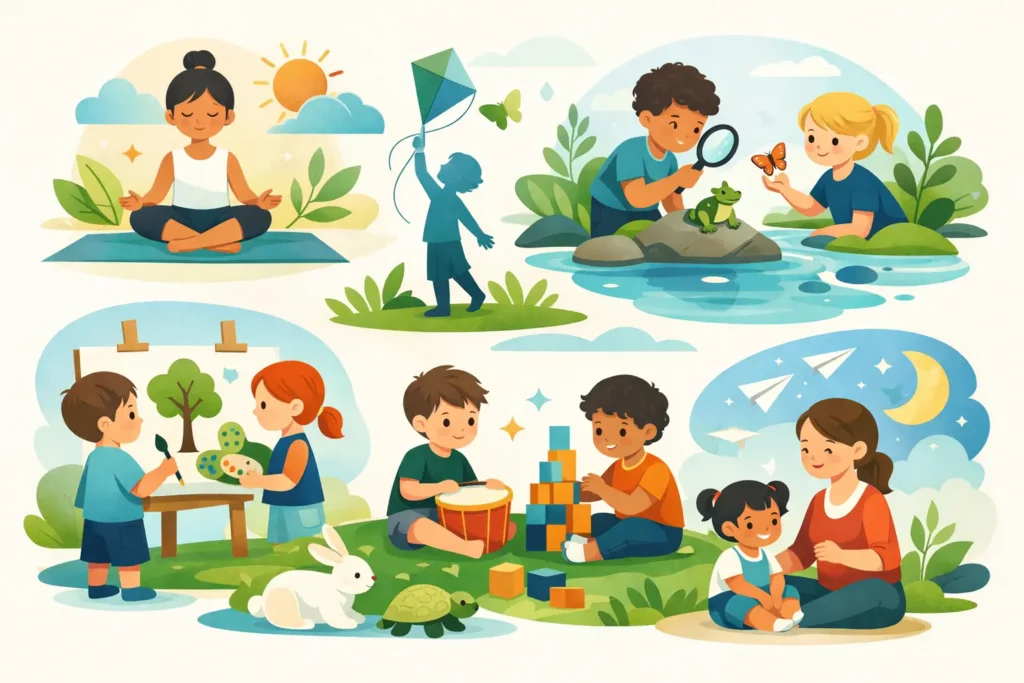
A child proudly carrying a tray of pizza toppings, waiting patiently for a turn on the slide, or telling the story behind a painting is learning far more than one skill. Holistic activities for early years give children these meaningful moments, helping their minds, bodies, emotions, and relationships grow together. For young children, joyful learning is not separate from play. It happens through play.
For parents, this approach can feel reassuring. Rather than asking a child to sit still and memorize information before they are ready, a holistic early learning environment gives them safe, purposeful ways to explore. They build early literacy while sharing stories, physical strength while playing outdoors, confidence while trying new tasks, and kindness while learning alongside friends.
Why Holistic Activities Matter in the Early Years
The preschool and kindergarten years are full of rapid change. Children are learning to communicate their needs, manage big feelings, use their hands with greater control, listen to others, and make sense of the world around them. These abilities are closely connected. A child who feels safe and understood is more likely to speak up, try again after a mistake, and enjoy learning.
That is why meaningful activities should not focus only on worksheets or early academic drills. Letter recognition and number skills matter, but they become more useful when children can connect them to real experiences. Reading a recipe, counting seeds for a garden project, or writing a name on a drawing gives early learning a purpose.
A balanced program also recognizes that children develop at different speeds. One child may eagerly talk in English but need more time with pencil control. Another may enjoy building detailed structures yet feel shy in a group. Caring educators observe these differences and offer gentle encouragement, without turning childhood into a race.
10 Holistic Activities for Early Years Growth
1. Grow something together
Planting herbs, beans, or small flowers invites children to care for a living thing. They can scoop soil, count seeds, notice changes each morning, and learn that growth takes patience. It also creates lovely opportunities for conversation: What does the plant need? How can we look after it? What do we do if a leaf falls off?
For younger children, the sensory experience is often the main benefit. Feeling dry soil, pouring water, and seeing a bright green sprout build curiosity and hand strength. For older preschoolers, a simple picture journal can add early writing and observation skills.
2. Cook a simple snack
Preparing fruit skewers, sandwiches, sushi rolls, or homemade pizza helps children feel capable. They practice following directions, using descriptive words, waiting for a turn, and making choices. Measuring, spreading, mixing, and arranging ingredients strengthen small hand muscles needed later for writing.
Cooking also supports healthy habits without making food feel like a lesson. Children are often more willing to taste something new when they have helped prepare it. Adult supervision is essential, especially around heat and cutting tools, but even safe tasks such as washing produce or sprinkling cheese can be meaningful.
3. Turn a story into play
After reading a favorite picture book, invite children to act out the characters, create a new ending, or build a setting with blocks and loose materials. This brings language to life. A quiet child may feel more comfortable speaking as a brave rabbit, a helpful doctor, or a curious explorer.
Story play develops listening, imagination, vocabulary, and empathy. Ask simple open-ended questions: How do you think the character feels? What could help them? There is no need to correct every answer. The goal is to show children that their ideas matter.
4. Make art from everyday materials
Cardboard tubes, leaves, fabric scraps, paper plates, and clean containers can become a rocket, a family portrait, or a tiny neighborhood. Open-ended art is especially valuable because there is no single “right” result. Children learn to plan, adapt, and take pride in their own choices.
Adults can support the process by naming effort rather than judging the final product. “You kept trying different ways to make that tower stand” builds a stronger message than simply saying, “That is pretty.” This approach helps children develop resilience and confidence in their abilities.
5. Create a water investigation
Water naturally captures children’s attention. With bowls, cups, spoons, sponges, and a few safe objects, children can explore floating and sinking, pouring and measuring, or how ice changes as it melts. They are practicing early science skills: noticing, predicting, testing, and talking about what happened.
A floating boat project can be as simple or detailed as a child needs. Some children will enjoy decorating the boat. Others will want to change the shape repeatedly to see what works best. Both approaches have value, because curiosity and persistence are at the heart of learning.
6. Build an obstacle course outdoors
Outdoor movement supports healthy bodies, but it also helps children develop self-control and courage. A simple course might include stepping over cushions, balancing along a line, crawling through a tunnel, and throwing a beanbag into a basket. Children learn to judge space, coordinate their movements, and keep going after a wobble.
The activity should be challenging but achievable. If it is too easy, children lose interest. If it is too difficult, they may become discouraged. A caring adult can adjust the course, offer a hand when needed, and celebrate each child’s personal progress rather than comparing them with friends.
7. Care for animals with kindness
Observing chicks, fish, caterpillars, or classroom pets can teach children gentleness and responsibility. They learn to use quiet voices, move carefully, and recognize that another living creature has needs. Even if a school does not keep animals, watching birds outdoors or discussing a family pet can spark the same caring conversations.
This kind of activity supports character development in a very natural way. Children begin to understand that kindness is not only something we say. It is something we practice through our actions.
8. Set up a pretend community
A pretend grocery store, clinic, restaurant, or construction site gives children a chance to use real-world language. They may write a shopping list, count play money, greet a customer, explain a problem, or work with friends to build something together. These experiences strengthen communication while making early math and literacy feel useful.
Role play also gives educators insight into children’s thoughts and feelings. A child who has recently visited a doctor may replay the experience. With patient guidance, pretend play can help children understand unfamiliar situations and regain a sense of control.
9. Practice calm moments together
Holistic learning includes emotional well-being. A short breathing game, gentle stretching, quiet music, or a cozy reading corner can help children pause after an exciting activity. These are not punishments for being energetic. They are tools that show children how to notice and care for their feelings.
Try language that is simple and warm: “Your body looks like it needs a quiet minute” or “Let’s take three slow breaths before we try again.” Over time, children can begin to recognize when they need help settling themselves.
10. Give children helpful responsibilities
Putting books back on a shelf, feeding a plant, setting out cups, or helping a friend find their bag may seem small. Yet these daily jobs tell children that they belong and can contribute. Responsibility builds confidence, independence, and respect for shared spaces.
At Summer Tots, practical projects and everyday routines are valued because children learn best when they are trusted with meaningful roles. The adult’s job is not to do everything faster. It is to give children enough time to try, make manageable mistakes, and feel the satisfaction of succeeding.
Making Holistic Learning Work for Your Family
You do not need a perfect craft setup or a full day of planned activities at home. A few thoughtful moments can have a lasting effect. Invite your child to help rinse vegetables, describe clouds on the way home, choose a bedtime book, or talk about one kind thing they did that day.
The most helpful question is often not “What did you learn?” but “What did you enjoy?” Their answer may lead to a conversation about friendship, a new word, a tricky problem they solved, or something they want to try tomorrow. When children feel heard, learning becomes connected to happiness and belonging.
Give your child space to be messy, curious, active, thoughtful, and wonderfully themselves. With patient guidance and many small chances to participate, they can grow into a confident learner with a happy heart and a healthy mind.