
A preschooler who melts down because the blue cup is being washed is not trying to make life difficult. They are having a big feeling with a still-growing ability to manage it. The good news for parents is that how preschoolers develop self regulation is not about expecting perfect behavior. It is about giving children repeated, caring chances to notice feelings, pause, choose a response, and recover when things do not go their way.
Self-regulation grows slowly, through thousands of ordinary moments: waiting for a turn on the slide, putting away blocks before lunch, taking a breath after a disagreement, or trying again when a puzzle piece will not fit. With patient adults nearby, these small moments become building blocks for confidence, friendships, learning, and happy hearts.
What self-regulation looks like in preschool
Self-regulation is a child’s developing ability to manage emotions, attention, energy, and behavior. For a young child, it may look like using words instead of hitting, sitting with a story for a few more minutes, following a simple direction, or calming down with help after disappointment.
It does not mean a child is always quiet, obedient, or cheerful. Preschoolers are meant to be active, curious, and expressive. A child who is excited during a science activity or deeply frustrated when a tower falls is showing real feelings. The goal is not to remove those feelings. It is to help the child learn safe, respectful ways to move through them.
Every child develops at a different pace. Temperament, tiredness, hunger, language skills, changes at home, and a busy day can all affect behavior. A child may wait beautifully in line one morning and struggle with the same task the next day. That is normal. Progress is usually seen over time, not in one perfect afternoon.
How preschoolers develop self regulation through connection
Young children borrow calm from the adults who care for them. Before they can reliably calm themselves, they need someone to stay close, speak gently, and show them that difficult feelings can be handled safely.
When a child cries because it is time to leave the playground, a caring adult might say, “You are sad because you want more time outside. It is hard to stop when you are having fun. We can take one last look at the garden, then walk together.” The limit remains, but the child feels seen. Over time, they begin to use some of that language and steadiness for themselves.
This is why warm, predictable relationships matter so much at home and at school. Children are more able to take turns, listen, and try new things when they trust that adults will guide them with kindness. Firm boundaries and affection work together. A child needs to know both, “I understand,” and, “I will help you do this safely.”
Naming feelings gives children useful words
A preschooler may not yet say, “I am overwhelmed because the room is noisy.” They may cry, grab, run away, or refuse to join in. Adults can help by putting simple words to what they observe: “You look disappointed.” “Your body is very excited.” “You seem worried about joining the group.”
Feeling words do not excuse unkind behavior, but they make it easier to teach a better next step. “You are angry. I will not let you push. Let’s use your words: ‘I was using that truck.’” Clear, short phrases are easier for young children to remember when emotions are high.
Routines make space for growing independence
A predictable day helps preschoolers feel secure because they know what comes next. Familiar routines for arrival, meals, toileting, cleanup, rest, and going home reduce uncertainty. When children do not have to guess every part of the day, they have more energy for learning and managing themselves.
Visual cues can be especially helpful. A simple picture sequence showing wash hands, eat, clear plate, and choose a book can guide a child through a routine without repeated reminders. At home, families might use the same approach for getting dressed or preparing for bedtime.
Choices also build regulation when they are small and genuine. Instead of asking, “What do you want to do?” during a rushed morning, try, “Would you like to wear the red shirt or the green shirt?” The child gains a healthy sense of control, while the adult keeps the routine moving. Too many choices, however, can be overwhelming. Two options are often enough.
Play is practice for real life
Play gives preschoolers a joyful place to rehearse self-regulation without feeling like they are being tested. During pretend play, children negotiate roles, wait for a turn, manage excitement, and solve disagreements. A child making pizza in a play kitchen may need to share ingredients, listen to a friend’s idea, and adapt when the pretend oven is already full.
Games with simple rules are equally valuable. Freeze dance, Simon Says, and turn-taking board games encourage children to listen, stop their bodies, remember directions, and cope with winning or losing. The learning comes from the experience, not from getting every rule right.
Hands-on projects can offer the same practice. Baking, making floating boats, building geometric forms, or observing water vapor asks children to focus, follow steps, and persist when the first attempt changes shape or sinks. Outdoor play matters, too. Running, climbing, digging, and balancing help children understand their bodies and release energy in healthy ways. A child who has had time to move is often more ready to settle for a story or a group activity afterward.
At Summer Tots, purposeful play and practical exploration create natural opportunities for children to practice patience, cooperation, curiosity, and pride in their own effort.
Adults can coach the pause, not demand it
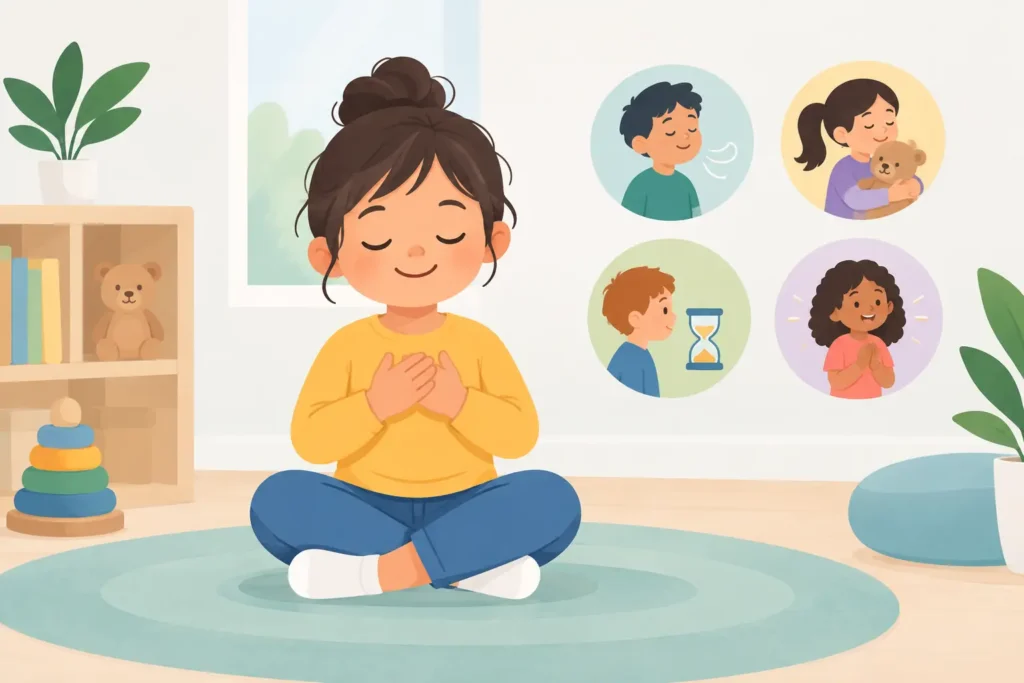
“Calm down” is a difficult instruction for a preschooler who does not yet know how. It helps more to offer a specific, practiced strategy. Some children respond to slow breaths, while others need a sip of water, a quiet corner, a cuddle, a chance to squeeze play dough, or a short walk with an adult.
The strategy should fit the child and the moment. Deep breathing may be useful before a turn at show-and-tell, but it may not be enough for a child who is exhausted at the end of a long day. Sometimes the most supportive response is food, rest, fewer demands, and a gentle reset.
Adults can model their own pauses, too. Saying, “I am feeling frustrated, so I am going to take one slow breath before I answer,” shows children that everyone is still learning. This is not about performing calm perfectly. It is about making coping skills visible.
Responding to challenging moments with care
When behavior becomes difficult, connection should come before a long explanation. First make sure everyone is safe. Get close, use a calm voice, and keep words brief. A child who is crying loudly or throwing toys is not ready for a detailed lesson.
After the child has settled, return to what happened. You might say, “You wanted the train, and you hit when you had to wait. Hitting hurts. Next time, you can say, ‘Can I have a turn when you are done?’” Then help the child practice the words. Repair is powerful, whether that means checking on a friend, helping rebuild a knocked-over block tower, or offering a sincere apology.
Consistency matters, but so does curiosity. If a normally cheerful child is having frequent outbursts, consider what may be underneath: a new sibling, a disrupted sleep schedule, worry, illness, hunger, or a task that feels too hard. Talking openly with teachers can reveal patterns and help home and school use similar language and strategies.
Small habits families can use every day
Self-regulation is strengthened in ordinary family life. Build in a little extra time for transitions when possible, especially before school, meals, and bedtime. Give a warning before changing activities: “Five more minutes, then we clean up.” Follow through kindly, even if the child protests.
Read stories and pause to wonder about characters’ feelings. During play, notice effort: “You kept trying even when that was tricky.” At dinner or bedtime, a simple question such as, “What made you happy today? What felt hard?” helps children reflect without pressure.
Most of all, aim for progress rather than perfection. A child who once screamed whenever play ended may begin to cry but walk with you. Later, they may use the words you practiced. Those are meaningful steps, and they deserve to be noticed.
When children are surrounded by calm guidance, predictable routines, active play, and adults who believe in their potential, they gradually learn something lasting: big feelings are safe, help is available, and they can find their way back to steady.