
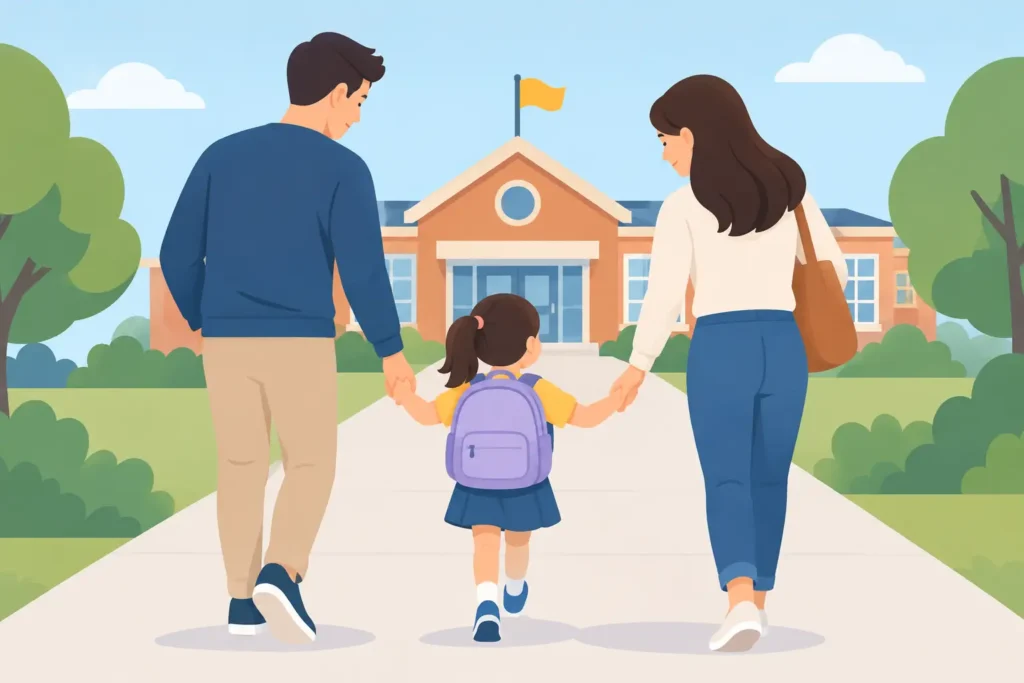
The first kindergarten morning can feel surprisingly big. Your child may be excited about a new backpack, new friends, and new activities, while you are quietly wondering whether they will settle in, eat lunch, ask for help, or miss home. This parent guide to the kindergarten transition is here to make that first step feel gentler for the whole family.
A successful start is not about a child arriving already able to read, write, or sit still for long periods. It is about helping them feel safe enough to try, communicate their needs, and trust that school is a happy place where caring adults will help them grow. With a little preparation and plenty of patience, kindergarten can become a joyful beginning rather than a stressful leap.
Parent Guide to the Kindergarten Transition: Start With Security
Children often manage change best when the adults around them are calm, clear, and consistent. Before the first day, talk about kindergarten in simple, positive language. Explain what will happen: you will arrive together, they will greet their teacher, enjoy activities and play, have meals or snacks, and you will return at pickup time.
Keep the message honest. If your child says, “I might miss you,” avoid brushing the feeling aside. Try saying, “You may miss me, and your teacher will take care of you. I will always come back after school.” This gives them reassurance without promising that they will never feel nervous.
If possible, let your child visit the school or see photos of their classroom, teacher, playground, and arrival area before their first day. Familiar details reduce uncertainty. Point out the places where they may read stories, build with blocks, paint, eat, and play outdoors. A child who knows what to expect has more room to feel curious.
A short, predictable goodbye is especially helpful. Lingering because your child is upset can accidentally make the separation feel more alarming. Offer a warm hug, use the same goodbye words each day, and leave with confidence after placing your child in the care of their teacher. Tears at drop-off can be difficult for parents, but they do not necessarily mean a child is unhappy all day. Many children settle once they join a familiar activity and see other children at play.
Build Routines Before School Begins
Kindergarten asks children to move through a day with more structure. They do not need a strict schedule at home, but a few steady routines will make school days feel more manageable.
Begin with sleep. Gradually shift bedtime and wake-up time a week or two before school starts, especially after holidays or a relaxed summer schedule. Well-rested children are better able to handle frustration, listen to directions, and enjoy social play.
Practice a calm morning routine as well. Let your child try getting dressed, putting on shoes, using the bathroom, washing hands, and packing a water bottle with your guidance. These small acts of independence build real confidence. If they need help, that is perfectly normal. The goal is not perfection but familiarity.
Mealtimes matter, too. If your child will bring food to school, practice opening containers, unwrapping snacks, and cleaning up afterward. Choose food they can manage independently and are likely to eat. The first weeks are not the best time to introduce an unfamiliar lunch simply because it looks ideal on paper.
For working families, an extended day can be a wonderful support, but it may take adjustment. Explain the full rhythm of the day: learning time, meals, rest or quiet time, outdoor play, and pickup. When children understand that school includes both purposeful activities and caring routines, they are less likely to see a longer day as something uncertain.
Practice the Skills That Help Children Feel Capable
Academic readiness is only one part of kindergarten readiness. Children benefit just as much from being able to express feelings, take turns, and try again when something does not work the first time.
At home, make room for everyday conversations. Ask open questions such as, “What was your favorite part of the park?” or “How could we help when someone feels sad?” Listen without rushing to correct every answer. These exchanges strengthen language, confidence, and the habit of sharing thoughts with adults.
Role-play common school moments using stuffed animals or simple pretend play. A teddy bear can practice asking, “Can I play?” Another can ask a teacher for help opening a lunch box. You can also act out what to do when a toy is unavailable: “I can wait for a turn,” or “Can we use it together?” Rehearsing these words at home gives children a useful script when emotions run high.
Reading together each day is another gentle preparation. Let your child choose books, notice pictures, predict what may happen next, and retell a favorite part. There is no need to turn every story into a lesson. The warmth of sitting close, hearing language, and discovering that books hold ideas is a powerful foundation for literacy.
Hands-on activities build readiness in ways worksheets cannot always provide. Bake simple muffins and talk about measuring. Make a boat from recycled materials and test whether it floats. Watch ice melt or observe steam rise from warm food. These experiences encourage children to question, describe, compare, and persist. They also show children that learning is active, creative, and fun.
Let Play Do Some of the Preparation
A child does not need to give up play to prepare for kindergarten. Play is where young children practice many of the skills school will ask of them.
Outdoor play supports balance, coordination, and confidence in their bodies. Running, climbing, carrying, digging, and balancing help children develop strength while releasing energy. After active play, many children find it easier to focus on a story, drawing activity, or group conversation.
Creative play develops flexibility. When children build a tall tower, make a pretend restaurant, or turn boxes into a spaceship, they are planning, negotiating, solving problems, and coping when their ideas change. These are meaningful kindergarten skills.
Play with other children also offers practice in kindness and boundaries. There will be disagreements, and that is part of learning. Rather than stepping in immediately, help your child name what happened and consider a next step: “You both wanted the truck. What could you say?” Children do not need to handle every problem alone, but they grow when adults guide them toward respectful solutions.
Support Big Feelings Without Making Them Bigger
Even children who appear eager may have wobbly moments during the transition. They may become clingy at bedtime, more tired than usual, or upset over small things. A new environment requires energy, and behavior can be a child’s way of showing that they are still adjusting.
Try to keep afternoons and weekends relatively simple during the first few weeks. Extra activities may be enjoyable, but too many commitments can leave a child overstimulated. A quiet snack, a little outdoor time, a familiar book, and an early bedtime can be exactly what they need.
When your child shares a worry, listen first. Saying “Don’t be scared” is well intentioned, but it can make a child feel that the feeling is wrong. Instead, try, “That sounds hard. Tell me more.” Then remind them of a practical support: their teacher, a friend, a comfort item if permitted, or a phrase they can use to ask for help.
It also helps to avoid asking only, “Did you have fun?” Some children cannot answer that broad question after a full day. Ask something smaller: “What did you play outside?” “What made you laugh?” or “Who sat near you?” Over time, these small conversations help you understand how your child is settling in.
Partner With Your Child’s Educators
Teachers see a side of your child that may be different from the one you see at home. They can tell you how your child joins group activities, responds to routines, approaches new materials, and connects with peers. Share useful information with them, too, such as comfort strategies, food needs, family changes, or words your child uses for the bathroom or emotions.
A strong school-home partnership works best when it is ongoing, not only used when there is a problem. Brief updates can help everyone respond consistently. If your child is learning to wait for a turn or speak up more clearly, you can reinforce the same skill at home. If they are suddenly more tired after school, educators can help you understand whether the days are particularly busy or whether an adjustment to routine may help.
At Summer Tots, children are supported through purposeful learning, outdoor experiences, practical projects, and caring guidance from educators who understand that every child settles in at their own pace. Some children walk in ready to explore; others need a little more time to watch, hold a familiar hand, and build trust. Both paths are normal.
The kindergarten transition is not a test of your parenting or your child’s ability. It is a new relationship, a new rhythm, and a collection of small brave moments. Give your child time, celebrate the effort behind each new step, and let them know that home and school are both places where they are loved, safe, and ready to grow.