
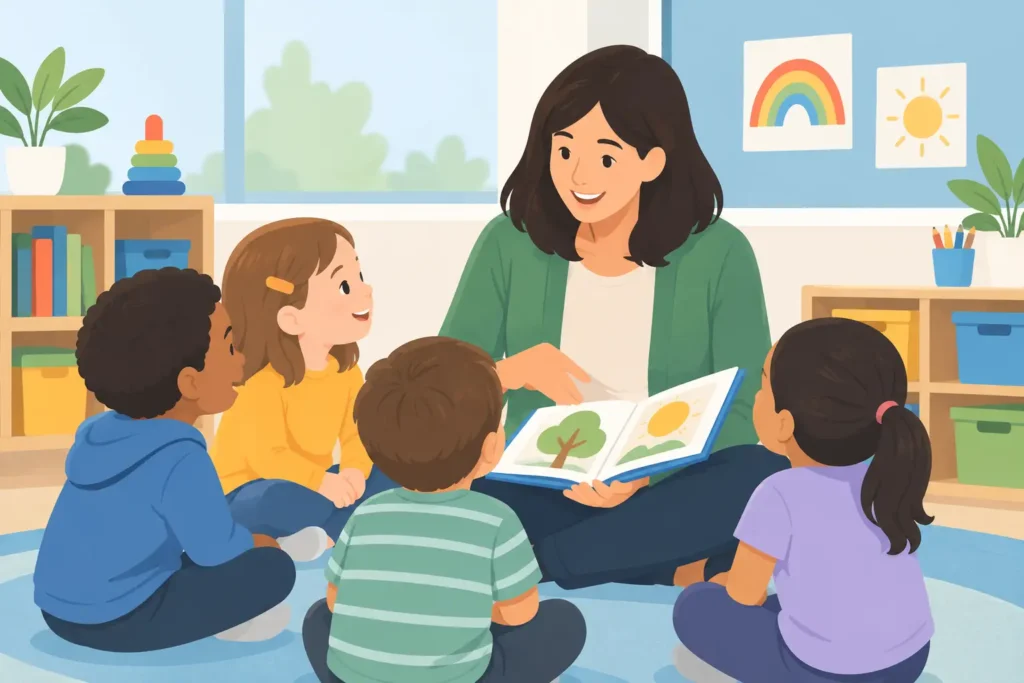
A child may not remember every worksheet from kindergarten, but they will remember how their teacher made them feel. A thoughtful kindergarten teacher quality review helps parents look past polished brochures and focus on the everyday moments that shape a child’s confidence: being welcomed at the door, encouraged to try again, comforted after a disappointment, and noticed for who they are.
For families, choosing a kindergarten is about more than preparing for first grade. It is about finding a safe, joyful place where a child can build happy hearts and healthy minds while parents feel informed, respected, and supported.
What a Kindergarten Teacher Quality Review Should Really Consider
Credentials and years of experience matter, but they are only the beginning. A capable kindergarten teacher needs to understand young children, guide a group with kindness, plan meaningful learning, and respond calmly when the day does not go as planned.
The best reviews consider the whole classroom experience. Does the teacher help children feel secure? Do activities invite curiosity as well as build early reading and number skills? Are children learning how to take turns, use words for their feelings, and care for one another?
A strong teacher does not expect every child to learn in the same way or at the same pace. Some children are ready to speak up in a group, while others need more time to observe. Some are eager to write letters, while others first need to strengthen their hands through painting, building, cutting, and play. Quality teaching makes room for these differences without losing sight of each child’s progress.
Look for Warmth That Is Paired With Purpose
A warm teacher is not simply cheerful. Warmth is shown through attention, patience, and the ability to make a child feel known. Listen to how the teacher speaks to children. Are directions respectful and clear? When a child is upset, does the teacher get down to the child’s level and help them name what happened?
At the same time, a nurturing classroom still needs structure. Young children thrive when they know what comes next, where materials belong, and what is expected during meals, play, learning time, and transitions. Gentle routines help children feel safe enough to become independent.
Parents can often sense this balance during a visit. The room does not have to be silent to be well managed. In fact, a healthy kindergarten classroom often has lively conversation, laughter, questions, and the occasional disagreement. What matters is whether the teacher guides that energy with calm confidence.
Notice How Learning Comes Alive
Kindergarten children learn deeply when they can touch, test, create, move, and talk. A quality teacher turns ordinary moments into chances for discovery. Baking can become a lesson in measuring and following steps. Making a floating boat can lead to questions about weight and water. Watching water vapor on a lid can spark early scientific thinking.
These experiences are not extras that distract from learning. They give meaning to new vocabulary, early math, problem-solving, and communication. Children are more likely to remember a word when they have used it while raising chicks, planting seeds, preparing pizza, or creating geometric forms with their own hands.
Ask how the teacher plans activities and adjusts them for different children. A prepared educator has clear learning goals, but also notices when children’s curiosity takes the activity in a promising new direction. If a child asks why a shadow changes or why dough rises, a thoughtful teacher does not rush past the question. They help the class wonder, explore, and find words for what they see.
Watch How the Teacher Builds Confidence and Character
Academic readiness matters, but it is difficult for a child to learn when they are worried, withdrawn, or afraid of making mistakes. Kindergarten is a precious time for children to practice being part of a community.
Quality teachers guide children through small social challenges every day. They show them how to ask for a turn, apologize after hurting a friend, include someone in play, and keep trying when a puzzle or writing task feels hard. These lessons are not delivered only during a special character activity. They are woven into conversations, stories, outdoor play, and classroom routines.
Notice whether the teacher praises only correct answers or also recognizes effort, kindness, and persistence. A child who hears, “You kept working on that,” learns something different from a child who hears only, “Good job.” Specific encouragement helps children understand their own growth.
It also helps to ask how teachers handle conflict. Children will have disagreements. That is normal. The question is whether adults use those moments to shame children or to teach them better ways to communicate. Clear boundaries and compassionate guidance can exist together.
Consider Individual Attention, Especially in a Group Setting
Every kindergarten class has shared routines and group activities, yet every child arrives with a different personality, home language, interest, and level of readiness. Parents should ask how teachers observe and support individual development.
A quality teacher notices when a normally talkative child becomes quiet, when a child needs more challenge, or when a child is struggling to join play. They share useful observations with families rather than offering only general comments such as “Everything is fine.” Parents deserve to hear about the small victories too: a child who finally volunteers an answer, reads a familiar word independently, waits patiently for a friend, or uses a new English phrase with confidence.
Individual care does not mean a teacher can give one-on-one attention every minute. It means the classroom is organized so children are seen. Class size, staff support, and daily routines all influence how possible that is. A school should be open about these practical details.
Ask How Teachers Partner With Parents
A kindergarten teacher sees a child in a different setting from home. Parents see another side entirely. When teachers and families communicate with trust, children benefit from the consistency.
Look for communication that is warm, specific, and two-way. Families should feel comfortable sharing a child’s new routine, worry, interest, or achievement at home. In return, teachers should explain what children are learning and offer realistic ways to continue that growth outside school, whether through reading together, talking about a nature walk, or practicing independence during simple daily tasks.
Regular updates are helpful, but quality matters more than volume. A photo without context can be pleasant; an observation about what a child tried, said, or learned is far more meaningful. For working parents, dependable communication also offers reassurance that their child is cared for throughout the extended day, not simply supervised.
Questions to Bring to a Kindergarten Visit
A visit is often more revealing than a long list of promises. Bring a few focused questions, then give yourself time to watch the teacher with children.
- How do you help a child who is nervous at drop-off or slow to settle in?
- How do you support children at different reading, writing, and language levels?
- What does outdoor play look like, and how do children learn through it?
- How do you guide sharing, conflict, and respectful behavior?
- How will you keep our family informed about our child’s development?
Listen for practical examples rather than perfect-sounding phrases. A teacher who can describe a real situation, explain what they did, and share what the child learned is showing reflection and care.
Trust What You See and What Your Child Feels
No classroom is perfect every moment. A rainy day can make children restless. A new child may need extra reassurance. A project may become messier or take longer than planned. These are not signs of poor teaching by themselves. Often, the most telling sign is how the teacher responds.
A positive kindergarten environment feels purposeful without feeling pressured. Children should have opportunities to learn English, develop literacy, explore practical projects, move their bodies outdoors, and build friendships. They should also have space to be young: to ask questions, make mistakes, imagine, and feel proud of their own discoveries.
At Summer Tots, we believe a teacher’s greatest work is helping each child feel safe enough to grow brave. When parents choose educators who combine skill, affection, clear guidance, and genuine curiosity about children, they give their child more than a good start in school. They give them a caring foundation for the person they are becoming.