
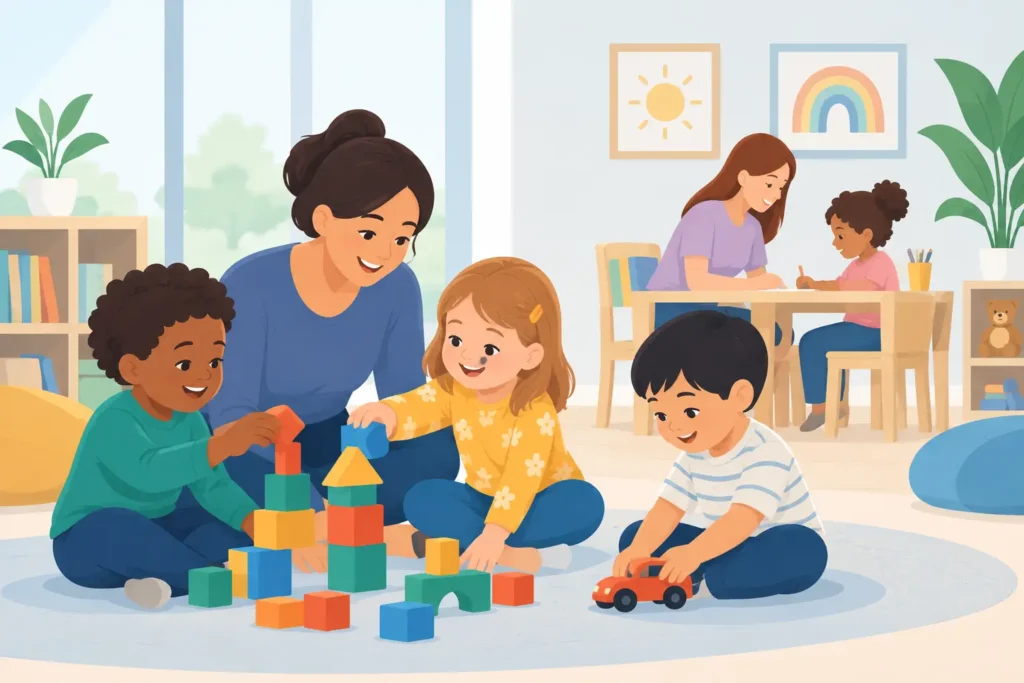
The right childcare choice is about much more than covering the hours between drop-off and pick-up. For young children, childcare options shape their first friendships, their sense of security away from home, and the way they begin to see themselves as learners. For parents, the decision often carries both practical pressure and a heartfelt hope: that your child will be safe, happy, understood, and growing well while you are apart.
A good setting does not ask a child to simply get through the day. It gives them caring relationships, meaningful play, patient guidance, and small daily chances to become more confident. The best fit will look different for every family, but knowing what to look for can make the decision feel clearer.
Childcare options come with different strengths
Families may consider care from relatives, a nanny or home-based caregiver, a daycare center, a preschool program, or a kindergarten with extended care. Each arrangement can be valuable when it matches a child’s needs and a family’s daily rhythm.
Care with a relative or familiar caregiver may offer comfort, flexibility, and close personal attention, especially for babies and very young toddlers. A nanny can also provide a home-based routine that works around changing work hours. These arrangements can be a wonderful choice when caregivers share your expectations around meals, rest, screen time, play, and behavior.
A group setting offers something different. Children learn to wait for a turn, express a need with words, join a game, and recover after a disagreement with support from adults. These moments may seem small, but they build the social confidence children need for school and life. A well-run preschool or kindergarten also brings a predictable rhythm to the day, with time for stories, movement, creative work, outdoor exploration, meals, and rest.
For preschool- and kindergarten-age children, many working families find that an education-led program with extended day care provides the most balanced support. It combines dependable care with purposeful learning, so a child is not moving between separate environments just to complete the day.
Look beyond supervision
Safety is the foundation of every childcare decision. Parents should feel reassured by secure arrival and departure routines, clean spaces, attentive adults, appropriate supervision, and clear communication when a child is unwell or needs extra comfort. Yet safety is only the beginning.
Children also need to feel known. Notice whether educators greet children warmly, get down to their eye level, and respond with patience. Ask how teachers help a child who is shy, frustrated, or missing home. A child may need time to settle, but they should never be expected to cope with big feelings alone.
The environment matters, too. Bright displays and new toys are pleasant, but purposeful spaces tell a deeper story. Look for books within reach, materials that invite children to build and create, areas for quiet play, and outdoor spaces where children can run, climb, observe, and imagine. Young children learn with their whole bodies. A day spent sitting still for too long is rarely a day that supports healthy development.
Choosing childcare options for your child
Rather than asking which program is best in general, ask which setting is best for your child right now. A confident, highly social child may enjoy a lively group environment. A child who takes longer to warm up may thrive in a smaller class with gentle, consistent teachers. Neither temperament is a problem to fix. It simply helps guide the kind of support your child needs.
Your family’s schedule deserves equal consideration. If you have long workdays or an unpredictable commute, a program with extended care can reduce daily stress for everyone. Children benefit when pickup feels calm rather than rushed. They have time to finish a puzzle, share about their day, and leave knowing a familiar adult will be there tomorrow.
It also helps to think about what you want your child to gain over the next year. Is your priority early reading confidence, stronger English communication, friendships, independence, school readiness, or more opportunities for physical play? A caring program should support all of these areas without treating children like little test-takers.
Questions worth asking on a visit
A visit gives you information that a brochure cannot. Listen to the tone of the rooms. Are teachers speaking respectfully? Are children absorbed in play, conversation, art, or exploration? A lively classroom can be joyful, while a chaotic one may feel unsettled. Trust your observations and ask direct questions about:
- how teachers communicate with parents about a child’s day and progress
- how the school handles tears, conflict, biting, toileting, meals, and naps
- how much time children spend outdoors and in active play
- how learning is introduced through stories, games, projects, and hands-on experiences
- how educators support children who need extra encouragement or a slower transition
The answers should be specific and reassuring, not vague promises. You are looking for a team that can explain what they do, why they do it, and how they will work with your family.
Learning should still feel like childhood
Parents understandably want children to be ready for the next stage of school. Early literacy, number awareness, communication, and listening skills all matter. But readiness is not just about worksheets or memorizing answers. A child who can ask questions, listen to a story, use scissors, share an idea, and try again after a mistake is building strong foundations for future learning.
Play-based learning gives children a meaningful way to practice these skills. Making a floating boat can introduce problem-solving. Baking can bring numbers, language, and cooperation together. Observing water vapor, caring for chicks, or creating shapes with everyday materials makes learning memorable because children can see, touch, talk about, and test their ideas.
Character grows in these moments as well. When children help prepare a snack, tidy up a shared space, or comfort a friend, they practice responsibility, kindness, and respect. These are not extras added after academics. They help children become capable learners and caring members of a community.
At Summer Tots, this balance is reflected in English-led learning, practical projects, outdoor activity, reading development, and thoughtful guidance from experienced educators. The aim is not to hurry children through childhood, but to help them grow with happy hearts and healthy minds.
A strong partnership makes a real difference
The most supportive childcare setting sees parents as partners. You know your child’s routines, comforts, interests, and worries better than anyone. Educators bring experience in child development and group learning. When both sides communicate openly, children receive more consistent support.
Look for a program that shares more than reminders and photos. Helpful communication includes honest updates about new friendships, emerging skills, challenges, and small moments of pride. Perhaps your child joined a group activity after watching quietly for several days. Perhaps they recognized a new word, used a kind phrase with a friend, or kept trying at a task that first felt difficult. These details show you how your child is growing as a person, not only what they completed.
Partnership also means listening when parents have concerns. If your child’s sleep changes, a family event causes anxiety, or you notice reluctance at drop-off, a responsive teacher can help create a gentle plan. Consistency between home and school often helps children feel safer and settle more easily.
Give the transition time and care
Even an excellent choice may take time to feel comfortable. Some children walk into a new classroom with excitement; others need several weeks to build trust. A calm, predictable goodbye routine can help. Keep it warm and brief, tell your child when you will return in words they understand, and let the teacher take over with confidence.
Try not to measure success only by whether there are tears at the door. Instead, look at the whole picture over time. Is your child beginning to mention a teacher or friend? Do they talk about an activity they enjoyed? Are they becoming more independent at home or more willing to use words for their feelings? These are meaningful signs that a new environment is becoming familiar.
Choosing care for your child is a decision made with both your head and your heart. Find a place where practical reliability meets genuine affection, where learning has purpose, and where your child is encouraged to be curious, kind, and fully themselves. That sense of belonging can carry them well beyond the classroom door.