
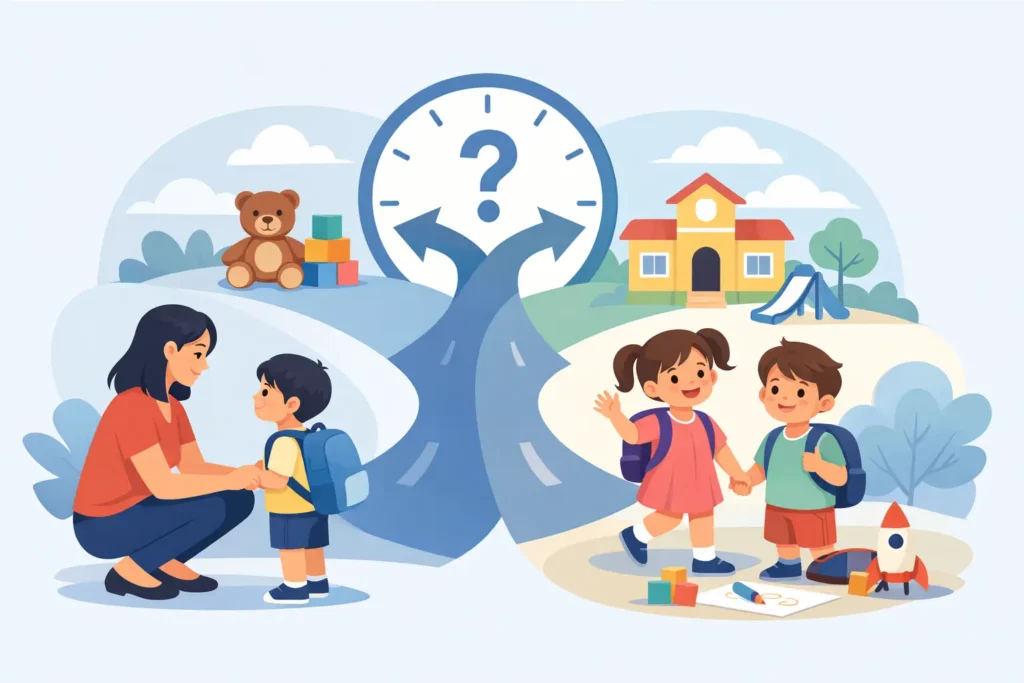
A child may know every letter in their name and still feel worried about saying goodbye at the classroom door. Another may be slow to warm up in new places but happily join a group project once they feel safe. When should children start kindergarten? The answer is rarely found in one skill or one birthday. It comes from looking at the whole child – their confidence, daily routines, relationships, curiosity, and the kind of support waiting for them at school.
For parents, this decision can feel especially big because kindergarten is more than a new class. It is often a child’s first regular experience of being part of a larger learning community. A gentle, well-timed start can help children build happy hearts and healthy minds alongside early literacy, communication, and independence.
When Should Children Start Kindergarten? Start With the School Cutoff
The practical starting point is your local school’s age requirement. Public and private schools may set different cutoff dates, and programs may use kindergarten to describe slightly different age groups. Before comparing readiness, confirm the age your child must be to enroll and whether the school offers a younger or older kindergarten class.
Meeting the age requirement does not automatically mean a child must start at that moment, however. Families sometimes have flexibility, particularly with private programs. If your child is one of the youngest in the class, waiting may give them extra time to strengthen language, attention, and confidence. If they are eager for peers and a more engaging learning environment, beginning on schedule may be just right.
There is no prize for being the youngest child in the room, and there is no disadvantage in giving a child time when that time is truly needed. The best choice is the one that supports steady growth rather than unnecessary pressure.
Readiness Is About More Than ABCs
Many parents first think about academic readiness. Can my child recognize letters? Count objects? Hold a pencil? These skills are helpful, but kindergarten educators expect to teach and practice them. A child does not need to arrive already reading, writing long sentences, or completing worksheets independently.
More meaningful signs of readiness often appear in everyday moments. Your child may be ready to begin kindergarten if they can separate from a trusted caregiver with reassurance, follow a simple routine, communicate basic needs, and show interest in playing or learning alongside other children. They do not need to do these things perfectly. They simply need a foundation that caring teachers can build on.
Consider how your child responds when something does not go their way. Can they recover after a few tears? Can they ask for help? Can they wait briefly for a turn with support? These early social and emotional skills matter because kindergarten brings shared materials, group activities, new friendships, and small disappointments as well as joyful discoveries.
Physical independence also makes the school day easier. Children benefit from practicing handwashing, opening a lunch container, putting on shoes, using the restroom with appropriate support, and tidying toys after play. These are not tests. They are small daily achievements that help a child feel capable in a new setting.
Look at Your Child’s Whole Day
A kindergarten schedule asks children to move through several kinds of activity: arrival, group time, play, outdoor movement, meals, stories, creative work, and rest or quiet time. Think about whether your child can manage a predictable routine at home or in preschool, even when they need reminders.
Energy is part of the picture, too. Some children flourish with a full morning of activity and conversation. Others become overwhelmed in loud or busy settings, especially if they are tired. That does not mean they are not ready for kindergarten. It may mean they need a program with smaller groups, patient transitions, outdoor time, and educators who notice when a child needs a quiet moment.
For working families, extended child care is another important consideration. A longer day can be a positive experience when it includes rest, nourishing meals, free play, movement, and warm adult attention rather than simply more structured lessons. Ask how the school helps children settle after class hours and how staff communicate about their mood, meals, friendships, and progress.
A Gentle School Environment Can Change the Experience
Children do not need to be ready for every kind of kindergarten. They need to be ready for a setting that understands young children.
A nurturing program gives children a reason to feel excited about coming back tomorrow. Instead of spending the day only at desks, they may listen to stories, paint, build, sing, explore outdoors, prepare a simple snack, or investigate why a boat floats. These hands-on experiences build language, early math thinking, coordination, and confidence without taking away the joy of being young.
The right teachers make a particular difference for children who are shy, energetic, sensitive, or still developing English communication skills. Experienced educators can offer a familiar welcome each morning, use clear routines, guide children through friendship challenges, and celebrate progress that may seem small but means a great deal. Raising a hand, trying a new activity, recognizing a sound in a word, or showing kindness to a classmate are all meaningful steps.
When visiting a school, notice the feeling in the room. Are children treated with patience and respect? Is there space for active play and calm concentration? Do teachers speak warmly to children while maintaining clear boundaries? A safe haven is not a place without challenges. It is a place where children are supported through challenges and learn that they can handle them.
If You Are Considering Waiting a Year
Delaying kindergarten can be helpful when a child is struggling with major transitions, has difficulty communicating needs, is not yet able to participate in short group activities, or would benefit from more time in a play-based preschool setting. It can also be a reasonable choice if the child is very young for the grade and the family has a high-quality alternative for the year ahead.
Still, waiting is not automatically the kinder option. A child who seems hesitant at first may blossom once they have daily opportunities to make friends, follow routines, and explore new interests. Keeping a curious, socially ready child in an environment that no longer challenges them can create frustration.
Talk with people who know your child well, such as current teachers, pediatric professionals when appropriate, and the educators at the prospective school. Ask for specific observations rather than a simple yes or no. Does your child participate after settling in? How do they respond to guidance? What situations are difficult, and what support helps? Clear examples make the decision less emotional and more child-centered.
Help Your Child Feel Ready Before the First Day
The months before kindergarten do not need to become a home classroom. The most helpful preparation happens through ordinary routines and joyful connection. Read together every day, talk about pictures and feelings, let your child help sort socks or count fruit, and make time for drawing, building, pretend play, and outdoor movement.
Practice the routines that will make the first weeks easier. Let your child carry a small bag, open a food container, put away a toy, and say goodbye to you during a short visit with a trusted relative or friend. Describe school positively and honestly: there will be teachers to help, children to play with, new things to try, and times when they may miss home.
Avoid promising that every day will be easy. A more reassuring message is that new things can feel strange at first, and that they will be safe, loved, and supported while they learn. Children borrow confidence from the calm adults around them.
At Summer Tots, we believe school readiness grows through caring relationships, purposeful play, outdoor discovery, and gentle guidance in kindness and independence. Every child develops on their own timetable, and every child deserves to begin feeling seen.
The right kindergarten start is not about racing ahead. It is about choosing a moment and a learning environment where your child can walk through the door, find their place, and gradually discover how much they can do.