
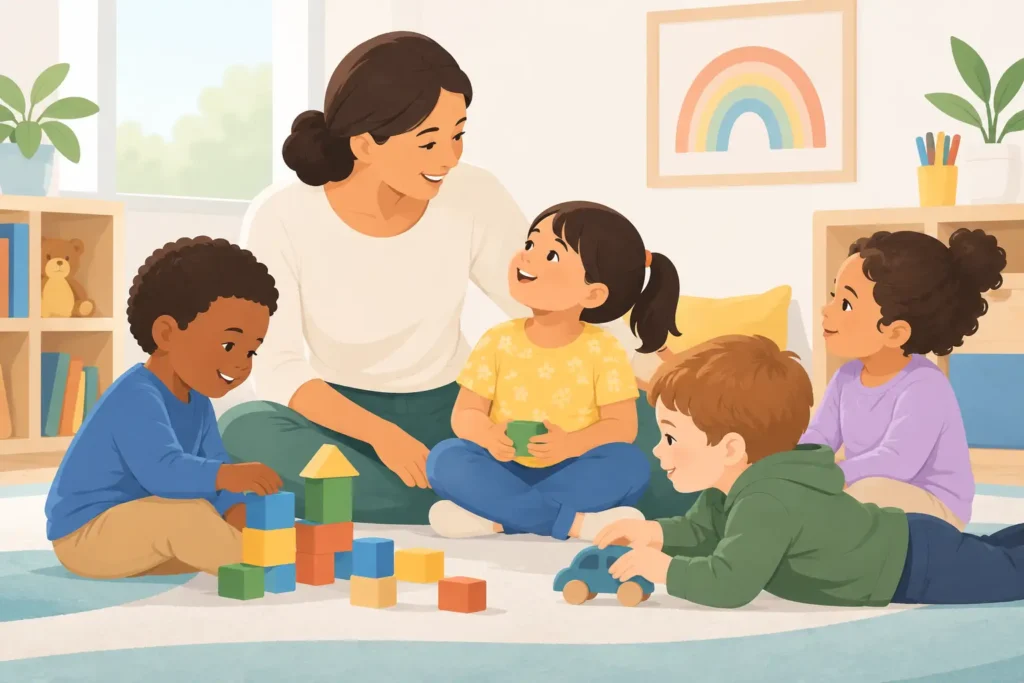
A child may not tell you that a classroom has helped them feel secure. You may notice it instead when they walk in without holding tightly to your hand, tell you about a friend, or proudly show you something they made. What makes childcare nurturing is not one beautiful room, one activity, or one kind teacher. It is the steady feeling that a child is known, safe, listened to, and encouraged throughout the day.
For preschool and kindergarten families, especially those balancing busy workdays, this feeling matters deeply. Children need care that is dependable, but they also need a place where their questions are welcomed, their feelings are guided, and their growing independence is celebrated. Nurturing childcare gives children both a warm landing place and room to stretch.
What Makes Childcare Nurturing Every Day?
A nurturing setting treats each child as a whole person. Learning letters, building early reading skills, and practicing pencil control all matter, but so do confidence, friendship, movement, rest, and the ability to say, “I need help.” Children learn best when these needs are cared for together.
This does not mean every moment is unstructured or that children are never asked to try difficult things. In fact, thoughtful routines and gentle expectations can help young children feel calmer and more capable. The difference is in how adults guide them. A nurturing educator does not rush to fix every problem or demand perfect results. They stay close, offer words for big feelings, and help a child try again.
Caring educators who truly notice children
The heart of nurturing childcare is the relationship between children and their educators. Young children need adults who greet them warmly, learn what makes them laugh, recognize when they are unusually quiet, and notice the small steps that others might miss.
A teacher may see that a child who once watched from the edge of group play has finally joined a game. Another may recognize that a child is frustrated with writing their name and offer encouragement before tears take over. These moments are not separate from education. They are the foundation that helps children take part, communicate, and learn.
Experienced educators also understand that behavior is communication. A child who pushes, refuses to join an activity, or becomes upset at drop-off may be tired, worried, overwhelmed, or still learning how to express a need. Clear boundaries are still necessary. Children feel safer when adults are consistent. But nurturing care responds with patience and guidance rather than shame.
Safe routines that children can trust
For young children, a predictable day is comforting. Knowing that breakfast is followed by circle time, that outdoor play comes before lunch, or that a familiar educator will be there at pickup helps children settle into their environment.
Safety is part of this trust. Parents deserve to know their child is supervised carefully, cared for in clean and thoughtfully prepared spaces, and supported through daily routines such as meals, toileting, handwashing, and rest. Yet emotional safety is just as meaningful. Children need to know they can make a mistake, ask a question, or feel sad without being dismissed.
A nurturing school creates a calm rhythm without becoming rigid. Some children need a few extra minutes to separate in the morning. Others may need a quiet corner after an energetic outdoor game. Flexibility, when paired with consistent care, helps children feel respected rather than managed.
Play Has a Serious Place in Nurturing Childcare
Play is how young children make sense of the world. When children build a bridge with blocks, negotiate who gets to be the shopkeeper, or test whether their handmade boat will float, they are practicing far more than fun. They are learning to plan, communicate, solve problems, take turns, and recover when an idea does not work the first time.
Purposeful play gives educators a chance to follow children’s interests while introducing new skills. A classroom project about water, for example, might lead children to observe vapor, make floating boats, compare what sinks and floats, and learn new words to describe what they see. Baking can become a lesson in measuring, following steps, waiting, and sharing. Caring for chicks can invite conversations about gentleness, responsibility, and living things.
The goal is not to turn every playful moment into a worksheet. It is to give children meaningful experiences that make learning feel real. A child who feels joy and ownership in an activity is often more willing to persist, ask questions, and remember what they discovered.
Outdoor time supports happy hearts and healthy minds
Children need room to move. Outdoor play supports balance, coordination, strength, and healthy energy release, but its benefits reach further. On the playground, children learn to wait for a turn, take manageable risks, cooperate in games, and notice the natural world around them.
A nurturing program makes outdoor time a valued part of the day, not simply a break between academic activities. Of course, weather, air quality, and a child’s individual needs may affect how long children play outside. Even so, regular opportunities for movement and fresh air help many children return indoors more settled and ready to focus.
Kindness and Confidence Grow Together
Parents often hope their child will become more confident, but confidence is not the same as being the loudest voice in the room. Real confidence develops when children feel accepted and learn, through repeated experience, that they can try something new, ask for help, and keep going.
Character education belongs naturally in nurturing childcare. Children can learn to use kind words, care for shared materials, include a classmate, apologize after hurting someone, and show respect for adults and peers. These skills need to be taught in everyday moments, not only mentioned on a poster.
A teacher might help two children work through a disagreement over a toy by naming each child’s feelings and guiding them toward a fair solution. Over time, children begin to borrow this language for themselves. They learn that being kind does not mean never disagreeing. It means learning how to handle disagreements with care.
A Partnership That Extends Beyond Pickup Time
Nurturing childcare works best when families and educators see one another as partners. Parents know their children’s histories, routines, strengths, and worries. Educators see how children interact, learn, and grow within a group. Sharing these perspectives creates a fuller picture of each child.
This partnership can be simple and practical: a warm check-in at arrival, a brief update about a new interest, or a conversation about how to support a child who is having trouble with transitions. It can also include celebrating progress, whether a child has begun speaking more confidently in English, recognizing letter sounds, making a new friend, or showing greater patience at home.
Communication should feel supportive, not judgmental. Families should be told honestly when a child needs extra support, while also hearing about the strengths and progress that may not be visible after a long day apart. For working parents, this reassurance is especially valuable. It helps them remain connected to their child’s development even when schedules are full.
At Summer Tots, this family-centered approach means combining purposeful early learning with the warmth, attention, and extended care children need to feel at home in their school day.
Choosing a Nurturing Environment for Your Child
When visiting a childcare program, look beyond the decorations and planned activities. Notice how educators speak to children. Are they at eye level? Do they respond calmly when a child is upset? Are children encouraged to make choices, communicate their needs, and care for one another?
Ask how the day balances learning, play, outdoor activity, meals, rest, and quiet time. A program may have strong academics, but young children also need space to move, imagine, and build relationships. On the other hand, a warm atmosphere should still include thoughtful routines and learning experiences that prepare children for their next steps.
The right fit depends on your child and your family. Some children thrive with lively group activities, while others need smaller moments of reassurance before they join in. What matters most is finding a place where your child is not expected to fit a single mold, but is gently supported as they grow.
A nurturing childcare experience gives children a message they carry with them: you are safe here, you matter here, and you are capable of wonderful things. When children hear that message through daily care, patient guidance, joyful play, and trusted relationships, they are better prepared to meet the world with curious minds and kind hearts.