
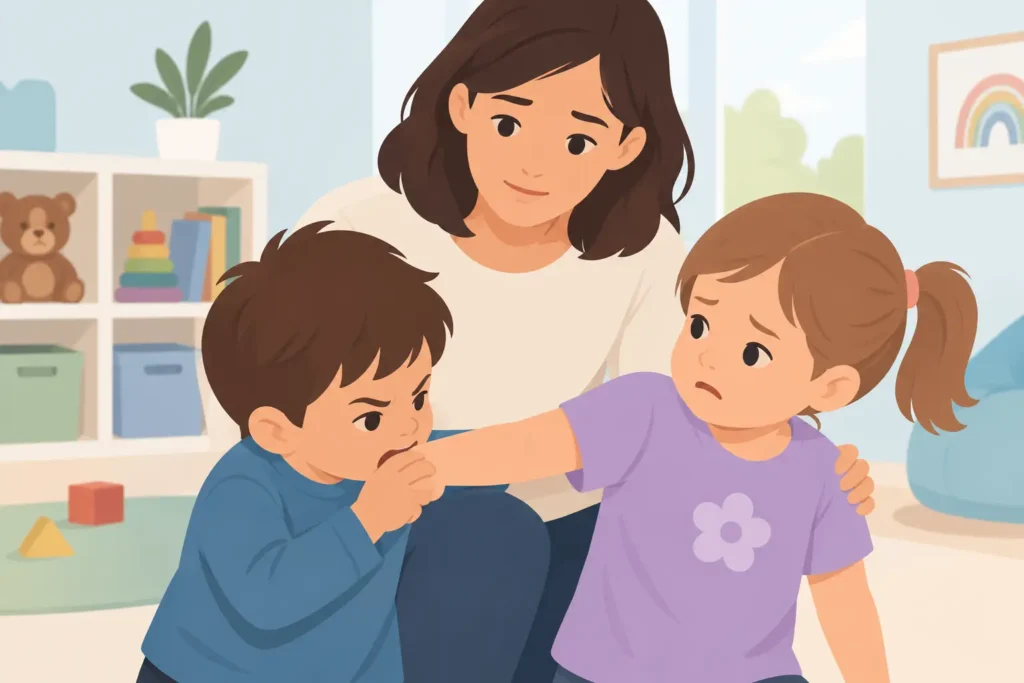
A bite can feel startling, upsetting, and deeply personal – especially when your child has bitten a friend at school or come home with a bite mark. Parents often wonder, why do preschoolers bite when they seem old enough to know that it hurts? The reassuring answer is that biting is usually communication, not cruelty. A young child may be overwhelmed, excited, frustrated, tired, or simply unsure how to express a big feeling in a safer way.
That does not mean biting should be ignored. Children need calm, consistent limits and caring guidance to keep everyone safe. But when adults look beneath the behavior instead of labeling a child as “bad,” they can help that child learn the words, confidence, and self-control they are still developing.
Why Do Preschoolers Bite?
Preschoolers are learning how to live in a busy social world. They are sharing toys, waiting for turns, hearing “not yet,” managing noise, and trying to make themselves understood. Those are big demands for a child whose emotional control is still growing.
Sometimes a child bites because they want something another child is holding. Sometimes it happens during an exciting game, when their body is moving faster than their thinking. A child who is tired, hungry, unwell, or adjusting to a new classroom routine may also have less patience than usual.
For some children, biting is connected to language. They may know what they want to say but cannot find the words quickly enough: “Stop pushing me.” “I want a turn.” “Move back.” “I’m mad.” In that tense moment, a bite can become an immediate, physical response.
Sensory needs can play a role, too. Some children enjoy strong pressure in their mouth or seek extra sensory input when they are excited or stressed. Teething is less common in the preschool years than in toddlerhood, but mouth discomfort can still affect a child. The reason matters because the best response is not identical for every child.
A one-time bite after a difficult morning calls for a different level of concern than repeated biting across settings. Patterns are useful information, not a reason for shame.
Biting Is a Behavior, Not a Child’s Identity
It is understandable to feel embarrassed when your child bites. You may worry that other families will judge them, or that their teacher sees only the difficult moment. Try to separate the behavior from the child. A preschooler who bites may also be the child who comforts a crying friend, carefully waters a plant, laughs during story time, or proudly helps clean up after a project.
Children grow best when they know adults will hold a firm boundary while still believing in them. Saying, “Biting hurts. I won’t let you bite,” is clear and loving. Saying, “You are a biter,” can make a child feel stuck in a role they do not know how to leave.
The goal is not to lecture a child for a long time. In the moment, they are unlikely to absorb a detailed explanation. First, make sure the child who was bitten is cared for. Then help the child who bit understand the limit with a few calm words.
How to Respond in the Moment
A steady adult response protects both children and teaches more than anger does. If you see a bite happen, move close, gently separate the children, and say something simple: “I won’t let you bite. Biting hurts.” Give your attention first to the child who was hurt, offering comfort and following your school or family’s health and safety procedures.
Once the situation is calm, guide the child who bit toward a better action. They may need help finding words, taking space, asking for a turn, or offering care. A prompt such as, “You wanted the truck. Say, ‘My turn when you’re done,’” gives them a usable alternative.
A forced apology is not always meaningful, particularly when a child is still upset. Instead, encourage repair in an age-appropriate way. They might bring a tissue, help get an ice pack with an adult, or say sorry once they are ready. Repair teaches empathy without turning the moment into public humiliation.
Avoid biting a child back, shouting, or giving a long punishment. These reactions can increase fear and do not show the child what to do with their feelings next time. Children need adults to model the calm control we hope they will eventually develop themselves.
Help Your Child Practice Safer Ways to Communicate
The most helpful teaching often happens after the moment has passed. At home, use simple play to rehearse tricky situations. With stuffed animals or toy figures, act out a disagreement over a favorite toy. Let your child practice phrases such as “Stop,” “Can I have a turn?” “Help, please,” and “I need space.”
Name emotions in everyday life, not only after a problem. You might say, “You look disappointed that the park is closed,” or “You are excited to show Grandma your picture.” When children hear feeling words often, they have more choices available when emotions become intense.
It also helps to notice success. If your child steps back, uses words, waits briefly, or asks an adult for help, describe what they did well: “You were mad, and you used your words. That kept everyone safe.” Specific encouragement builds the skills you want to see again.
Predictable routines support behavior, especially for children who struggle during transitions. A filling snack, enough rest, outdoor movement, and a warning before it is time to leave can make a real difference. These supports will not prevent every bite, but they reduce the number of moments when a child is already running out of coping skills.
Working With Your Preschool After a Bite
When biting happens at preschool, a respectful partnership between family and educators is one of the strongest supports a child can have. Ask what happened before the bite. Was there a crowded area, a disputed toy, a transition, a long wait, or a child who was having difficulty entering play? The details can reveal a pattern.
Experienced educators do more than respond after an incident. They watch closely, stay near children during high-risk moments, offer language before frustration rises, and organize the environment to make sharing and movement easier. A nurturing classroom gives children many chances to practice kindness, patience, and problem-solving through guided play.
Consistency between home and school is helpful. If adults use similar short phrases – such as “Teeth are not for biting people” and “Use words or ask for help” – children receive a clear message. Share changes that may affect your child, too. A new sibling, travel, illness, a family move, or a change in sleep can make behavior more difficult for a while.
At Summer Tots, we see guidance as part of caring for the whole child. Through purposeful play, outdoor activity, group projects, and everyday classroom routines, children have opportunities to build communication, confidence, empathy, and respect. These skills take time, and each small step matters.
When to Seek Additional Support
Many preschoolers go through a brief biting phase and improve with patient, consistent support. It may be worth speaking with your child’s pediatrician or a child development professional if biting is frequent, severe, difficult to interrupt, or continues despite clear strategies at home and school.
Additional support can also be helpful if biting comes with major language difficulties, intense distress, frequent aggression, withdrawal, or a sudden change in behavior that concerns you. Seeking advice is not an overreaction or a label. It is a way to better understand what your child may need.
Keep a simple record for a week or two if the behavior repeats. Note the time, place, what happened just before, who was nearby, and how your child responded afterward. This can help adults move beyond guesses and identify practical supports.
Your child does not need perfection to be welcomed, valued, and capable of growth. With calm limits, patient teaching, and caring adults who work together, a preschooler can learn that big feelings are safe to have – and that there are safer ways to show them.