
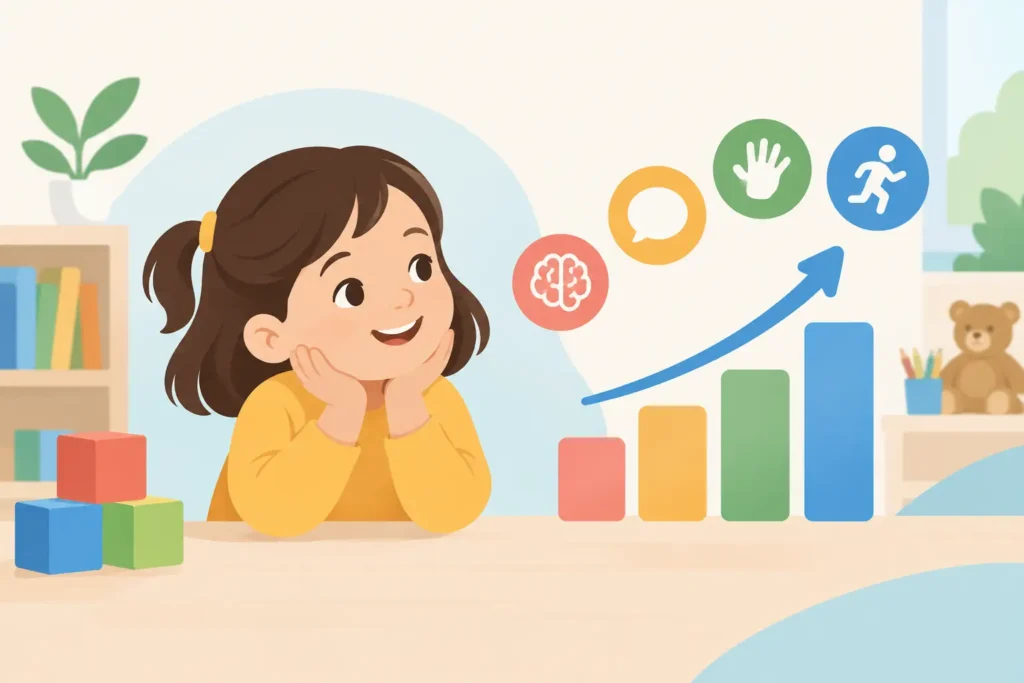
A child who once clung tightly at drop-off may begin walking into class with a smile. Another may come home excited to explain how a floating boat worked or ask to read the same story again. These everyday moments are often the best child progress indicators because they show growth that a worksheet alone cannot capture.
For preschool and kindergarten families, progress is rarely a straight line. Children develop in bursts, especially when they feel safe, known, and encouraged. One child may speak confidently before learning to hold a pencil with control. Another may become a careful observer during group activities before feeling ready to share ideas aloud. Looking at the whole child helps parents notice the meaningful steps that lead to happy hearts, healthy minds, and readiness for what comes next.
Best Child Progress Indicators Go Beyond ABCs
Early reading, writing, and number skills matter, but they are only part of a young child’s foundation. A child’s ability to communicate needs, join play kindly, recover after disappointment, and try something unfamiliar will shape how they experience learning for years to come.
The most helpful indicators are connected to real life. Rather than asking only, “What can my child recite?” parents can also ask, “How does my child approach a challenge?” and “What does my child do when a friend needs help?” These questions make room for the social, emotional, physical, and practical skills that support academic growth.
A nurturing preschool environment gives children many chances to show this progress naturally. They may practice counting while setting a table for a pretend café, strengthen language while describing water vapor, or develop patience while waiting for a turn to add toppings to homemade pizza. Purposeful play is not separate from learning. For young children, it is often how learning becomes memorable.
Confidence and Emotional Security
Confidence in preschool does not mean a child is always loud, outgoing, or eager to perform. A confident child may be quiet and still show strong growth by separating more comfortably, choosing an activity independently, or trying again after making a mistake.
Watch for small signs of emotional security. Your child might tell you about a difficult moment instead of shutting down, ask an educator for help, or begin using words such as “I feel frustrated” and “Can I have a turn?” These are valuable skills. They show that a child is learning to understand feelings and trust the adults around them.
Progress may look different after a big change, such as moving classrooms, welcoming a new sibling, or starting a longer school day. During these periods, children may need extra reassurance before they show their usual independence. That does not erase their growth. It simply means they need time, consistency, and loving support.
Signs of growing confidence
Look for a child who is increasingly willing to make choices, participate in familiar routines, and take gentle risks. Perhaps they volunteer to carry materials, show a friend how to use a toy, or proudly bring home a drawing that includes more detail than before. The goal is not perfection. It is the growing belief that “I can try.”
Communication That Connects With Others
Language development is about much more than knowing letters or repeating new vocabulary. It includes listening, taking turns in conversation, explaining an idea, and understanding what others are trying to say.
You may notice progress when your child tells a fuller story about their day, asks thoughtful questions, or follows a two- or three-step direction. A child who once answered only “good” when asked about school may begin saying, “We made geometric shapes, and mine was a triangle.” That growing ability to share experiences supports both literacy and connection.
English-led learning can give children valuable exposure to language through songs, stories, classroom conversations, and hands-on projects. Still, children who are learning more than one language may mix words or speak more quietly in one setting. This is common. Their understanding may be greater than what they can express right away, so patient listening matters.
Educators and parents can work together by noticing the words a child uses at home and at school. Sharing favorite books, repeating meaningful phrases, and giving children time to answer all encourage language without pressure.
Curiosity, Focus, and a Love of Learning
A young child’s curiosity is one of the clearest signs that learning is taking root. Notice when your child asks why a chick needs warmth, wonders whether a boat will sink, or experiments with how many blocks can balance before falling. Curiosity turns ordinary experiences into discoveries.
Attention also grows gradually. A preschooler may begin by staying with an activity for only a few minutes, then later return to it, add new ideas, or finish a simple project. Progress might appear when they listen through a story, sort materials for a craft, or concentrate while shaping dough. It does not mean a child must sit still for long periods. Healthy learning at this age includes movement, talk, play, and exploration.
Outdoor activities can be especially revealing. Climbing, gardening, observing insects, and group games invite children to solve problems with their bodies and minds. A child who hesitates at first may eventually attempt a climbing structure, cooperate in a game, or share an observation with the group. These experiences build persistence in a joyful way.
Friendships, Kindness, and Character
Learning to live and play with others is serious work for young children. Sharing is not always easy, and disagreements are expected. The encouraging sign is not that a child never has a conflict. It is that they gradually learn healthier ways to handle one.
You may see progress when your child starts using words instead of grabbing, notices when a classmate is sad, or offers to help clean up without being reminded. They may begin to understand that being kind includes listening, respecting boundaries, and including others in play.
Character grows through repeated everyday experiences. When educators gently guide children to apologize, take turns, care for classroom materials, and show empathy, these habits become part of how children see themselves. A child who learns “I can be helpful” is developing a strength that reaches far beyond kindergarten.
Physical Independence and Everyday Skills
Preschool progress is also visible in the practical tasks that help children feel capable. Washing hands carefully, opening a lunch container, putting on shoes, tidying up after an activity, and using child-safe tools with growing control all matter.
Fine motor skills often develop through enjoyable work: drawing, cutting, threading, building, mixing ingredients, or making shapes from clay. Gross motor development appears through running, balancing, jumping, dancing, and outdoor play. These abilities support future classroom tasks, but they also give children confidence in their own bodies.
Avoid comparing one child’s timeline too closely with another’s. Some children become independent in routines quickly but need more time with pencil grip or coordination. Others move confidently outdoors yet prefer help with dressing. What matters is steady opportunity, encouragement, and a safe place to practice.
How Parents Can See Progress More Clearly
The clearest picture comes from looking for patterns over time rather than judging one difficult afternoon. A child may be tired, hungry, shy around visitors, or unsettled by a new routine. One moment is rarely the whole story.
Try asking specific, open questions after school. “What did you make today?” may bring a short answer, while “What happened when you tested your boat in water?” invites a child to remember and explain. You can also notice what they choose to repeat at home. A child who sings a new song, acts out a story, or carefully lines up toy animals may be showing what has captured their attention.
Regular conversations with educators are equally helpful. Teachers see how children manage group routines, approach peers, and respond to activities outside the home. Parents bring insight into a child’s interests, family experiences, and personality. At Summer Tots, this partnership helps each child receive encouragement that feels personal and consistent.
If you have a concern, share it early and calmly. A supportive school can help distinguish between a normal developmental variation and an area where a child may benefit from extra practice or guidance. The purpose is never to label a child. It is to understand what helps them flourish.
The most meaningful progress is often quiet: a child who finally joins a game, proudly reads a familiar word, comforts a friend, or comes home believing tomorrow holds something worth trying. Notice those moments, celebrate them warmly, and give your child the steady reassurance that growth has its own beautiful pace.