
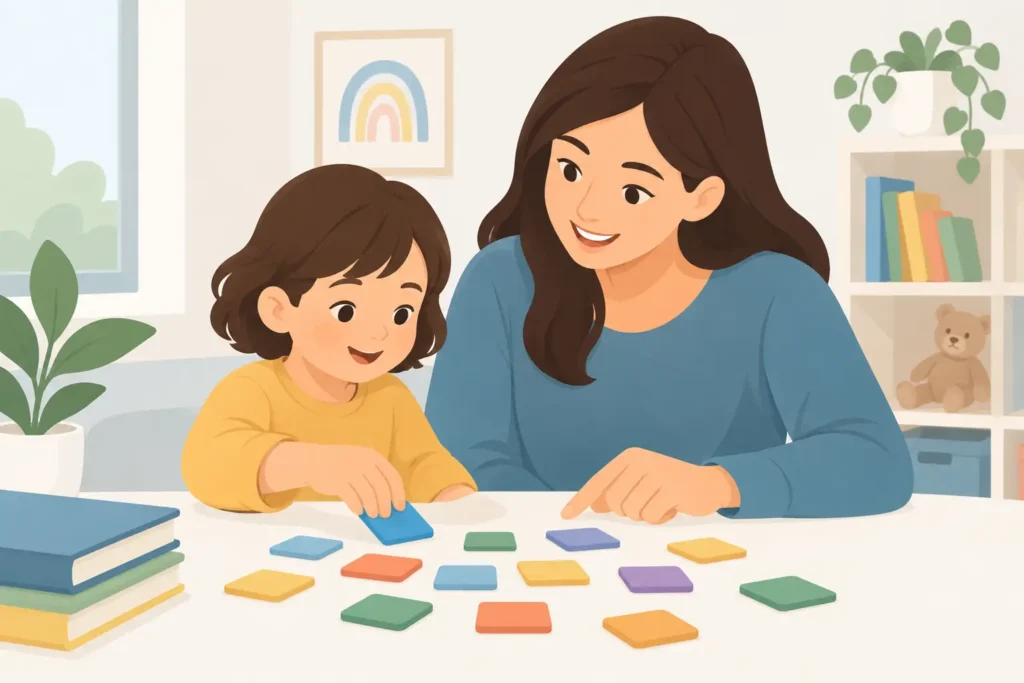
A child points to the big M on a shop sign and proudly announces, “That’s in Mommy’s name!” Another child may happily sing the alphabet song but not recognize the letters when they appear in a book. Both are learning. When parents ask, “when do children learn letters?” they are often looking for reassurance that their child is on a healthy path – and the reassuring answer is that learning letters happens gradually, through many small, joyful moments.
For most children, interest in letters begins during the preschool years, often between ages 2 and 5. Yet there is a wide range of what is typical. Some children notice the letters in their own name very early, while others need more time to build language, attention, confidence, or fine-motor skills first. The goal is not to make every child learn at the same speed. It is to create a happy, safe environment where letters feel familiar, meaningful, and fun.
When Do Children Learn Letters in Preschool?
Letter learning usually develops in stages rather than arriving all at once. Toddlers may first enjoy the rhythm of the alphabet song, turn pages while an adult reads, or point to familiar logos. They are discovering that print is everywhere and that it carries meaning.
By around ages 3 to 4, many children begin recognizing a few capital letters, especially the first letter of their name. They may also notice letters that appear often in favorite books, labels, or classroom displays. At this stage, it is completely normal for children to confuse similar-looking letters, such as b and d, or to name a letter without knowing its sound.
During the kindergarten years, many children become more secure in naming uppercase and lowercase letters and connecting them with sounds. They may start blending simple sounds, hearing rhymes, and noticing the first sound in words such as sun, ball, or moon. These early reading skills grow best when children are encouraged, not rushed.
A child who is not yet reciting all 26 letters before kindergarten is not automatically behind. Readiness is bigger than memorization. Listening, speaking, enjoying stories, taking turns, managing feelings, and feeling confident enough to try are all part of the foundation for literacy.
Letter Names and Letter Sounds Both Matter
Parents sometimes wonder whether to teach letter names or sounds first. In practice, children benefit from hearing both naturally. Knowing that a symbol is called “B” is useful; knowing that it often makes the /b/ sound helps a child begin reading words.
Start with a child’s name because it belongs to them. Seeing their name on a bag, artwork, or cubby gives letters a personal purpose. You might say, “Your name starts with S. S says /s/, like sun.” Keep it light and conversational rather than turning every moment into a quiz.
It also helps to remember that English has a few tricky sound patterns. A letter does not always make only one sound, and some words do not follow simple rules. Children do not need to solve these exceptions early. First, they need plenty of positive experiences hearing language, playing with sounds, and seeing print used in real life.
What Letter Learning Looks Like Through Play
Young children learn deeply when their hands, imaginations, and senses are involved. Sitting with flashcards can work for a few children in short bursts, but it is rarely the most meaningful starting point. Play gives children a reason to notice letters again and again without feeling pressured.
At home, invite your child to form the first letter of their name with play dough, arrange magnetic letters on the refrigerator, or search for a chosen letter during a walk. While cooking, they can look for the S in “salt” or make a letter shape with dough. In the bath, foam letters can become part of a silly sorting game.
Books are especially powerful. Read slowly enough for your child to enjoy the pictures, predict what may happen next, and notice a familiar letter when they choose to. There is no need to interrupt every page for instruction. The warm experience of sharing a story is itself a valuable literacy lesson. Children who connect books with comfort, laughter, and closeness are more likely to become willing readers later.
Creative projects can bring letters to life too. A child might paint a giant A, make a collage of objects that begin with M, or trace letters in sand before attempting them on paper. These activities strengthen hand control while allowing children to experiment without worrying about being perfect.
Signs Your Child Is Building Early Literacy
Progress does not always look like a child reciting the alphabet from A to Z. Often, the quieter signs are just as meaningful. Your child may pretend to read a familiar book, ask what a sign says, recognize their name, or make marks and explain that they have written a message. They may clap along with rhyming words or laugh when you change the first sound in a silly word.
These behaviors show that a child is beginning to understand how spoken language, books, and print connect. Celebrate the effort: “You noticed the same letter in your name and this book!” Specific praise helps children see themselves as capable learners.
Writing will also emerge gradually. Early scribbles, wavy lines, and invented spellings are not mistakes to correct away. They are important experiments. Before children can write recognizable letters comfortably, they need strong fingers, steady hands, and confidence using crayons, scissors, paintbrushes, blocks, and everyday tools.
How to Support Letter Learning Without Pressure
The most helpful routine is often a simple one: talk, read, sing, and play every day. Use letters as part of ordinary life rather than presenting them as a test. A few relaxed minutes are more valuable than a long session that ends in frustration.
Follow your child’s interests. A child fascinated by vehicles may enjoy spotting letters on buses. A child who loves animals may want to match toy animals to the first sound in their names. If they lose interest, move on. Curiosity grows when children feel that adults are listening to them.
Try to avoid comparing siblings, classmates, or friends. One child may recognize many letters at 3 but need extra support with sharing or speaking in a group. Another may be slower to identify letters yet have a rich vocabulary and a strong love of storytelling. Children develop in their own patterns, and every area of growth matters.
Screens and alphabet videos can occasionally support a familiar song or idea, but they cannot replace conversation with a caring adult. Children learn more when someone responds to their questions, notices their effort, and shares their excitement. A warm “You found it!” can make a letter memorable in a way a video cannot.
When Extra Support May Help
Children should never be expected to master letters on a fixed timetable. Still, it can be helpful to speak with your child’s teacher or pediatrician if, by the later preschool years, your child consistently avoids books and print, seems unable to hear or use language clearly, has trouble seeing materials, or becomes unusually distressed by simple letter activities.
The concern is not whether a child can perform on demand. It is whether there are broader barriers to communication, vision, hearing, attention, or confidence that deserve gentle support. Early conversations can lead to practical strategies and help families feel less alone.
In a nurturing preschool setting, experienced educators can observe a child over time and adapt activities to their needs. At Summer Tots, letter learning can be woven into story time, outdoor discoveries, hands-on projects, songs, and everyday classroom conversations. This gives children repeated opportunities to learn while still enjoying the friendships, movement, and imaginative play they need.
A Loving Pace Builds Lasting Confidence
Children do not need a perfect worksheet or an early start on every letter to become readers. They need language-rich days, caring adults, chances to explore, and the freedom to make mistakes. When letters are introduced with patience and joy, they become invitations rather than demands.
So notice the small moments: the letter found on a cereal box, the first attempt at writing a name, the delighted shout when your child recognizes an S on a street sign. These are the beginnings of literacy, growing one happy discovery at a time.