
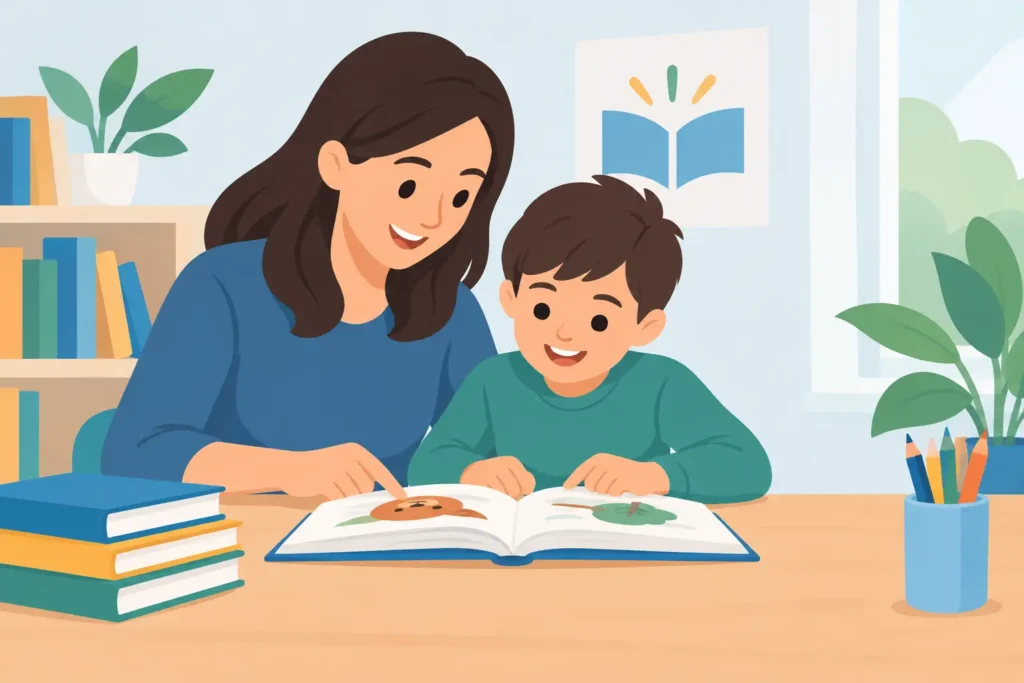
A child who proudly spots the first sound in their name is doing more than learning a letter. They are beginning to understand that print carries meaning, sounds can be put together, and books can become a source of real joy. So, can reading classes help phonics? Yes, when they give young children warm, playful, and well-paced opportunities to connect letters with sounds, words, and stories.
For preschool and kindergarten children, phonics should not feel like a daily test. It works best when it is part of a caring learning experience: singing a rhyme, finding the letter M in a menu, listening for the beginning sound in “moon,” then sharing a favorite picture book with a trusted teacher. A good reading class can bring these moments together while helping each child grow at a pace that feels encouraging.
How Reading Classes Can Help Phonics
Phonics is the understanding that letters and letter groups represent sounds. It helps children begin to read unfamiliar words instead of relying only on memory or pictures. Reading classes can support this skill because they create regular, guided practice with language in a meaningful setting.
Rather than asking children to memorize a long list of words, experienced educators can help them notice patterns. They may clap the parts in a word, stretch out a sound, match picture cards to beginning letters, or build a simple word with magnetic letters. When children hear, see, say, and touch language, the learning often feels clearer and more memorable.
Reading aloud also gives phonics a purpose. A child may practice the sound /b/ while reading about a brown bear, or recognize the letter S while talking about a story’s sunny setting. The goal is not simply to finish a worksheet. It is to help children see that sounds and letters help them understand the books, signs, labels, and messages around them.
Repetition Builds Comfort, Not Pressure
Young children need many friendly encounters with the same skills. A reading class offers a predictable rhythm: a familiar welcome song, a sound game, shared reading, and a short hands-on activity. This repetition helps children feel safe enough to try.
A child who is quiet during the first few sessions may begin by pointing to a letter card. Later, they may say the sound. With patient guidance, they may eventually blend sounds into a word. Small steps deserve to be noticed because confidence is closely connected to early literacy growth.
Teachers Can Spot What a Child Needs
Every child arrives with a different language experience. Some already recognize many letters because they love alphabet books. Others enjoy stories but have not yet connected letters to sounds. Some children are learning English alongside another language at home, which can be a wonderful strength but may mean they need extra time to hear and use new sounds.
In a small, nurturing group, a teacher can observe these differences. They can offer a simpler starting point, repeat a sound with a child, or provide a fresh challenge when a child is ready. This individual attention is one reason reading classes can be especially helpful for families who want clear support without turning learning into pressure.
What a Helpful Phonics Reading Class Looks Like
The strongest classes do not separate reading from childhood. They use movement, conversation, art, music, and play to make language feel alive. A child might hop to the letter that makes the /t/ sound, make a turtle craft, and then listen for words beginning with T in a story. These activities may look simple, but they build attention, memory, vocabulary, and listening skills alongside phonics.
A helpful class also includes real books, not only flashcards. Phonics gives children tools for reading words, while stories show them why reading matters. Through books, children meet characters, talk about feelings, predict what might happen, and learn new ways to describe their own experiences. This supports communication and empathy as well as literacy.
At Summer Tots, reading development is most meaningful when it sits alongside hands-on discovery, outdoor play, creative projects, and kind relationships. A child who observes water vapor, prepares pizza with friends, or creates a floating boat has something exciting to talk about and read about. Rich experiences give new words a home.
The Right Balance of Structure and Play
Phonics does need clear teaching. Children benefit from hearing correct sounds, seeing how letters are formed, and practicing how sounds blend together. But too much drilling can make a curious child feel that reading is only about getting an answer right.
A balanced class keeps lessons short and active. It may introduce one sound clearly, revisit sounds already learned, and then let children apply them through a game or book. The best pace depends on the child. Some are ready to blend simple words quickly, while others need more time to develop listening skills, speech clarity, or confidence in a group.
When Reading Classes May Need Extra Support
Reading classes can be a valuable part of a child’s phonics journey, but they are not a magic shortcut. Progress depends on regular attendance, thoughtful teaching, a child’s developmental readiness, and gentle practice beyond the classroom.
If a child consistently struggles to hear differences between sounds, avoids speaking, becomes very frustrated with letters, or has difficulty understanding language in everyday conversation, parents may want to speak with the teacher and, if needed, a qualified specialist. Early support is not a label or a failure. It is a caring way to understand what will help a child feel successful.
It is also worth remembering that children develop at different speeds. Knowing fewer letters at age four does not predict a child’s future as a reader. What matters most is that they feel secure, engaged, and willing to keep trying. A child who says, “Can we read that again?” is building a powerful foundation.
How Parents Can Extend Phonics at Home
Home does not need to become a second classroom. In fact, the most helpful phonics practice is often woven into ordinary family routines. Read a bedtime story and pause to notice the first sound in a familiar word. Point out the first letter of your child’s name on a birthday card. Let them help find a letter on a cereal box or listen for rhyming words during a car ride.
Keep the tone light. If your child gives an incorrect answer, respond with warmth: “That was a good try. Let’s listen to the first sound together.” Children learn more freely when they know mistakes are part of growing.
You can also ask their teacher what sound, letter, or book theme the class is enjoying that week. When home and school use similar words and activities, children receive a reassuring message: the adults who care for me are working together.
Choosing a Reading Class for Your Child
When visiting a program, look beyond whether children can recite the alphabet. Notice whether they are comfortable speaking, participating, and handling books. Listen to how teachers respond when a child hesitates. A calm, respectful response tells you far more about a learning environment than a perfectly completed worksheet.
Ask how phonics is taught, how children are grouped, and how teachers share progress with families. A thoughtful program should be able to explain how it balances sound practice with stories, conversation, play, and individual care. It should also welcome your questions about your child’s interests and needs.
The right reading class can give a child more than early decoding skills. It can offer a safe place to use their voice, make friends around a story, and discover that learning is something they can do with happy hearts and healthy minds. With patient adults beside them, each new sound can become one more small, joyful step toward a lifelong relationship with reading.