
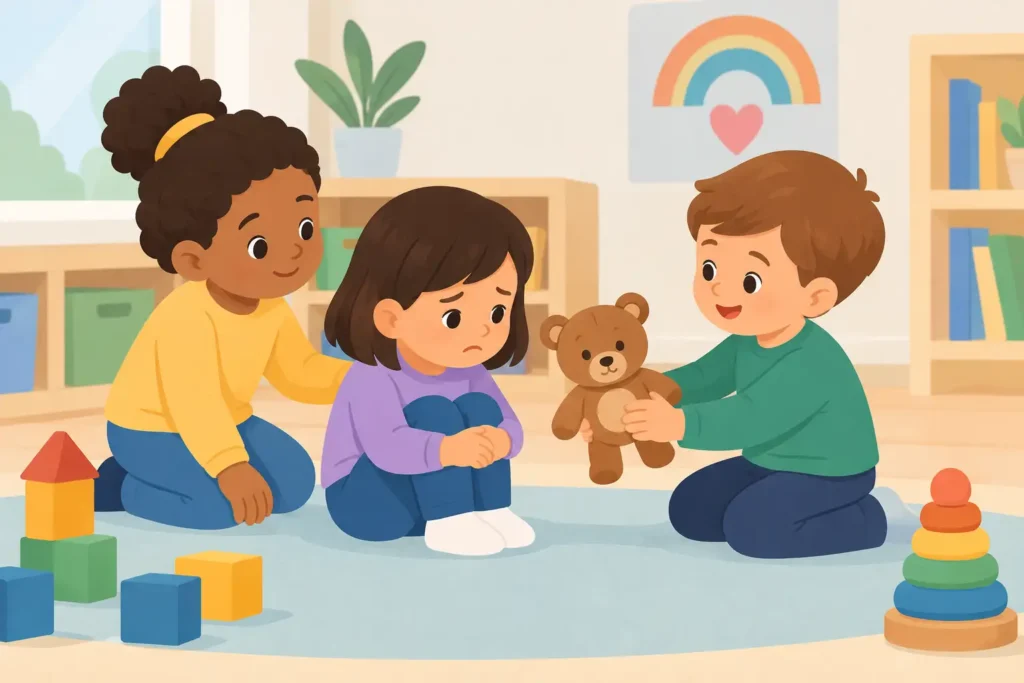
A preschooler notices that a friend is crying because a block tower fell down. Instead of being told, “Say sorry,” they pause, look concerned, and offer a block to help rebuild. That small moment shows why parents and teachers work together to teach preschool empathy. Empathy is not about expecting young children to manage big feelings perfectly. It is about helping them gradually notice, understand, and respond to the feelings of others.
For preschoolers, empathy grows through warm relationships, repeated practice, and adults who put caring words to everyday moments. A child who feels seen and comforted is better able to offer that same kindness to someone else. At home and in a nurturing preschool setting, these early lessons help children build happy hearts, healthy minds, and stronger friendships.
What empathy looks like in preschool
Empathy can sound like a big idea, but in early childhood it often appears in simple, meaningful ways. A child may bring a stuffed animal to a sad sibling, ask a friend, “Are you okay?”, wait while another child finishes talking, or help pick up toys after someone spills them.
Preschoolers are still learning that other people can feel differently from them. A child may laugh when someone cries, grab a toy from a friend, or insist that everyone should play their game. These reactions do not mean a child is unkind. They usually mean the child needs more language, practice, and gentle guidance.
It also helps to keep expectations realistic. A tired, hungry, overstimulated, or frustrated preschooler may not be ready to think about another person’s feelings in the moment. First, they may need help calming their own body and emotions. Empathy develops best when children feel safe, not ashamed.
How to teach preschool empathy in everyday moments
The most effective lessons do not need to feel like lessons. Daily routines offer many chances to notice feelings and practice care.
Name feelings as they happen
Young children need words before they can clearly express what they see and feel. When emotions arise, calmly describe them without judgment. You might say, “Your friend looks disappointed because she was still using that truck,” or, “You are frustrated that it is time to clean up. It is hard to stop playing.”
Naming both children’s feelings is especially helpful during conflict. Rather than quickly deciding who is right, help your child see the full moment: “You wanted the red crayon, and Mateo is upset because it was taken from his paper.” This does not excuse hurtful behavior. It gives children the information they need to begin repairing it.
Avoid forcing an apology before a child understands what happened. A rushed “sorry” may end the conflict, but it does not always build empathy. Instead, ask a gentle question: “What could help Mateo feel better?” Your child may return the crayon, offer another color, help fix the drawing, or use words to apologize when ready.
Model the caring behavior you hope to see
Children learn by watching the adults who care for them. Let them hear you use respectful language with family members, teachers, shop staff, and neighbors. When you make a mistake, show them what repair can look like: “I spoke too sharply because I was rushing. I am sorry. I will try again more calmly.”
You can also narrate small acts of care. “Grandma has a heavy bag. Let’s hold the door for her.” “Daddy has a headache, so we can use quiet voices.” These moments show that kindness is not only for major problems. It belongs in ordinary family life.
At Summer Tots, caring educators can model empathy throughout the day, from welcoming a hesitant child in the morning to helping classmates solve a disagreement during play. Children learn that their feelings are accepted and that they can treat others with the same patience.
Use pretend play to practice another point of view
Pretend play gives preschoolers a gentle way to explore feelings without the pressure of a real conflict. A teddy bear can feel lonely, a doll can be nervous about visiting the doctor, or a toy dinosaur can be upset because no one let him join the game.
Ask open-ended questions such as, “How do you think Teddy feels?” and “What could we do to help?” Let your child lead the story. There is no need to correct every answer. The goal is to encourage them to imagine another perspective and consider a kind response.
Role-playing can also prepare children for common social situations. Take turns acting out how to ask to join a game, how to wait for a turn, or how to respond when someone says no. A child who has practiced the words, “Can I play too?” may feel more confident using them with friends.
Choose stories that invite conversation
Books are a wonderful bridge into empathy because children can explore a character’s feelings from a safe distance. While reading, pause to wonder together. “Why do you think she hid behind her mom?” “His face looks worried. What might happen next?” “Have you ever felt left out like that?”
Keep the conversation light and age-appropriate. Preschoolers do not need a long discussion after every page. Even one thoughtful question can help them pay attention to emotions, facial expressions, and choices.
Stories become even more meaningful when followed by a small action. If a character shares a snack, invite your child to help prepare a treat for a family member. If a story is about welcoming a new friend, talk about one kind thing they could do for a new child at school.
Give children real chances to care
Empathy becomes stronger when children experience that their actions can help others. Simple responsibilities at home are a good starting place. They can bring a tissue to someone with the sniffles, help set a place at the table, choose a drawing to brighten a relative’s day, or refill a pet’s water bowl with adult support.
In a preschool classroom, shared projects create similar opportunities. Children learn to cooperate while growing plants, making pizza, building a boat, or caring for classroom materials. If a friend needs help opening a container or finding a missing shoe, an educator can invite another child to assist. These small acts build confidence as well as kindness.
Be careful not to turn caring into a performance. Some children are naturally quick to offer help, while others need more time to observe and feel comfortable. Invite rather than demand. “Would you like to help?” is often more powerful than, “You should help.”
Respond calmly when empathy is hard
There will be days when your child says, “I do not care,” refuses to share, or seems more interested in the toy than a crying friend. This is normal. Preschool children are still developing self-control, language, and awareness of other people’s needs.
Start by setting a clear boundary if someone has been hurt: “I will not let you push.” Then support the child who is upset and return to the situation when everyone is calmer. You can say, “Lina is crying because pushing hurt her. Let’s check if she is okay.”
If your child cannot respond kindly right away, offer a simple next step. They might give space, help rebuild, fetch an ice pack with an adult, or try again later. Empathy is not proved by perfect words. It grows through repeated opportunities to notice harm and make things better.
Create a home-school partnership around kindness
Children benefit when the adults in their lives use similar language. Share with your child’s teacher what helps your child calm down, what friendship challenges you are noticing, and the caring moments that make you proud. Teachers can share what they see during group activities, outdoor play, and classroom routines.
Consistency matters, but home and school do not need to look identical. One family may talk about feelings at bedtime, while another may find the best conversations happen in the car after school. The important thing is that children receive the same reassuring message: feelings are welcome, people deserve care, and mistakes can be repaired.
When your child notices a sad face, offers a toy, or uses gentle words after a disagreement, pause to recognize the effort. “You saw that your friend needed help. That was thoughtful.” Those few words can encourage a child to keep choosing kindness, one small moment at a time.