
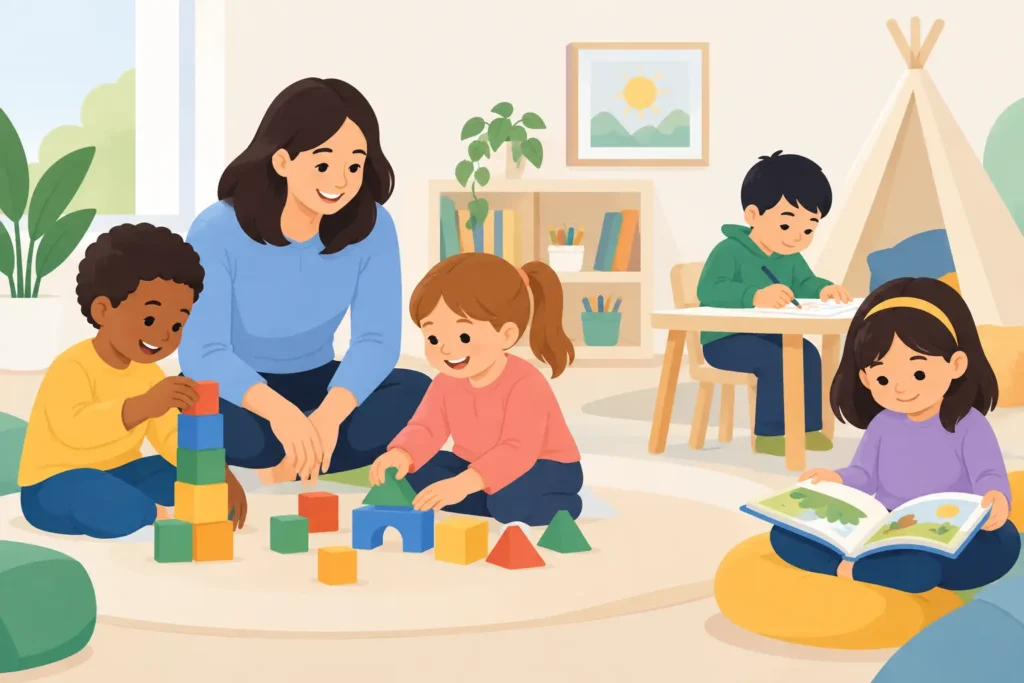
A child who comes home cheerful, talks about a new friend, proudly shows a painted boat, and wants to read one more story has learned far more than a worksheet can show. For many families, preschool alternatives become a serious consideration when a traditional, highly academic program does not feel like the right fit for their child or their family routine.
The best choice is not always the program with the earliest homework or the fullest timetable. Young children need warm relationships, time to play, room to move, gentle guidance, and meaningful opportunities to try things for themselves. They also need parents to feel confident that their child is safe, understood, and cared for throughout the day.
Why Families Look for Preschool Alternatives
Every child develops at a different pace. One child may love letters and numbers at age three, while another may first need more time to build confidence in a group, practice sharing, or become comfortable separating from a parent. Neither child is behind. They simply need an environment that responds to who they are.
Some parents begin looking at alternatives because their child seems overwhelmed by long periods of sitting, repetitive worksheets, or pressure to perform before they are ready. Others need a more practical answer to daily life: dependable extended care, a safe place after school hours, or a program that supports both learning and family schedules.
For families in Kuala Lumpur, especially working parents around OUG, Bukit Jalil, and nearby neighborhoods, the question is often bigger than “Where will my child spend the day?” It is “Who will help my child grow while I am at work?” A strong early childhood setting should feel like a caring partner in that answer.
Preschool Alternatives Can Look Very Different
There is no single path that suits every child. The right option depends on your child’s temperament, your family’s schedule, the support available at home, and the kind of early experience you hope to provide.
Learning at Home With Intentional Routines
Some families choose to keep a young child at home and create simple learning routines around everyday life. Reading together, baking, sorting laundry by color, watering plants, singing songs, and helping prepare meals can all build language, coordination, curiosity, and independence.
This approach can be wonderfully personal. A child has familiar surroundings and plenty of individual attention. However, it also asks a great deal of the adult leading the day. Parents may need to intentionally create chances for peer interaction, outdoor activity, and routines that help children learn patience, sharing, and listening in a group.
Home learning works best when it is joyful and realistic, not when it tries to recreate a formal classroom at the kitchen table. At this age, learning often happens through conversation, repetition, play, and participation.
Care From Family Members or a Nanny
Grandparents, relatives, and trusted caregivers can offer affection, stability, and a deep sense of belonging. For some children, this is a gentle start, particularly if they are very young or still adjusting to being away from their parents.
The trade-off is that loving care does not automatically provide a varied learning experience. Parents may want to consider how their child will meet other children, practice communicating with adults outside the family, explore books and art materials, and spend active time outdoors. A caregiver can support these areas beautifully with a little planning and access to community activities.
Playgroups and Parent Co-Ops
Playgroups offer regular social time without the commitment of a full preschool schedule. They can be especially helpful for children who need gradual exposure to a group setting or parents who want to stay closely involved in their child’s early learning.
A good playgroup includes more than free play, although free play matters greatly. Look for gentle routines such as story time, music, snack time, simple craft activities, and outdoor exploration. These repeated moments help children learn to wait, follow directions, express needs, and feel comfortable among peers.
The limitation is consistency. A child may attend only once or twice a week, and the experience can vary depending on who leads the group. Families who need full-day support may find that playgroups are a helpful addition, rather than a complete solution.
Nature-Based and Outdoor Programs
Some children flourish when much of their learning happens outside. Digging in soil, observing insects, balancing on stepping stones, collecting leaves, and watching clouds change can strengthen physical confidence and scientific curiosity at the same time.
Outdoor programs can be a lovely alternative for active children who find it difficult to stay indoors for long periods. They encourage healthy movement and give children real experiences to talk about, draw, and remember. Still, parents should ask practical questions about shade, weather plans, supervision, hygiene, and safety procedures.
Outdoor time does not need to replace literacy, art, or early math. It can make those ideas more meaningful. A child counting seeds, comparing leaf shapes, or describing a butterfly is already building early skills through hands-on discovery.
A Holistic, Play-Based Preschool Setting
For many families, the most fitting alternative is not leaving preschool behind completely. It is choosing a preschool that is different from a narrowly academic model. A holistic, play-based program combines purposeful learning with the experiences young children naturally need: movement, friendships, stories, practical projects, creative expression, and caring guidance.
In this kind of environment, children may explore water vapor, build floating boats, create geometric forms, bake together, or help prepare pizza and sushi. These activities are not distractions from learning. They give children a reason to ask questions, use new words, solve small problems, follow steps, and feel proud of what they can do.
At Summer Tots, this approach also makes space for English-led learning, reading development, outdoor activity, and character education. Children are encouraged to grow not only in knowledge, but also in kindness, respect, empathy, and confidence. Those qualities help children feel ready for kindergarten and for the relationships that come next.
What to Look for in Preschool Alternatives
Whether you are considering home learning, a caregiver, a playgroup, or a school program, look beyond the daily schedule. Ask how adults respond when a child is upset, shy, frustrated, or excited. Young children learn about themselves through those moments.
A nurturing environment should have clear routines without becoming rigid. Children benefit from knowing what comes next, but they also need adults who can notice when a child needs an extra few minutes, a quiet corner, or encouragement to join the group.
Pay attention to the balance of the day. Is there time for active outdoor play, quiet reading, conversation, creative work, and independent exploration? Is there room for children to use their hands, make choices, and care for real materials? A program that only measures progress through written work may miss many important signs of growth.
Safety and communication matter just as much. Parents should feel welcome to ask about supervision, meals, rest time, hygiene, pickup procedures, and how teachers share updates. Trust grows when families know their child’s educators see and value the small changes that matter: a child using a new word, trying a task independently, or showing kindness to a friend.
Choosing What Fits Your Child Right Now
Try to resist the pressure to choose based on what other families are doing. A quiet child does not necessarily need a more demanding program. An energetic child does not necessarily need stricter rules. Often, children need patient adults who can recognize their strengths and guide them with warmth.
If possible, visit during a normal part of the day. Notice the children’s faces. Are they engaged? Do teachers speak calmly and respectfully? Are children encouraged to ask questions and try again after mistakes? A beautiful classroom is helpful, but the feeling of care inside it matters more.
It can also help to consider your family’s full routine. A short program may sound ideal, but it may create stress if parents need reliable extended care. On the other hand, a longer day should still include rest, comfort, and unhurried moments. The best arrangement supports your child’s well-being and gives your family breathing room.
Your child’s early years do not need to be rushed to be meaningful. Choose the setting where they can feel safe enough to explore, loved enough to take small risks, and supported enough to grow into a confident learner with a happy heart and a healthy mind.