
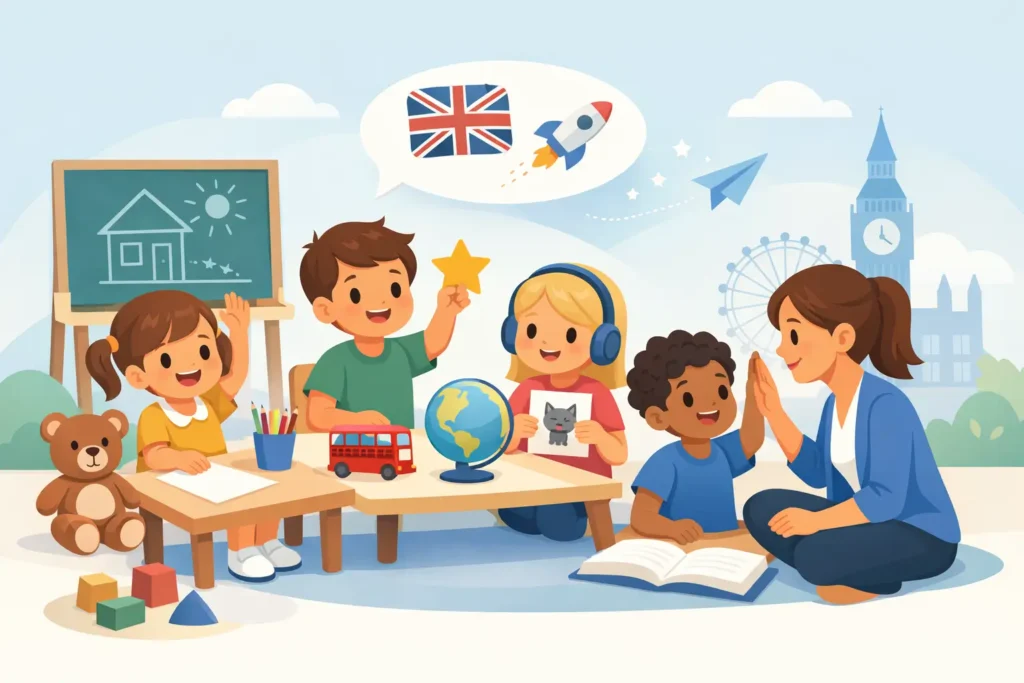
A child’s first confident English sentence often begins long before a worksheet or formal lesson. It may happen while describing a tower they have built, asking why water turns to vapor, sharing a snack with a friend, or proudly explaining the pizza they helped prepare. A thoughtful english preschool program for children gives these everyday moments a purpose: children learn to communicate because they have something meaningful, joyful, and real to say.
For many families in Kuala Lumpur, especially working parents, preschool is also a decision about trust. Children need a safe, loving place where they can spend their day feeling seen and supported. Parents need to know that their child is not simply being kept busy, but is growing in language, confidence, independence, kindness, and readiness for the next stage of school.
What an English Preschool Program for Children Should Build
English exposure is valuable, but hearing English alone is not the same as learning to use it with confidence. Young children develop language most naturally through warm relationships, repetition, play, stories, songs, conversation, and hands-on experiences. When a teacher listens closely, introduces new words at the right moment, and encourages a child to share an idea, English becomes part of how that child understands the world.
A strong English-led preschool program helps children express needs, join conversations, listen to instructions, and tell simple stories. These are important early skills for future reading and classroom learning. Just as importantly, they help children feel capable. A child who can say, “Can I try?” or “I made this with my friend” is practicing both language and self-belief.
The best programs also recognize that every child develops differently. Some children begin by watching quietly and absorbing new words. Others are ready to chat, sing, and ask questions from the first day. Neither approach is wrong. With patient guidance and individual care, children can find their own voice without feeling pressured to perform.
Learning English Through Play, Not Pressure
Preschoolers learn with their whole bodies and all their senses. They remember words more easily when words are connected to action, feeling, and discovery. That is why play-based learning is not a break from education. It is one of the most effective ways young children learn.
During a practical project, children may describe what floats and what sinks as they make small boats. While baking, they can name ingredients, notice changes in texture, count spoonfuls, and take turns. When observing chicks or watching water vapor form, they learn to look carefully, ask questions, and share what they notice. These activities give children a real reason to use English, rather than asking them to memorize language without context.
Creative play matters too. Painting, building geometric forms, role-playing in a pretend kitchen, or creating a nature collage can encourage children to use descriptive words and explain their choices. A caring educator can extend the learning gently: “What color did you choose?” “How did you make it balance?” “What do you think will happen next?”
This approach supports children who love active exploration, as well as those who need time to warm up. It makes room for joy, curiosity, and small discoveries, which are the feelings children carry with them when they begin to see learning as something they can enjoy.
Stories and early literacy have a special place
Reading development should be part of daily preschool life, not a hurried task saved for later. When children hear stories read with expression, look at pictures, repeat favorite phrases, and talk about characters, they begin to understand that books carry meaning. They learn that print, sounds, ideas, and imagination are connected.
Early literacy does not mean pushing formal reading before a child is ready. It means building the foundations: listening carefully, recognizing rhymes, enjoying books, developing vocabulary, holding a book with care, and beginning to notice letters and sounds. Children who feel happy around books are more likely to approach reading with curiosity as they grow.
Confidence Grows in a Safe, Caring Routine
A preschool day can feel big to a young child. There are new people, transitions, group activities, meals, outdoor play, and moments when they must try something for themselves. A predictable routine helps children feel secure enough to participate.
They learn that there is time to greet friends, explore, eat, rest, create, move, and be collected by the people they love. Within this rhythm, they can practice simple independence: packing away toys, washing hands, choosing an activity, carrying a plate, or asking an adult for help. Each small success tells a child, “I can do this.”
Safety and affection are equally essential. Children learn best when they know an adult will comfort them when they are upset, celebrate their effort, and guide them calmly through a disagreement. A nurturing preschool does not expect children to manage every emotion alone. It helps them name feelings, take turns, apologize sincerely, and try again.
For parents, this care can be especially reassuring when a child is spending extended hours at school. Extended day care should feel like a continuation of a child’s safe haven, with time for rest, play, meals, conversation, and meaningful activities rather than simply filling the hours.
Character Learning Happens in Small Moments
Kindness, empathy, and respect are not subjects that children learn only from posters on a wall. They are practiced in the small moments of a day: inviting someone into a game, waiting for a turn, helping a friend find a missing shoe, or using gentle words after a disagreement.
Teachers have a powerful role in making these moments visible. Instead of only correcting behavior, they can help children understand how their actions affect others. A child who spills blocks may be encouraged to help tidy up. A child who wants a toy may learn to ask, “Can I have it when you’re finished?” These lessons build emotional maturity alongside English communication.
There is a balance to strike. Children need clear boundaries, but they also need room to be children: energetic, curious, occasionally frustrated, and still learning. Consistent guidance helps them develop self-control without making them afraid of mistakes.
Outdoor Time Supports Happy Hearts and Healthy Minds
Outdoor play belongs at the center of early childhood education. Running, climbing, balancing, digging, and exploring give children opportunities to build strength, coordination, and confidence. Fresh air and movement can also help children regulate their energy and return indoors more ready to focus.
The outdoors creates rich language opportunities as well. Children notice insects, clouds, leaves, shadows, and changes in the weather. They negotiate games, make up stories, and learn words that come alive through experience. A garden or outdoor learning area can become a place for observation, responsibility, and wonder.
Of course, outdoor activities should be thoughtfully supervised and suited to a child’s age and comfort level. The goal is not to make every activity challenging. It is to give children safe chances to move, explore, and feel proud of what their bodies can do.
How Parents Can Recognize the Right Fit
When visiting an English preschool, look beyond the displays on the walls. Notice how educators speak to children. Are they patient, attentive, and encouraging? Do children have opportunities to talk, choose, create, and play? Is there a balance between guided learning and open-ended discovery?
Ask how the school supports children who are shy, new to English, or still adjusting to separation. Ask how reading is introduced, how outdoor time is included, and how parents receive updates about progress. A good program should be able to explain not only what children do each day, but why those experiences matter.
It also helps to consider your family’s rhythm. Some children thrive with a shorter day, while others benefit from the consistency of an extended care routine, particularly when parents have full workdays. The right choice depends on your child’s temperament, your practical needs, and the relationships the school is prepared to build with your family.
At Summer Tots, the goal is to help children grow into confident learners with happy hearts and healthy minds, while giving parents the reassurance of a caring partner. The most meaningful preschool experience is one where a child feels safe to ask questions, brave enough to try, and excited to come back tomorrow.
Pingback: Early Reading Milestones From Preschool to Kindergarten – Summer Tots