
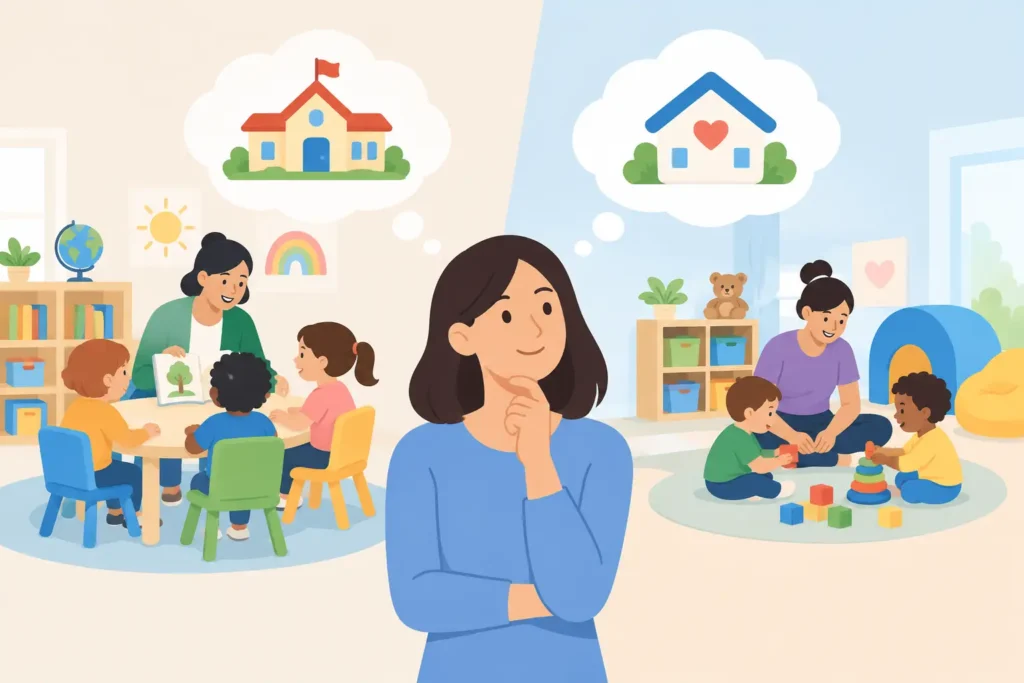
A child who happily tells you about the boat they made, the book they read, or the friend they helped is showing more than a busy day. They are building confidence, language, and a sense of belonging. When parents compare a preschool versus childcare center, they are often trying to find the setting where those meaningful moments can happen while their child is also safe, cared for, and understood.
For many working families in Kuala Lumpur, the choice is not simply about who can watch a child until pickup time. It is about finding dependable support that respects a child’s daily needs and their long-term potential. The right answer depends on your family’s schedule, your child’s personality, and the quality of care behind the program’s name.
Preschool versus childcare center: the main difference
A preschool is generally designed around early learning. The day has a purpose beyond supervision: children take part in stories, songs, conversation, creative work, practical projects, movement, and guided play that prepare them for kindergarten and later school years. They learn to listen, share ideas, try new tasks, and enjoy books and numbers without feeling pressured to grow up too quickly.
A childcare center is usually focused first on providing safe, reliable care while parents work or manage other responsibilities. Many childcare centers also offer activities, meals, naps, and playtime. Some provide excellent learning opportunities as well. However, the amount of structured teaching, literacy support, outdoor exploration, and individual learning attention can vary widely from one center to another.
The difference is not always a clear line. A thoughtful program can bring both together: a joyful preschool experience during the learning day, with extended care that gives working parents flexibility and children a familiar, comforting routine. For many families, this combination is more helpful than choosing between education and care.
What children gain from a strong preschool program
Young children learn best when they can touch, test, imagine, talk, and try again. A quality preschool does not rely only on worksheets or asking children to sit still for long periods. It gives them a reason to be curious.
A lesson about water, for example, can begin with observing vapor, continue with building floating boats, and end with children explaining why one boat stayed afloat longer than another. Baking, preparing simple pizza or sushi, creating geometric forms, planting seeds, or caring for chicks can all become learning experiences. Children practice vocabulary, early math, problem-solving, patience, and teamwork while doing something they can see and remember.
These experiences also strengthen school readiness in natural ways. Children become more comfortable speaking English, following a simple routine, recognizing letters and sounds, holding a pencil, listening to a story, and expressing what they need. Just as importantly, they learn that mistakes are part of learning. A child who feels safe enough to ask questions is better prepared for a new classroom than a child who has only memorized answers.
Learning should include the whole child
Academic readiness matters, but it is only one part of a happy start. Preschool-age children are still learning how to wait for a turn, cope with disappointment, join a group, and use kind words when they disagree. They need adults who notice when they are quiet, frustrated, proud, tired, or ready for a bigger challenge.
Character education can be woven into ordinary moments. A teacher may guide a child to include a friend in a game, thank someone who helped them, or care for classroom materials. Over time, these small lessons shape empathy, respect, independence, and resilience. Parents often see the results at home: a child becomes more willing to help, more able to explain feelings, or more confident about trying something new.
Physical development deserves space in the day, too. Outdoor play, climbing, running, balancing, and imaginative games support strong bodies and healthy minds. Children need opportunities to move after concentrating, breathe fresh air, and discover the world beyond a desk.
When a childcare center may be the right choice
A childcare center can be a good fit when a family primarily needs longer care hours, when a child is very young, or when a parent values a flexible, home-like daily rhythm. A nurturing caregiver, consistent routine, clean environment, and responsive communication are valuable at every age.
For infants and younger toddlers especially, loving relationships and attentive care are the foundation. Parents should look for caregivers who respond warmly, maintain safe routines, and share clear information about sleep, meals, diapers, comfort, and milestones. At this stage, children benefit from songs, sensory play, conversation, and simple exploration, even if formal academics are not yet the priority.
The key is to ask what happens throughout the day. Does play have intention? Are children spoken to, read with, and encouraged to communicate? Is there time outside? Are caregivers able to give comfort and attention rather than simply manage a room? The label “childcare center” tells only part of the story.
Questions to ask on a school visit
A visit often reveals what brochures cannot. Notice how the adults greet children. Are names used warmly? Do teachers crouch down to speak at a child’s level? Are children engaged, moving, talking, creating, and resting in age-appropriate ways?
Ask how the program supports early reading and English communication, how teachers respond to challenging behavior, and how often children play outdoors. Find out whether practical activities are part of the week and how educators adjust support for a child who is shy, energetic, still developing language, or ready for greater challenge.
It is also reasonable to ask about staff experience, security procedures, meals, hygiene, pickup arrangements, and parent updates. Reliable care should bring peace of mind, not leave parents guessing about their child’s day.
For working families, schedule matters just as much as philosophy. If extended day care is available, ask whether it feels like a calm continuation of the school day. Children often do best when the adults, setting, and expectations remain familiar. They can have time to rest, play, finish a project, or enjoy a story before their parents arrive, rather than shifting between multiple locations.
Choosing a setting that supports your family
The best choice is not always the program with the most academic claims or the longest list of activities. It is the place where your child is known as an individual and where the daily experience matches what your family needs. A quiet child may need patient encouragement to join group activities. A highly active child may thrive with regular outdoor play and hands-on projects. A child preparing for kindergarten may benefit from stronger literacy routines and opportunities to practice independence.
Parents should also consider the partnership they want with educators. Children grow best when home and school share information, celebrate progress, and work gently through challenges together. At Summer Tots, this partnership is reflected in a play-based approach that brings learning, character development, practical exploration, and extended care into one nurturing school experience.
Trust your observations as well as your checklist. When you picture your child arriving in the morning, can you imagine them being welcomed, comforted when needed, challenged with care, and sent home with happy stories to share? A setting that protects their joy while helping them grow can become a meaningful part of their childhood – and a steady support for your whole family.