
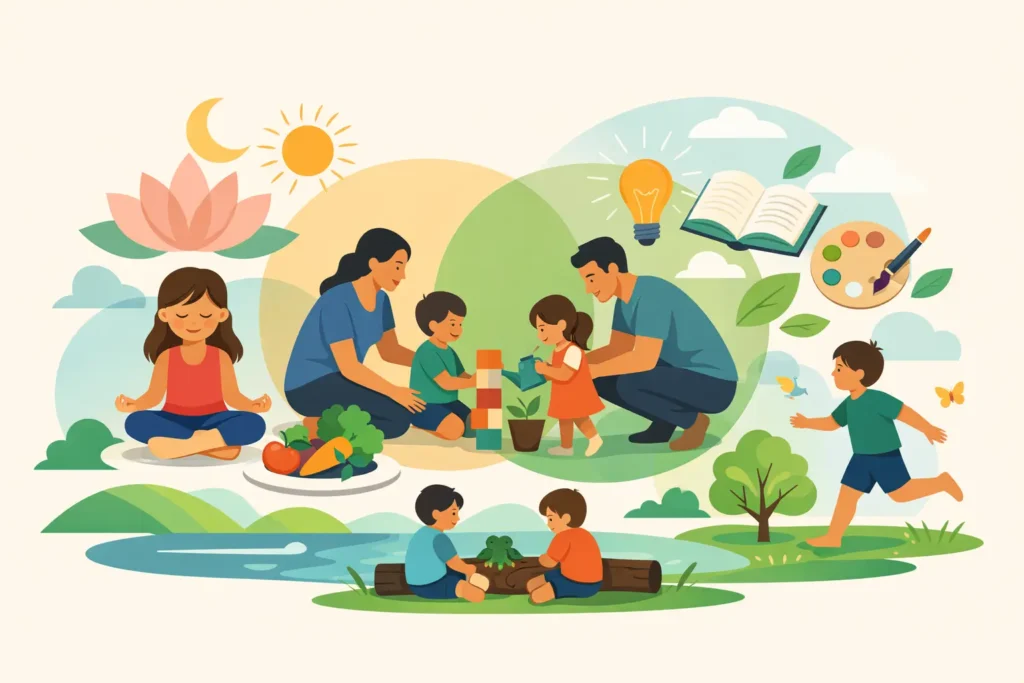
A child who proudly pours their own drink, comforts a friend who is upset, asks why a boat floats, and settles into a story is learning far more than separate skills. For parents asking, what does holistic mean in childcare, this is the heart of it: supporting the whole child, not only the part of them that will one day hold a pencil or recite the alphabet.
Holistic childcare recognizes that young children learn with their minds, bodies, feelings, relationships, and senses all at once. A happy, secure child is more ready to explore. A child who can communicate a need is better able to join a group activity. A child who climbs, runs, and plays outdoors is building physical confidence as well as resilience.
For families, a holistic approach offers reassurance that a child’s day has purpose. It makes room for early literacy and school readiness, while protecting the wonder, movement, care, and joyful play that childhood needs.
What Does Holistic Mean in Childcare?
In childcare, holistic means looking at every part of a child’s development and understanding that these areas are connected. Rather than measuring progress only by letters, numbers, or worksheets completed, educators also notice how a child feels, communicates, moves, solves problems, makes friends, and responds to everyday challenges.
This does not mean academic learning is left to chance. Children still benefit from hearing rich language, recognizing sounds, enjoying books, practicing early writing, and developing number sense. The difference is in how these skills are taught. They are woven into meaningful experiences that help children understand why learning matters.
For example, making pizza can involve reading a simple recipe, counting ingredients, strengthening hand muscles while kneading dough, taking turns, and feeling proud to share a finished creation. A project about floating boats can lead to questions, testing, observation, new vocabulary, and cooperation. The learning is real because the experience is real.
The Areas of Growth a Holistic Program Supports
A child’s development does not happen in neat, separate boxes. Still, it can be helpful for parents to see the areas a caring childcare program pays attention to.
Emotional security and self-confidence
Young children need to feel safe before they can confidently explore. Consistent routines, gentle guidance, and educators who know each child well help create that sense of security. When a teacher notices a child is quiet at drop-off, helps them name their feelings, and invites them into a familiar activity, they are supporting emotional growth.
Over time, children learn that feelings are manageable and that trusted adults will listen. They begin to try new things, recover from small disappointments, and say, “I can do it,” with growing belief.
Social skills and character
Childcare is often a child’s first regular community outside the family. Sharing materials, waiting for a turn, joining a game, and repairing a misunderstanding are not small lessons. They are the building blocks of kindness, empathy, respect, and friendship.
A holistic setting does not expect young children to behave perfectly. Instead, educators guide them through the moments that are hard. They model respectful words, help children understand another person’s feelings, and recognize thoughtful choices. This patient guidance supports both positive behavior today and strong relationships in the years ahead.
Thinking, language, and early literacy
Curiosity is a powerful starting point for learning. When children observe water vapor, care for chicks, create geometric forms, or ask questions during story time, they are developing attention, reasoning, vocabulary, and confidence in their own ideas.
English-led instruction can be especially meaningful when it is part of warm daily conversation, songs, books, play, and practical activities. Children need opportunities to listen and speak without fear of getting every word right. As their confidence grows, they become more willing to express ideas, follow instructions, enjoy reading, and prepare for the classroom routines ahead.
Physical health and independence
Active play is not simply a break between lessons. Running, balancing, digging, climbing, dancing, and exploring outdoors build coordination, strength, body awareness, and a healthy outlet for energy. Children also learn to assess manageable risks, such as how to climb carefully or use equipment responsibly.
Daily self-help skills matter too. Washing hands, packing away toys, opening a lunch container, dressing for an activity, and helping set the table all develop independence. These moments may take longer than doing everything for a child, but they give children a valuable message: you are capable.
What Holistic Childcare Looks Like During a Normal Day
Parents sometimes hear the word “holistic” and picture a program with no structure. In fact, young children usually thrive with a predictable rhythm. The key is that the routine includes a healthy balance of guided learning, free play, rest, movement, meals, outdoor time, and caring connection.
A morning might begin with a welcoming greeting and conversation, followed by a group story or song. Children may then choose activities that invite them to build, draw, sort, pretend, investigate, or create. An educator is not merely supervising. They are observing, asking thoughtful questions, extending language, and gently helping children work through social moments.
Later, a hands-on project might bring several areas of learning together. Children preparing sushi, for instance, can talk about ingredients and textures, practice fine motor skills, follow steps, learn about food, and cooperate with classmates. Outdoor time gives them space to move freely and discover the natural world. Quiet reading and rest allow their busy minds and bodies to reset.
This approach is purposeful without being overly pressured. There is a place for teacher-led activities, especially for introducing early reading and number skills. There is also a place for child-led play, where children practice decision-making, imagination, negotiation, and persistence in ways adults cannot fully script.
Why Individual Care Matters
Children develop at different paces. One child may speak confidently but need encouragement to join physical play. Another may be eager to build and experiment yet need more time with language or group participation. Holistic childcare looks beyond comparisons and asks what each child needs next.
This is where experienced educators make a meaningful difference. By watching closely and communicating with families, they can celebrate progress that might otherwise be missed: a shy child greeting a friend, a child using words instead of grabbing, or a child choosing a book independently for the first time.
Individual care does not mean every child follows an entirely different schedule. It means children are seen as people, with their own strengths, interests, comfort levels, and growing abilities. For working parents, this relationship can be especially reassuring. A dependable childcare partner helps ensure that the care and encouragement children receive during the day connect with the values they experience at home.
Questions Parents Can Ask When Choosing Care
The word “holistic” can be used broadly, so it is reasonable to ask what it means in practice. When visiting a program, listen for clear examples rather than general promises. Ask how educators support children who are upset, how outdoor play is included, how early literacy is taught, and how families hear about their child’s progress.
It is also helpful to observe the atmosphere. Do children appear comfortable approaching teachers? Are there materials for active, creative, and imaginative play? Is there evidence of children’s work and discovery, rather than only identical finished crafts? Are educators speaking to children with patience and respect?
Every family’s needs are different. Some children benefit from more structure, while others need more time to warm up socially. The right program should be able to explain how it balances learning goals with warmth, safety, play, and individual attention.
At Summer Tots, this whole-child view is reflected in nurturing routines, hands-on projects, outdoor exploration, reading development, and character guidance. The aim is not to rush childhood, but to give children a safe haven in which happy hearts and healthy minds can grow.
The most encouraging sign of holistic childcare may be the child who comes home with a messy art project, a new question, a kind story about a friend, and the confidence to try something new again tomorrow.