
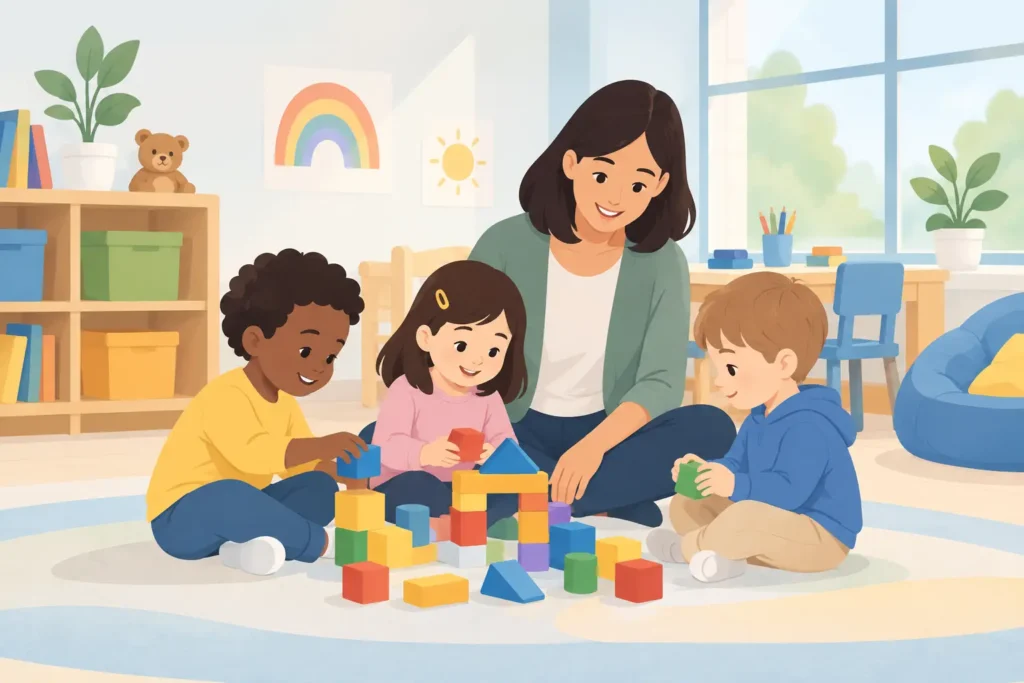
The moment your child walks into preschool, they are learning more than colors, letters, or new songs. They are learning whether they can trust the adults around them, join a group, try something unfamiliar, and come back to you at the end of the day with a happy story to share. A safe nurturing preschool environment gives children that steady foundation. It helps them feel protected enough to play, curious enough to ask questions, and loved enough to grow in their own time.
For families in OUG, Bukit Jalil, and nearby Kuala Lumpur neighborhoods, choosing a preschool can feel like choosing an extension of home. Working parents especially need confidence that their child is cared for with warmth and attention throughout a full day, not simply supervised between activities. The right environment brings together thoughtful safety practices, caring teachers, purposeful learning, outdoor movement, and the small everyday moments that help children feel known.
Safety Starts With Feeling Seen
A secure preschool has practical protections in place: supervised arrival and departure, clean and well-maintained learning areas, age-appropriate furniture and materials, careful routines for meals and rest, and attentive adults who know where children are throughout the day. These details matter deeply to parents, and they matter to children too, even when children cannot put them into words.
But safety is also emotional. A child who is greeted by name, helped through a tearful goodbye, and gently guided when a conflict arises begins to understand that school is a place where feelings are welcome. Rather than being hurried to “settle down,” they receive calm reassurance and clear boundaries.
This does not mean every day will be tear-free. Some children need time to adjust to a new classroom, a busy group, or separation at drop-off. A nurturing preschool recognizes this transition as part of development. Teachers can offer a familiar routine, a favorite activity, or a quiet moment nearby while the child finds their footing. Over time, that consistent care can turn uncertainty into confidence.
What a Nurturing Preschool Environment Looks Like
Warmth should be visible in the way adults speak to children, but it should also shape the whole day. Children need predictable routines because knowing what comes next helps them feel capable. They also need room to make choices, move their bodies, and follow their interests.
In a thoughtfully planned classroom, shelves and materials are within children’s reach. Art supplies invite creativity. Books are available for quiet moments with a teacher or a friend. Blocks, puzzles, dramatic-play corners, and hands-on activities encourage children to solve problems together. The goal is not to keep every child doing the same thing at the same pace. It is to create meaningful opportunities for each child to participate and succeed.
The teacher’s role is especially important. Experienced educators watch closely: Who is hanging back from group play? Who is ready for a more challenging task? Who needs help using words instead of grabbing? This individual attention helps children build confidence without feeling compared to others.
A nurturing setting also teaches kindness as a daily practice. Children learn to wait for a turn, notice when a friend is sad, care for shared materials, and apologize when they have caused hurt. These are not extras beside academic learning. They are early lessons in empathy, respect, and belonging.
Clear Boundaries Help Children Feel Secure
Some parents worry that a gentle approach means few rules. In fact, children thrive when warmth is paired with clear, age-appropriate expectations. They need adults who can say, “I will not let you hit,” while also helping them name the frustration behind the behavior.
Positive guidance helps children understand what to do next. A teacher may encourage a child to ask, “Can I have a turn when you’re done?” instead of taking a toy. They may guide two children to find a solution after both want the same bicycle. These moments take patience, yet they build the social skills children need for kindergarten and beyond.
Play Is Serious Work for Young Children
Parents naturally want to see progress in early reading, writing, communication, and number awareness. A strong preschool supports these skills, but young children learn best when lessons connect with real experiences. Play is not a break from learning. It is one of the ways learning becomes memorable.
When children make a floating boat, they begin to notice what sinks and what stays above water. When they observe water vapor, bake a simple treat, create geometric forms, or prepare pizza or sushi together, they practice language, sequencing, measuring, cooperation, and problem-solving. Raising chicks or caring for plants can also awaken a gentle sense of responsibility and wonder.
These activities do not need to be complicated to be valuable. What matters is the conversation around them. A caring teacher asks, “What do you think will happen?” “How could we make it stronger?” or “What did you notice?” Such questions invite children to think, explain, and listen.
English-led learning can be especially meaningful when it is woven naturally into stories, songs, instructions, and daily conversation. Children gain familiarity and confidence through repeated, enjoyable use of language rather than pressure to perform. For some children, early literacy grows quickly. For others, confidence in speaking and listening comes first. Both are meaningful signs of growth.
Outdoor Time Supports Happy Hearts and Healthy Minds
A child’s day should not be spent entirely at a table. Outdoor play gives children space to run, climb, balance, explore, and release energy. It supports physical development, but its benefits reach further. Children often become more cooperative, focused, and emotionally settled after active time outdoors.
A safe outdoor area needs close supervision, age-appropriate equipment, and routines that keep children comfortable in warm weather. Yet it should still offer appropriate challenge. Children gain confidence when they learn to climb a little higher, ride with more control, or keep trying after an early wobble.
Nature also brings learning to life. Watching clouds, collecting leaves, noticing insects, or watering a garden helps children slow down and observe. These simple experiences can become the starting point for stories, drawings, questions, and new vocabulary.
Partnership Makes Care More Consistent
A preschool cannot replace a family, and it should not try to. The most supportive schools work as partners with parents. They share meaningful updates, listen to family concerns, and communicate about a child’s routines, interests, and progress.
For working parents, dependable extended care can be part of this partnership. A longer day should still feel calm and purposeful, with time for rest, nourishing routines, reading, creative play, and outdoor activity when appropriate. Children benefit when the adults caring for them understand that extended hours are not simply extra time to fill. They are part of the child’s day and deserve the same attention and warmth.
Open communication is particularly valuable when a child is adjusting, developing a new skill, or working through a behavior challenge. Parents and teachers do not have to agree on every detail, but they should share the same hope: helping the child feel secure, capable, and understood.
Questions Worth Asking During a Preschool Visit
A tour can tell parents a great deal, especially when they look beyond bright displays and classroom materials. Notice how teachers speak with children. Are they patient and engaged? Do children appear comfortable approaching them? Are there spaces for active play, quiet reading, creative work, and rest?
Ask how the school handles drop-off tears, disagreements between children, outdoor supervision, illness, meals, naps, and communication with families. You may also ask how teachers support children with different personalities and learning paces. A school should be able to explain its routines clearly without making broad promises that every child will develop in exactly the same way.
At Summer Tots, a child-centered approach means combining joyful, hands-on learning with individual care, character guidance, and a dependable daily rhythm. The aim is not only to prepare children for their next classroom. It is to help them become confident, curious, kind, and happy learners.
The best choice often feels reassuring in practical ways and emotional ones. You can see that the space is cared for. You can hear respectful language. And, over time, you may notice your child walking in with a little more confidence, bringing home a new question, a new skill, or a kind story about a friend. Those small signs are the beginning of a strong and joyful school journey.