
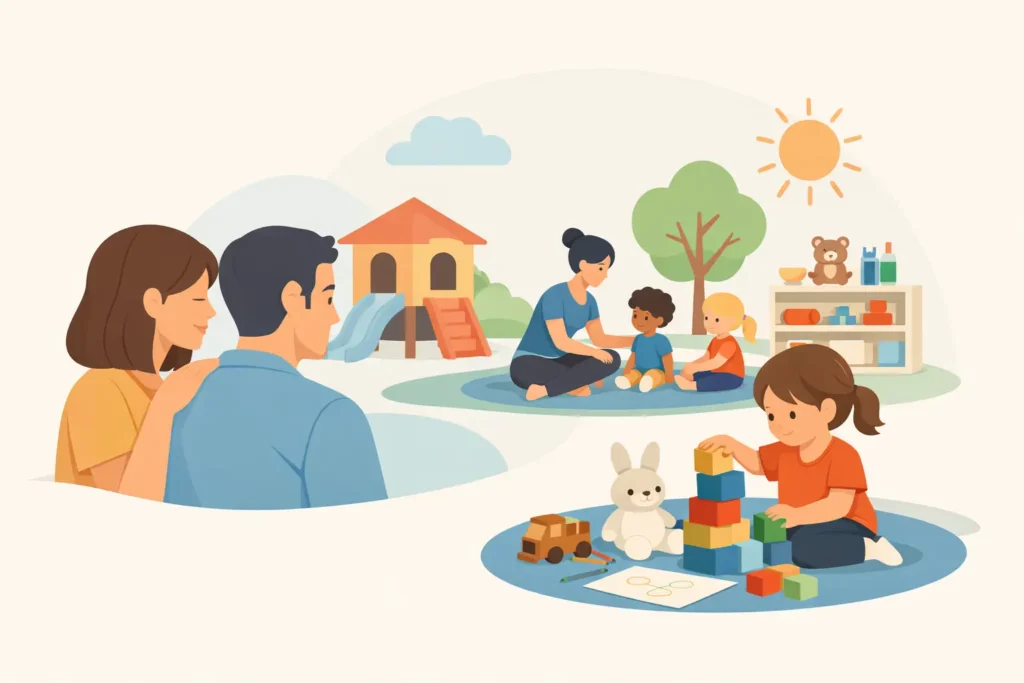
A child who insists on pouring their own water, asks “why?” for the tenth time, and turns a cardboard box into a rocket is showing many of the wonderful signs of preschool age. This is a season of big feelings, fast-growing language, busy hands, and an emerging wish to do things independently. It can be joyful, exhausting, and deeply meaningful for parents all at once.
For families, preschool is not simply a place to keep children occupied while adults work. It is often a child’s first experience of belonging to a group outside the family. With caring guidance, children learn that their ideas matter, their feelings can be managed, and new challenges can be approached with confidence.
What Happens at Preschool Age?
Preschool age generally refers to children around 3 to 5 years old, though every child develops at their own pace. Some children are ready to join a group setting shortly after turning 3. Others need a little more time to feel secure with new routines, teachers, and friends.
At this age, learning happens through nearly everything children do. Building a tall block tower introduces balance and problem-solving. Waiting for a turn on the slide encourages patience. Listening to a story builds attention, imagination, and early language skills. Even a disagreement over a favorite toy can become a gentle lesson in using words, understanding another person’s feelings, and finding a solution.
Children also begin to notice what they can do for themselves. They may want to carry their own bag, put on their shoes, help prepare a snack, or tidy up after an activity. These small moments are not chores to rush through. They are opportunities to build independence and pride.
The Growth Parents Can Expect to See
Development at preschool age is rarely neat or predictable. A child may speak confidently at home but be quiet in class at first. Another may recognize many letters but still find it difficult to sit through a story. This does not mean a child is behind. It means they are growing in different areas at different speeds.
Confidence and emotional security
A nurturing preschool helps children separate from parents with reassurance, not pressure. Over time, a familiar morning routine, a warm welcome from a teacher, and a safe classroom environment can help a child feel settled.
Confidence grows when children are given achievable responsibilities and praised for effort. A teacher might encourage a child to try again when a puzzle feels difficult or celebrate their kindness when they comfort a friend. These experiences teach children that mistakes are part of learning and that they can cope with new situations.
Language, communication, and early literacy
Preschoolers learn language best when it is useful, joyful, and part of real conversation. Songs, storytelling, dramatic play, picture books, rhymes, and classroom discussions all give children reasons to listen and speak.
Early literacy should feel inviting rather than stressful. Children benefit from hearing stories read aloud, noticing letters in their names, talking about pictures, and retelling familiar tales in their own words. Some may begin recognizing words or attempting writing, while others are still strengthening their pencil grip and enjoyment of books. Both stages are valuable.
English-led learning can be especially helpful when children hear and use the language naturally throughout play, routines, projects, and conversations. The goal is not to make young children perform. It is to help them communicate with growing comfort and curiosity.
Social skills and character
Friendships at this age can change quickly. One minute children are best friends; the next, both want the same red crayon. These everyday moments are where social learning begins.
Children need adults who calmly show them how to ask, wait, share, apologize, and express disappointment without hurting others. Kindness, empathy, respect, and responsibility are not separate subjects reserved for a special lesson. They become part of the classroom culture when teachers model them throughout the day.
A child who learns to say, “Can I have a turn when you are finished?” is building a skill that will support relationships for many years to come.
Why Play Is Serious Learning
Parents sometimes worry that a play-based preschool may not be academic enough. It is understandable to want visible preparation for kindergarten and beyond. Yet meaningful play is one of the most effective ways young children learn because it gives ideas a purpose.
When children make floating boats, they observe what stays above water and what sinks. When they bake, they measure, follow steps, notice changes, and practice cooperation. Raising chicks can nurture gentleness and responsibility. Creating geometric forms makes shapes more memorable because children can touch, build, and test them.
Play does not mean children are left without guidance. Purposeful play is thoughtfully prepared by educators who know when to ask a question, introduce a new material, or step back so children can investigate independently. A classroom project about water vapor, for example, can encourage children to observe closely, describe what they see, and become excited about finding answers.
The balance matters. Children benefit from a predictable rhythm that includes group time, stories, meals, outdoor activity, rest, creative work, and free exploration. Too much structure can make learning feel pressured. Too little structure can make some children feel uncertain. A caring preschool creates room for both freedom and gentle direction.
Choosing a Preschool That Fits Your Child and Family
The right preschool is not necessarily the one with the flashiest materials or the longest list of worksheets. It is the one where your child is safe, known, and encouraged to grow.
When visiting a school, watch how teachers speak to children. Do they get down to a child’s eye level? Are they calm when a child is upset? Do they notice children who are quiet as well as those who eagerly raise their hands? Experienced educators understand that each child needs a slightly different kind of encouragement.
Look closely at the learning spaces, too. Young children need room to move, create, read quietly, and explore outdoors. Outdoor play supports physical coordination, healthy energy, confidence, and a love of the natural world. It is not simply a break from learning. Climbing, running, digging, balancing, and observing insects all support healthy development.
For working parents in OUG, Bukit Jalil, and nearby Kuala Lumpur neighborhoods, practical support matters as much as educational philosophy. Extended child care can make daily life more manageable when it remains warm, organized, and purposeful. A longer day should still include attentive care, nourishing routines, meaningful play, and opportunities for children to rest.
It is also helpful to ask how the school communicates with families. Parents should hear not only about special events, but also about their child’s emerging interests, friendships, progress, and any areas where extra support may help. The strongest early education partnerships are built on trust and regular conversation.
Helping Your Child Feel Ready
Readiness is less about drilling letters and numbers at home than helping a child feel capable in everyday life. Before preschool begins, practice short separations with a trusted caregiver, talk positively about the school day, and create a simple goodbye routine. A hug, a clear promise to return, and a confident farewell often work better than a long, worried goodbye.
You can also involve your child in small preparations. Let them choose a water bottle, practice opening their lunch container, or talk through what happens after breakfast: “We will drive to school, your teacher will welcome you, then I will see you after work.” Familiar language makes a new routine feel more manageable.
If tears happen at drop-off, do not assume the school is a poor fit. Many children need time to adjust, especially when they are beginning a new routine or experiencing a major change at home. Consistent attendance and a close partnership with teachers can make a real difference. At the same time, parents should feel comfortable raising concerns if a child remains deeply distressed over an extended period.
At Summer Tots, we believe children flourish when home and school offer the same gentle message: you are loved, you are safe, and you are capable of learning. Preschool is a precious chapter because children are discovering who they are in the world beyond their family.
Give your child time, warmth, and a place where curious questions are welcomed. The confidence they build while painting, playing, reading, and making friends can quietly shape the happy heart and healthy mind they carry into every next step.