
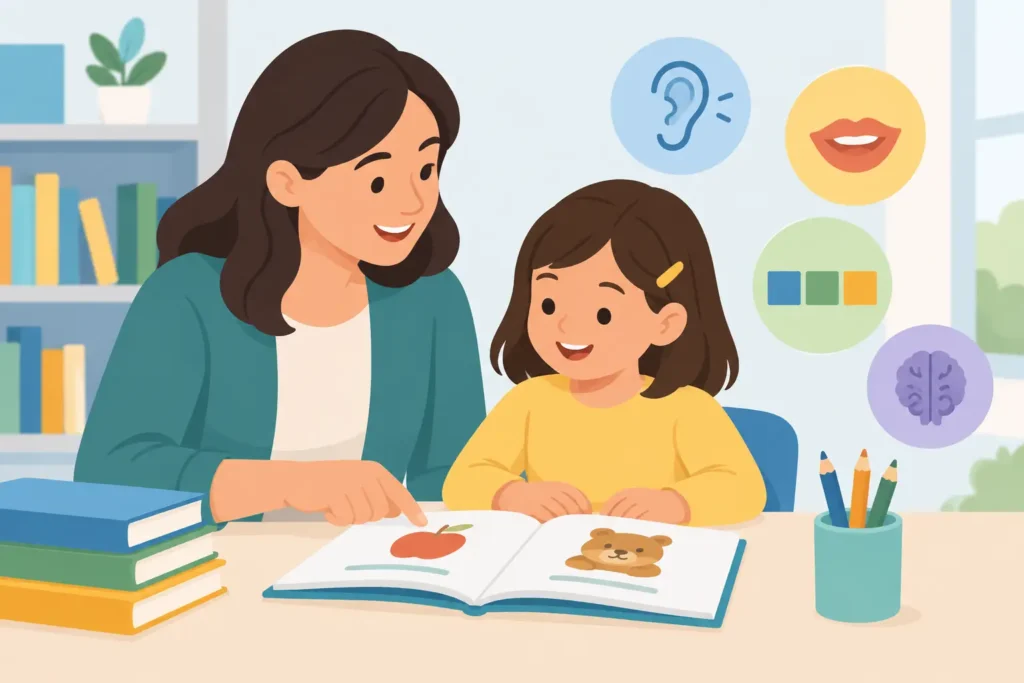
A child who points to the letter m and proudly says, “Mmm, like Mommy,” is doing more than memorizing a letter. They are beginning to understand that marks on a page carry sounds, and sounds can become words, stories, signs, and ideas. Thoughtfully planned phonics classes help young children make these connections with joy, patience, and growing confidence.
For preschool and kindergarten families, early reading can feel like a big milestone waiting just around the corner. Yet the strongest start rarely comes from pushing children to read long word lists early. It comes from giving them time to listen, play with language, notice patterns, and feel successful one small sound at a time.
What Children Learn in Phonics Classes
Phonics is the connection between letters and the sounds they make. Rather than asking children to recognize whole words by sight alone, phonics helps them understand how spoken language can be represented in print. When children learn that s can make the sound at the beginning of “sun,” and that a and t can join it to make “sat,” reading starts to feel possible.
For young learners, this work should be active and meaningful. A teacher may introduce a sound through a song, a picture card, a story, or an object from the classroom. Children might stretch out the sounds in “cat,” clap the syllables in their names, trace letters in sand, or hunt for beginning sounds during a walk outdoors.
These experiences develop several foundations at once. Children learn to listen closely, pronounce sounds clearly, recognize letter shapes, and begin blending sounds into simple words. Just as importantly, they discover that learning to read is not something to fear. It can be a happy part of their day.
Why Play Matters in Early Phonics Learning
Preschoolers learn through movement, repetition, imagination, and connection. Sitting still with flashcards for long periods may work for some children, but it can leave others frustrated or disconnected. A playful approach meets children where they are.
Imagine a child pretending to stir “soup” in a play kitchen while practicing the /s/ sound. Another child may form letters with play dough, match picture cards to beginning sounds, or sing a familiar rhyme with friends. These activities may look simple, but they invite children to hear and use language in ways that feel natural.
Play also gives educators valuable insight. A child who confidently joins a letter game may be ready for a new challenge. A child who watches quietly may need more time, a smaller group, or a different kind of encouragement. In a nurturing class, progress is not measured only by how many letters a child can name. It is also seen in their willingness to try, speak up, and return to an activity with interest.
The Skills That Come Before Reading Books
Many parents understandably hope their child will begin reading early. However, reading readiness is made up of smaller skills that grow gradually. Children first need to hear that words are made of separate sounds. They need to understand that words can rhyme, that sentences are made of words, and that letters have names as well as sounds.
A child may be able to sing the alphabet beautifully without yet knowing which sound each letter represents. That is perfectly normal. Alphabet knowledge and sound awareness develop together over time, especially when children see letters used in meaningful ways.
In a well-paced program, children may begin with sounds that are easy to hear and use in simple words. They practice blending sounds together, such as /m/ /a/ /t/, and separating a word into its individual sounds. Later, they may build confidence with short books, familiar phrases, and simple writing activities.
The goal is not to rush every child toward the same finish line. The goal is to build a secure foundation so that when more formal reading instruction begins, children can approach it with confidence rather than anxiety.
What a Caring Phonics Class Looks Like
The best phonics classes for young children are warm, organized, and responsive. Children should feel safe asking questions, making mistakes, and trying again. A teacher’s encouragement can make a great difference when a child is unsure about a sound or feels discouraged by a new word.
Look for a learning environment where phonics is part of a fuller day, not an isolated drill. Reading and language grow stronger when children also talk, listen, create, explore, and play with others. A class story about a garden can lead to sound games with “g,” drawing flowers, planting seeds, and sharing observations with friends. Language becomes connected to real experiences.
Small-group learning is especially helpful because children develop at different speeds. Some may quickly recognize letter sounds and enjoy early readers. Others may need repeated practice with a few sounds before they are ready to blend words. Both paths deserve patience and praise.
At Summer Tots, reading development can be supported through English-led learning, purposeful play, hands-on projects, and caring guidance from educators who notice each child’s individual progress. This helps literacy feel connected to a child’s whole world, including their curiosity, friendships, and growing ability to communicate.
How Parents Can Support Phonics at Home
Parents do not need to turn home into another classroom. A few relaxed moments each day can strengthen what children are learning and show them that words are part of everyday life.
Try noticing sounds during ordinary routines. While packing a snack, you might say, “Banana starts with /b/.” On the way home, invite your child to spot a letter they recognize on a sign. During bedtime reading, pause to ask what sound they hear at the beginning of “moon” or whether they can find a letter from their name.
Reading aloud remains one of the most powerful ways to support future readers. Choose books with rhythm, repetition, funny details, and characters your child enjoys. Let them turn pages, predict what might happen next, and retell parts of the story in their own words. These conversations build vocabulary, listening skills, and a lasting affection for books.
It also helps to keep correction gentle. If your child says the wrong sound, offer the right one calmly and move on. Children are more likely to keep trying when they feel supported instead of tested. A cheerful “Let’s say that sound together” can protect their confidence far better than repeated quizzing.
When Should a Child Start?
There is no single age when every child should begin formal phonics instruction. Many preschoolers show interest in letters between ages three and five, especially when learning is presented through songs, stories, and play. Others take longer to feel ready, and that does not mean they are behind.
What matters most is whether the experience matches the child’s development. If a child is excited to notice letters, enjoys rhymes, and listens attentively to stories, they may welcome more phonics activities. If they are tired, resistant, or becoming upset, a gentler pace may be the better choice.
Children also benefit from a balance. Phonics is an essential reading skill, but it is only one part of language development. They need rich conversations, imaginative play, fine motor practice, social interaction, and time outdoors too. Happy hearts and healthy minds support learning in every form.
Signs Your Child Is Growing in Confidence
Progress in phonics is often visible in small, wonderful moments. Your child may begin pointing out letters in a cereal box, listening for the first sound in a sibling’s name, or attempting to write a meaningful letter on a drawing. They may ask to hear the same favorite story again because they enjoy joining in with familiar words.
These moments show that literacy is becoming personal. Children are not simply completing an activity for an adult. They are beginning to see themselves as readers, writers, listeners, and storytellers.
A joyful phonics experience gives children more than an early reading skill. It gives them the quiet belief that they can learn something new, ask for help when they need it, and take pride in every sound, word, and story they discover.